12 min read
Stay updated with the latest sports news across Cricket, Football, Chess, and more. Catch all the action with real-time live cricket score updates and in-depth coverage of ongoing matches.
© The Indian Express Pvt Ltd



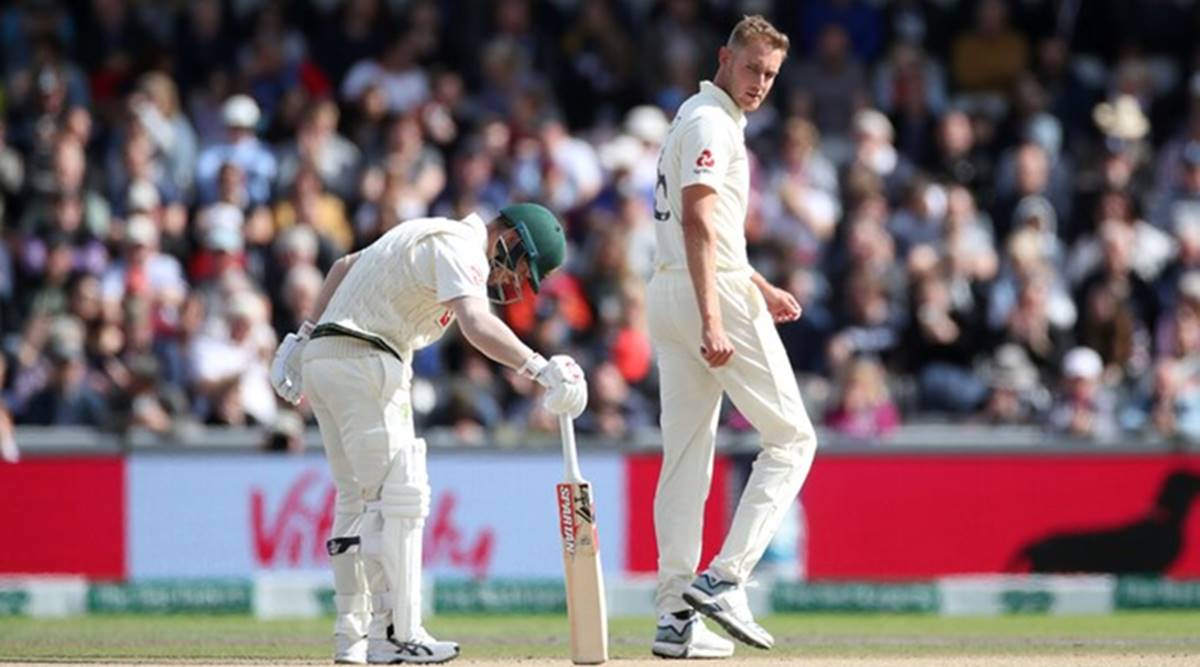 Stuart Broad and David Warner. (Reuters)
 For 19 masochistic innings, over a decade, David Warner has walked out to bat in India to eke out 414 unconvincing runs. For 25 Test innings in England, he averages 26.04. Just regression, not progression. The Australian fans might rate Warner high based on what he has done back home, but for many in the cricketing world, Warner the Test batsman doesn’t trigger much reverence. He will now get his last chance to sparkle in Ashes but will have to move past the big hurdle Stuart Broad from round the stumps. Ben Stokes had talked about how he wanted a really pace bowler, but in the end he picked Broad, no doubt to harass Warner.
Somewhere down the line, Warner has seemingly lost the confidence to attack in Tests. Will he change in what could be his last couple of chances in England? If he fails in the first two Tests, he might well be dropped for good. Forget in India, the reticence to attack has plagued Warner even elsewhere in the past. So much so that his mentors have had to remind him of his own aggressive talent.
At the start of the 2013-14 season, after a fallow run in which he failed to reach a hundred in 23 innings, Trent Woodhill, a renowned batting coach, took Warner to a café in Sydney for a chat about exactly this tendency. The crux of that talk was – ‘Attack the balls there to be hit and defence would look after itself.”
Apparently, so the story goes, that the then coach Mickey Arthur had wanted Warner to strengthen his defense, triggering a mini-slump. In Woodhill’s telling, Warner the batsman is a different beast at the crease once he starts thinking about attacking. He turns busy, the footwork turns more like a boxer’s and he is ready to punch. This tuk-tuk business of being caught stuck at the crease is the worst disservice he can do to himself, and to Australia.
In some ways, David Warner seems to be the last Aussie standing. In respect to the stereotypical version of an Aussie batsman’s technique, for some of us from an earlier generation. Lot more arms, a sense of compactness, preference for punchy shots, boxer’s rapid foot movement in stance to the pacers, the horizontal strokes, the on-the-up salvos, and the sudden deceleration to soft-handed tip-and-runs. Above all, the arms in the shot production. In those aspects, Warner is the last Aussie left. Techniques worldwide are coalescing so much these days that the hitherto uniqueness is fading out gradually. Warner is still a throwback, though.
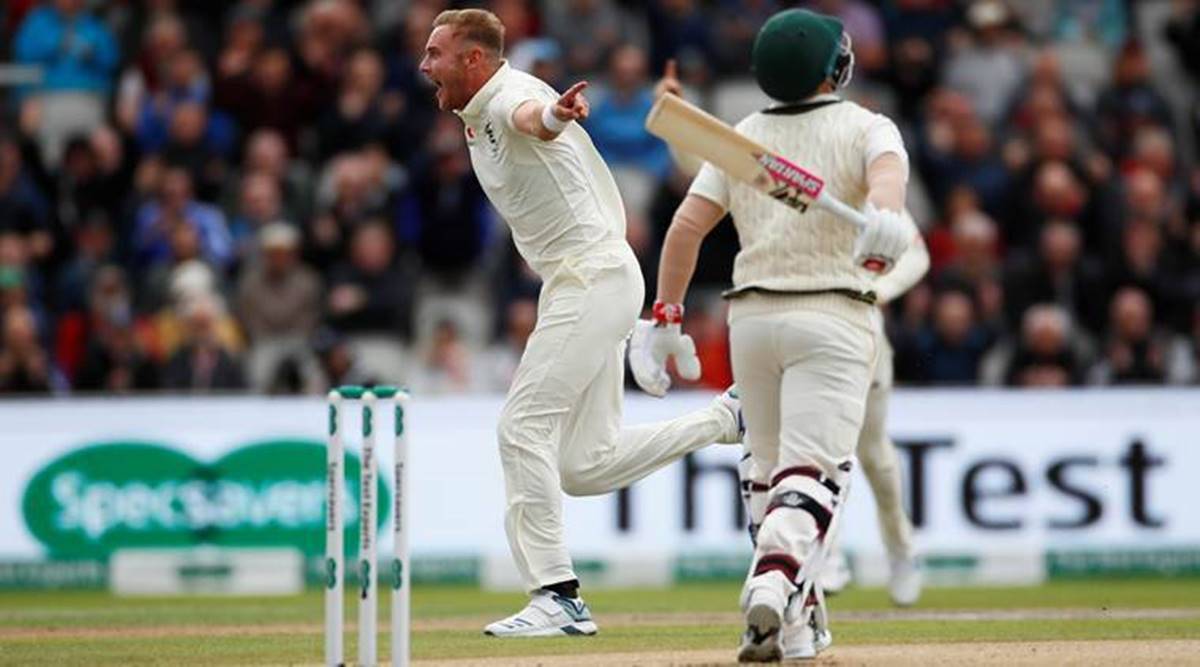 Ben Stokes had talked about how he wanted a really pace bowler, but in the end he picked Broad, no doubt to harass Warner. (Reuters)
This is intended to be a piece about his batting; his off-field issues have been well-documented, but just one episode is worth reiterating. Long before the ball tampering or the Joe Root punch, there was an episode at Brisbane’s Centre of Excellence when he was thrown out for attitude issues. This time around, his brother came to his help with an ultimatum. “I’m a plumber, and I said to him, ‘You can give it away and come labour for me, digging trenches, or you can put your head down and put everything into this if you want to be a professional sportsman’,” Steve, his brother, has said in the past. Luckily, Warner did.
The world cricket nearly didn’t have him. When he was 13, Warner was told by his coach to switch to right-hand as he was hitting the ball too much in the air but a season later, with the backing of his mother Lorraine, Warner made the crucial decision to revert; who knows what’s to say what would have happened if he hadn’t.
The last Aussie standing is a bit of exaggeration of course; not in the terms of the final sample left but even in the lineage there have been Aussie batsmen who have differed from the norm. A Mark Waugh, or going back into the mists of time, Victor Trumper, if one is to believe the raves of the past. But it’s the norm that one is interested.
Consider the quintessential on-the-up punch. Until Sachin Tendulkar came along, it wasn’t natural in the Indian way. Not that no one played it; of course they did. Even Ravi Shastri, usually not associated with that shot, has unfurled a few such beauties (watch his 187 against England in 1990). There is an awesome on-the-up wallop from Sunil Gavaskar in the 1983 Test series against Michael Holding; a tiny shuffle back and across, and SMG just punches it gorgeously past the non-striker. The point, as ever, is the norm; what seemed natural. With Tendulkar it was. Up on his toes, a slight shift of weight to the back, and punching good back of length balls, and at times even length deliveries, back past the bowler. It used to be a startling sight in his initial days.
In the decade before Tendulkar, it was the Aussies who would play it easily, naturally, smoothly. Of course it was because they grew up on tracks with bounce. The arms power that shot. The Indians tend to collapse the arms a bit, and allow the wrists to enter the scene. Aussies jabbed like boxers. Warner does it. With him, perhaps since he is a left-hander, he punches more through covers. A young Warner was a lot more feisty, pouncing on even length balls, if he was confident enough that there was no great deviation off the pitch, to punch em. Travis Head too punches but he collapses the arm, and the wrist-cock comes into the picture.
Warner doesn’t move his feet all that much but nearly every ball, even in defense or leaving the ball alone, there is a sense of furious kinetic energy at the crease. A side-on angle is best to view him. A furious press-back, then the opening of the front foot – he might just be defending the ball but until that moment of anaesthetising, he would make it seem as if he was about to jab.
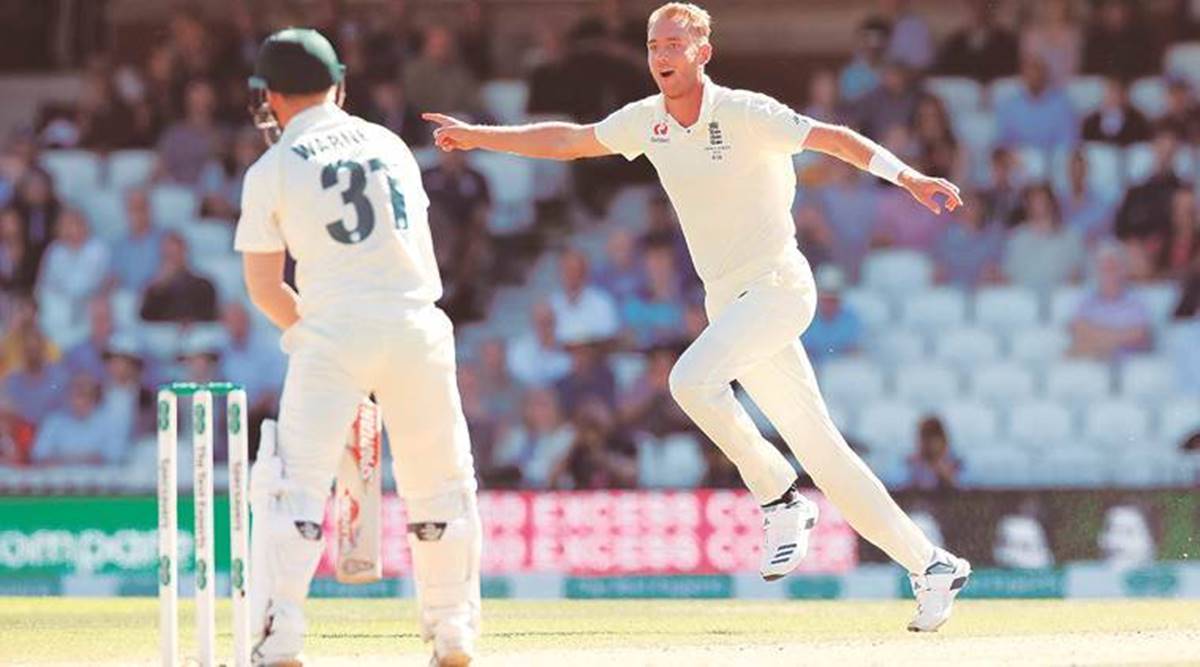 Warner has seemingly lost the confidence to attack in Tests. (Reuters)
It’s something he has worked on. During Mickey Arthur’s reign as coach, the focus apparently was on Warner getting his defence tighter – not a bad thing but it stripped him off the furious base he needed. It ended up anaesthetising himself somewhat, going by the quote of the coach Trent Woodhill that he worked with during that phase.
Woodhill told the Guardian newspaper that Warner’s first thought “was to get his defence in order and get into his innings then look to attack. To me, that defeats his natural instincts and his natural instinct is to attack and when he looks to attack, he’s in a really good defensive position because he lets balls go late, he can play late, so he plays the swinging ball later, he moves his feet. I’m not saying he’s a big mover of his feet, but he moves his body well. And when you look to defend, you naturally become really stable and stability isn’t such a good thing if it means you can’t move and react.”
It’s interesting that Woodhill says that as it also sides with the stereotypical Aussie batting image that resides in the head. That busyness. Consider the frenetic movements of Michael Slater, a fabulous Test opener from Australia. Seldom has anyone taken the back-and-across movement to heart as much as he did. Very busy; yet, so compact. So Australian.
Steve Waugh, to an extent, had that. Pressing back and across, on the move, trying to gain as much time as possible to defend. Slater would use that extra time to attack; Waugh for defense. Of course, then suddenly, he would flash his arms for that spanking cut. Not the horizontal shot necessarily, but a flamboyant fluid release of punchy arms. Ian Chappell too swore by that back-and-across movement. David Boon had a furious twirl of the bat and a fierce cut,
For the flamboyance in horizontal shots, Gilchrist was a good example. But he would push on where the other Aussies, traditionally, stopped. With him the extension of the arms was the key differentiator. Where most batsmen stop their arm-swing, Gilchrist’s arms would go cleanly through the line of the ball. You can only marvel at the absence of any self-doubt that allows him to play like that.What if the ball cuts away fractionally? What if it keeps slightly low or higher than what one expected? What if the length is fractionally shorter or fuller than what one thought? What if the pace is slower than anticipated? It’s as if he had no such doubts. Through his career he did the improbable – made happy both the purists and those who seek instant gratification.
Warner doesn’t let go of himself that way in all his shots. He curtails his punch; else it’s not a punch by definition. At times, he would be airborne when he plays that on-the-up punch.
Before his 100th Test, some of his team-mates were asked by Channel 7 about what they think is Warner’s trademark shot. The swivel-lap-around pull-flick he plays was picked by the likes of Josh Hazlewood; incidentally it was the shot with which he brought up his hundred; a four off Kagiso Rabada. Some like Marnus Labuschagne and Travis Head went for the square-drive. It’s a shot he has played a million times. The bowlers tend to take it across from the back of length or length and try to surprise him with the fuller one, hoping to catch him off-balance. But in his pomp, he would keep scything that ball through cover point. But we have seen the prince of that shot, regardless of the length, in Brian Lara. So, it’s the punch that’s best associated with Warner. It suits his feisty personality and the overall balance he strives to keep at crease.
For a long while, he would be so intent on staying side-on, that compactness allows him that balance to unreel all the off-side devilry, that the bowlers could tie him up on the leg and middle line. They still do it, go around the stumps and nail him there. Then, he would press back, almost jump back, and try to shovel it behind square to change the strike. If the bowler misses the good length and drags it back, he can collapse the arm for his short-arm pulls. Stuart Broad did the angle best, taking the ball away marginally from Warner to induce edges.
Failure against quality spin on turners?
That would remain an asterisk on his batting. He hasn’t been good in conditions where the ball has turned. R Ashwin has upset his most prized element at the crease – his balance, his compactness- and has troubled him. If the pitch allows for the ball to turn the width of two stumps, then Ashwin would land it outside leg. Forced to open up, Warner couldn’t cope up without the silken wrists needed to smother it. He has tried jumping out; no luck. He has tried pressing back; no luck. Perhaps because of his short height and reach, his sweeps in the subcontinent don’t have that venom-stripping effect of Matthew Hayden, who would come down hard on the ball from the top. Warner still tries to sweep bat parallel to the ground and without the necessary reach, he hasn’t always managed to get out of jail with that weapon on turners.
In his byte, Labuschagne had first mentioned Warner’s imperious down-the-track lofted shots to spin. Presumably, he is talking about shots on tracks that didn’t help turn.
The lofted shot that still sticks in the mind is the one he played during a 2012 knock of 180 against India at Perth, incidentally the innings that his father once rated as his aggressive best.
When long careers wind up, more often than not, the fans tend to be large-hearted, remembering the good moments more. With Warner the batsman too, that can be expected more or less. The press-backs, the ability to go airborne and still maintain balance for punches, the deliberate letting-go of the arms to slash over slips, the swivel-pulls off hips. The compactness, the arms … the last Aussie, standing.
Stay updated with the latest sports news across Cricket, Football, Chess, and more. Catch all the action with real-time live cricket score updates and in-depth coverage of ongoing matches.