6 min read
Stay updated with the latest sports news across Cricket, Football, Chess, and more. Catch all the action with real-time live cricket score updates and in-depth coverage of ongoing matches.

Journalism of Courage



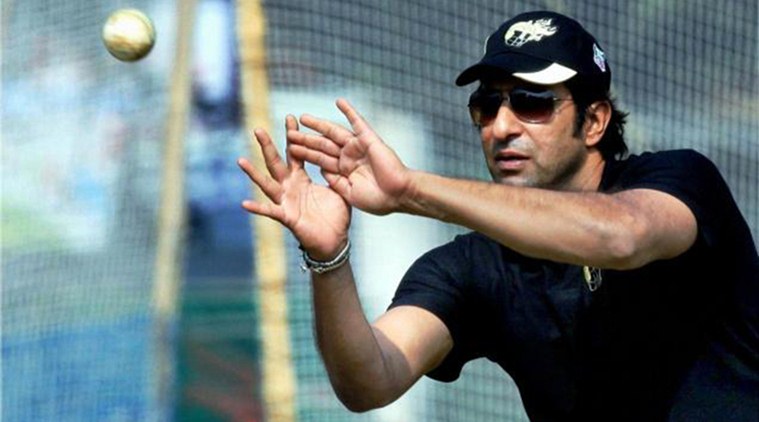 From Wasim Akram to Shaheen Afridi, the tape-ball cricket tradition continues.
Written by Aaqib Javed
The world’s most exciting version of street cricket is probably played in Pakistan. It’s called tape-ball cricket, which has its own stars. More importantly, with regards to fast bowling, it’s a never-ending supply line to Pakistan cricket’s mainstream. Tennis/tape-ball players graduating to leather ball cricket and going on to represent the national team is a routine. From Wasim Akram to Shaheen Afridi, the tradition continues. Haris Rauf of Lahore Qalandars is going to be the next pace-bowling sensation in Pakistan cricket, another product of the tape-ball variety.
Tape-ball is a tennis ball wrapped in electrical tape. This is done to make the ball smoother. The ball still remains lighter than the leather ball. When you are bowling with a heavier ball, your arm-speed is slower. When you are hurling a lighter ball at a distance, your arm-speed becomes faster. I have done some experiments with the tape-ball. What I found was that if your normal speed is 135kph with the cricket ball, the tape-ball goes at 155kph. A tape-ball travels 20 per cent faster in the air than a cricket ball and that’s because the tape-ball is lighter and smaller.
Bowling with a tape-ball requires more effort. It puts a lot of stress on your body. And when a kid starts playing with this ball, he naturally develops the habit of bowling with a quicker arm-speed. Also, almost every tape-ball bowler is very good with yorkers. To bowl a lighter ball at yorker length, you have to give some extra effort. The tape-ball doesn’t have a seam. So speed and yorker are your main currencies. Naturally, you can’t do that without a quick arm-speed.
A tape-ball bowler develops the understanding of angles quickly as well. The lighter ball moves in the air a lot more compared to a cricket ball. And if a bowler can control the lighter ball, when he graduates to proper cricket and bowls with a cricket ball, control comes to him naturally.
Reverse swing is another aspect that tape-ball cricket helps you learn. Tape-ball cricket is played on the streets and grounds that have barren outfields. So the tape gets damaged. The idea is to ensure that one side of the ball becomes rough and the other side stays relatively smooth. Then it starts reversing. It’s an important learning point, because the basic mechanism of bowling reverse swing remains the same even in international cricket – one side of the ball rough and heavier, and the other side smooth and lighter.
If one has to compare playing with a regular tennis ball as opposed to a tape-ball, you would notice that due to the fuzzy exterior of the tennis ball, which inhibits its speed while in motion, moves relatively slower. However, while playing with a tape-ball such external barriers are removed and the ball glides at a faster pace when in motion.
Practicing with tape balls from a young age encourages bowlers to develop motor movements that aid in achieving prime speed. This leads to an overflow of young, talented fast bowlers. Bowling with a lighter ball means more force is transferred from the bowler’s body to the ball, putting a lot of stress on the body, back and shoulders especially. However, through this practice, eventually, the body becomes stronger and better equipped to perform with the harder and heavier ball.
See, bowling fast doesn’t come from having a great physique. It mainly depends on your limbs coordination. Your base position gives you stability and the trunk transports the force from the ground to the upper body. The most important point here is that when you are bowling, throwing or batting, 70-80 per cent of the force is generated from the repulsive element of the ground. Thus, the potential energy harboured during the landing becomes the key factor in obtaining maximum power. The hinge movement of the foot, where energy is transferred from the ground to the heel and throughout the foot, aids in achieving maximum speed and optimum posture. In tape-ball cricket, a bowler has to land on his front heel.
A downside of tennis ball/tape-ball cricket is that with a lighter ball, chances are higher to bend the elbow for generating pace. This is a reason why Pakistan have so many bowlers with illegal action. The remedy is to shorten the distance for the kids, when they are just starting. The pitch-length should be 16 or 18 yards, not 22 yards for them. It can help the kids stave off bad habits.
The positives, though, far offset the negatives. To start with, tape-ball cricket thrives on natural ability, for there’s no coaching. This is why you will see the majority of variations – reverse swing, doosra, teesra – are originating from Pakistan and India. Because, tennis ball/tape-ball cricket gives you a chance to experiment. Players grow by gaining practical experience and take that muscle memory to mainstream cricket.
Another aspect is that, as because stakes are higher in tape-ball cricket compared to learning the ropes at an academy, youngsters here can’t afford to go wrong. It develops their temperament. When you are training a kid at an academy, you are telling him, ‘no worries, nothing to worry, you can afford to go wrong and learn from your mistakes’. But on the streets, you will get wild comments, angry expressions and abuse if you don’t perform well. The whole atmosphere makes tape-ball cricketers mentally tough. Also, there’s a responsibility. When someone is getting Rs 200 per match for example in tape-ball cricket, there’s an obligation to justify it. Youngsters become street-smarts.
(Aaqib Javed, a former Pakistan pacer & head coach of PSL franchise Lahore Qalandars, spoke to Shamik Chakrabarty)
Stay updated with the latest sports news across Cricket, Football, Chess, and more. Catch all the action with real-time live cricket score updates and in-depth coverage of ongoing matches.