Premium

Acing the test: Why India’s athletes need to be given academic flexibility to pursue sporting ambitions

Most top-tier athletes, if checked for their IQ and sheer resilience to survive challenges and ability to sponge in knowledge, will find themselves in the higher range, even if not the topmost bookish percentile.

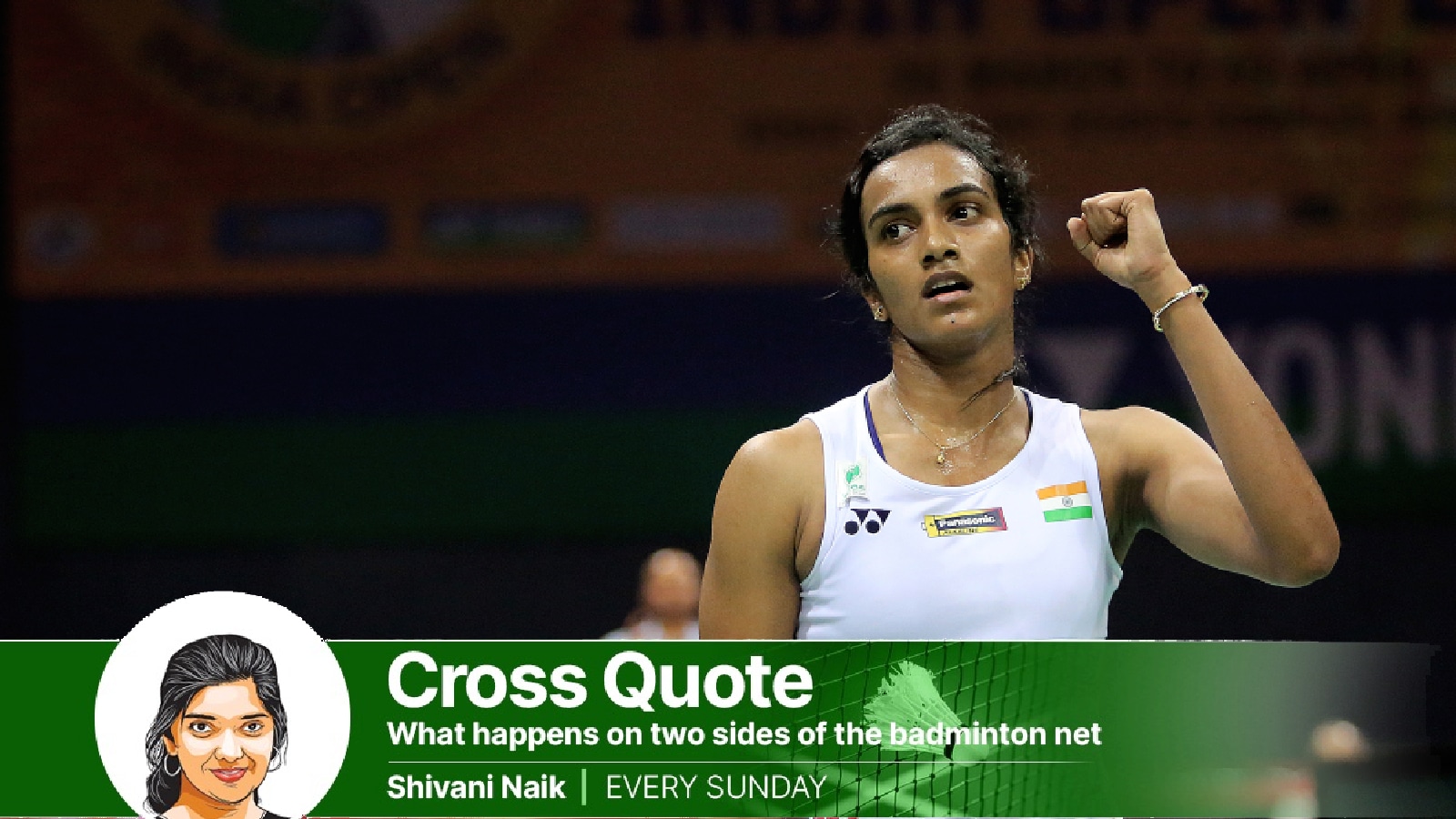
PV Sindhu, India BadmintonIndia's PV Sindhu in action (Express Archive)

March is all about board exams for the gaggle of Indian teens, 17, who also happen to be very promising badminton players.

In the perfect world though, March ought to be all about All England for a shuttler.

You have to be Top 40 in the world at least in seniors to even make the All E cut, and very few do at 17. But India is somewhat spoilt by the fact that PV Sindhu won a World Championship bronze, the first of her 5 medals, at 18. So, to reconstruct a near-perfect badminton career that only lacks in an Olympic gold, it isn’t all that outrageous to think that those dreaming of being champions in the future, start contending for international glory, before they formally get into the seniors.

Japanese Tomoka Miyazaki still cops her fair share of losses, but not unlike Akane Yamaguchi, she too is seriously pushing the established names, at a mere 18. It’s not even about being a World champion at 17, like Ratchanok Intanon. Simply, giving yourself ample time in the early 20s to fight for the biggest titles, when injuries don’t start throwing speed bumps, and ravaging a career that’s picking in skills with each passing tournament but held back because the knee or ankle cave in.

The last 3 Olympic champions in women’s singles, have been under 23 years. And Indians need to simply accept the fact that if a shuttler doesn’t get going on the international circuit (not necessarily win everything, but win once in a while), then careers can dawdle in the ‘developmental stage’, and hit the dangerous 25 years-mark, from when injuries can dictate every front court lunge, let alone career strides.

That is not to say that shuttlers must stop trying after 23, even if making Top 30 is a steep upclimb. Malvika Bansod has shown fantastic abilities and focus to straddle an engineering degree with a steadily rising badminton career. The sophistry that comes from a college degrees undoubtedly blends into sporting maturity, and most shuttlers in the past balanced academics and sports, rather admirably.

Most top-tier athletes, if checked for their IQ and sheer resilience to survive challenges and ability to sponge in knowledge, will find themselves in the higher range, even if not the topmost bookish percentile. Sindhu might well have been a doctor if she chose to, and there’s a bunch of engineers and MBAs in the fraternity.

Story continues below this ad

But the Indian system in sport and education is cramping these talents for time, trying to squeeze two out two high-pressure outcomes (big wins in sport, and big marks in board exams and beyond) at the precise same time – between 15 to 21. These are absolutely crucial years to climb the rankings ladder in sport, and set up for yourself, the launchpad from where to be there&thereabouts in the vicinity of titles. But even an open schooling system, pegs the pressure-mark at March, for the once-in-lifetime boards. It’s doing justice neither to education, nor sport.

When Unnati Hooda and Anmol Kharb, spoke to Indian Express at the National Games this week, those exams – even if it was cramming the syllabus in 20 days – meant the academics sword was hanging on their heads. Both are severely competitive, and will not like at all to end up with mere passable marks.

But the absence of flexi-examinations for elite athletes means they can’t quite go about this at their own pace. Not for them the Danish freedom to even study medicine, starting later, after an elite career is wrapped up. The doctor who attended to Christian Eriksen after his cardiac arrest, on the field, was a former badminton player, who could study medicine at his own pace while focusing on a top sports career. He might’ve not cracked the sports puzzle to win world titles, but he had the flexibility to try. Indian athletes ought to have the freedom to give their boards at a time of their choosing, even at a later age than 17-19, and devote the chunk between 16-25 to sport.

An athlete’s curriculum, which also educates them on financial literacy, communication skills, anatomy and biomechanics, can be drawn up with flexible electives, as happens in sports schools in Korea and China. Non time-bound being the operative word. It wouldn’t hurt, if they knew smatterings of organic chemistry, political science, history, geography, physics, Mandarin, Spanish or Telugu / Punjabi and trigonometry either. Just as long as they could study, reference-read and be tutored at their own speed.

Story continues below this ad

While assorted universities offer degrees to premier athletes, and India is far away from emulating the American NCAA mainstreaming-sport structure, given their training bases are spread out, a sportsperson’s curriculum wouldn’t be too ambitious. Both of India’s highest winning Olympic medallists, Mirabai Chanu and PV Sindhu, completed their post-grads when injury breaks and tournament gaps afforded them the time. But fame granted them that flexibility – which ought to be available for anyone trying their luck in international sport, without splitting their head over how to manage both.

Training for elite sport isn’t just practice and competition. It involves many hours of regulated “high-quality” sleep for regeneration, as well as active recovery methods. The mind-space too needs to be emptied of worries before a tournament, and academics in its current packaging in India, is hardly stress-free or enjoyable. Anmol and Unnati are both fairly bright students, with very sorted priorities and encouraging parents who respect sport, as happens in Haryana. But studies could be one thing less to worry about in those crucial 16-25 years. There’s a lifetime post sport, to sit with books fretting over examinations – if only that option was popular.

Shivani Naik is a senior sports journalist and Assistant Editor at The Indian Express. She is widely considered one of the leading voices in Indian Olympic sports journalism, particularly known for her deep expertise in badminton, wrestling, and basketball. Professional Profile Role: Assistant Editor and Columnist at The Indian Express. Specialization: While she covers a variety of sports, she is the primary authority on badminton for the publication. She also writes extensively about tennis, track and field, wrestling, and gymnastics. Writing Style: Her work is characterized by "technical storytelling"—breaking down the biomechanics, tactics, and psychological grit of athletes. She often provides "long reads" that explore the personal journeys of athletes beyond the podium. Key Topics & Recent Coverage (Late 2025) Shivani Naik’s recent articles (as of December 2025) focus on the evolving landscape of Indian sports as athletes prepare for the 2026 Asian Games and beyond: Indian Badminton's "Hulks": She has recently written about a new generation of Indian shuttlers characterized by power and physicality, such as Ayush Shetty and Sathish Karunakaran, marking a shift from the traditionally finesse-based Indian style. PV Sindhu’s Resurgence: A significant portion of her late-2025 work tracks PV Sindhu’s tactical shifts under new coaching, focusing on her "sparkle" and technical tweaks to break out of career slumps. The "Group of Death": In December 2025, she provided detailed tactical previews for Satwiksairaj Rankireddy and Chirag Shetty’s campaign in the BWF World Tour Finals. Tactical Deep Dives: She frequently explores technical trends, such as the rise of "backhand deception" in modern badminton and the importance of court drift management in international arenas. Legacy and History: She often revisits the careers of legends like Saina Nehwal and Syed Modi, providing historical context to current Indian successes. Notable Recent Articles BWF World Tour Finals: Satwik-Chirag have it all to do to get through proverbial Group of Death. (Dec 2025) The age of Hulks in Indian badminton is here. (Dec 2025) Treadmill, Yoganidra and building endurance: The themes that defined the resurgence of Gayatri and Treesa. (Dec 2025) Ayush Shetty beats Kodai Naraoka: Will 20-year-old be the headline act in 2026? (Nov 2025) Modern Cinderella tale – featuring An Se-young and a shoe that fits snugly. (Nov 2025) Other Sports Interests Beyond the court, Shivani is a passionate follower of South African cricket, sometimes writing emotional columns about her irrational support for the Proteas, which started because of love for Graeme Smith's dour and doughty Test playing style despite being a left-hander, and sustained over curiosity over their heartbreaking habit of losing ICC knockouts. You can follow her detailed analysis and columns on her official Indian Express profile page. ... Read More

 

Latest Comment
Post Comment
Read Comments
Advertisement
Advertisement
Advertisement
Advertisement