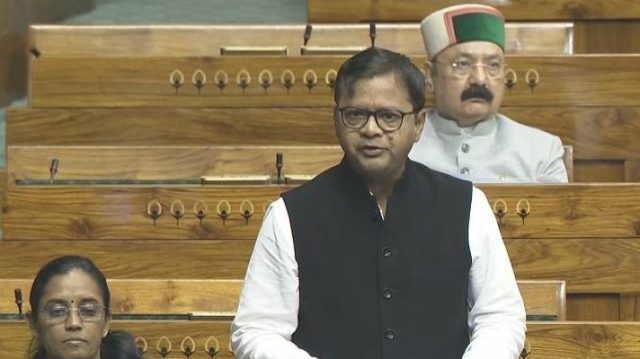
The Congress MP from Odisha’s Koraput, Saptagiri Sankar Ulaka heads the Parliamentary Standing Committee on Rural Development and Panchayati Raj. As the Viksit Bharat-Guarantee for Rozgar and Ajeevika Mission (Gramin) Bill, 2025, or VB-G RAM G Bill, came up in the Lok Sabha on Wednesday, Ulaka wrote to Speaker Om Birla, urging him to refer the proposed law to the Standing Committee for a detailed examination.
Ulaka tells The Indian Express in an interview that the Committee had called for a meeting with the Rural Development Ministry on December 29 so that it could brief it about the new rural jobs law and how it differs from MGNREGA. What was essentially a “right to a job” scheme has been reduced to a discretionary welfare scheme, he says, adding that the Congress Working Committee will meet on December 27 after getting feedback from people. Excerpts:


This Bill fundamentally changes the rights-based architecture into a centrally sponsored scheme. They have changed the funding pattern. It was 100% for labour wages and 75:25 for material costs. Now everything has been converted into a 60:40 sharing model, including wages and administrative costs. This will place a huge financial burden on the states, and many will struggle to implement it. The Centre now has the option to cut off funds for any state under Section 29(2) of the Act. This follows the Supreme Court ruling related to West Bengal, upholding the Calcutta High Court order in which it said the Act (MGNREGA) does not envisage a situation where the scheme will be put to cold storage for eternity. Unfortunately, what used to be a ‘right to a job’ scheme has now been reduced to a discretionary welfare initiative, where the Centre decides which state gets funds and which does not. They have converted the right to a job into a labharthi yojana kind of scheme.
We have called a meeting of the Rural Development Ministry on December 29, where they will brief us on the Bill and how it differs from MGNREGA. On January 5, we will also meet civil society organisations and NGOs to understand the ground-level impact. After that, the Standing Committee will submit its recommendations to the government. While these are not binding, they are important.
The Congress Working Committee is meeting on December 27 to decide the future course. We will decide how to take it up further. We are sure that, like the farm laws, this Bill will eventually have to be withdrawn. We will have an agitation throughout the country.
We want to meet our people, get their feedback and sense their perceptions. So we will take the feedback and that meeting has to be like, what is it that the people are thinking about on the issue? We will also discuss with civil society organisations and with all the people, and then we will have the CWC meeting that can be constructive.
The right to demand a job has been withdrawn. Once people understand that their right to demand work has been taken away, they will hit the streets. And I am sure this government will be forced to withdraw the Bill.


