7 min read
© The Indian Express Pvt Ltd



 Two of the candidates fielded by the BAP were earlier MLAs with the Bharatiya Tribal Party (BTP), the other tribal party in the contest, which is in the fray in 25 seats. (Express photo)
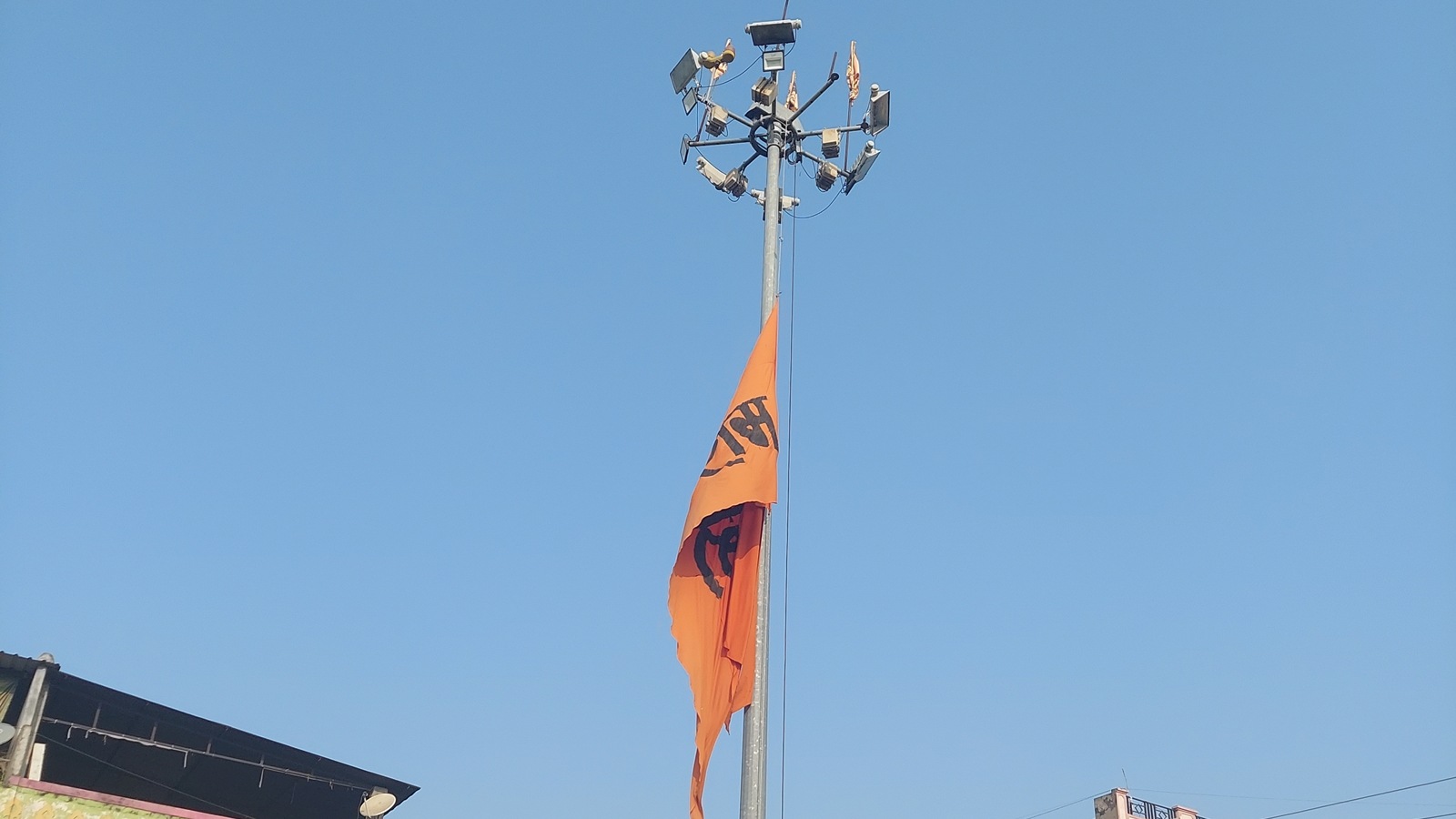
 AT THE main square of Bagidora town in the tribal-dominated Banswara district of Rajasthan, stands a tall post hoisted with a ‘Jai Shri Ram’ flag. It came up a few weeks ago, on Ram Navami, says Ganesh, a Bhil from Umedgarhi village nearby, replacing a tribal flag they had hoisted on ‘Vishwa Adivasi Diwas’ on August 9.
For Ganesh, the incident reconfirms his dissonance with both the BJP and Congress, and come November 25, he will vote for the new party in the fray, Bharat Adivasi Party (BAP). “Probably, they replaced the flag to please the savarnas (upper castes). Fine, then I’ll vote for those trying to please tribals,” he says.
 The BAP seems to be getting the most traction in the Mewar region, where the STs are the single largest vote block. (Express photo)
BAP president Mohan Roat, 44, who is contesting from Sagwara, lists the concern over dominant parties like the Congress and BJP “destroying our culture”, plus reservation and unemployment, as his party’s top concerns. “We have our own customary laws. Even the Supreme Court has said in some of its judgments that Adivasis are not Hindus. Hum dharmapurvi log hain (We came before religion),” Roat tells The Indian Express in an interview.
Formed only a few months before the Assembly polls, the party is contesting 27 seats (Rajasthan has 25 ST-reserved constituencies). “We are in a strong contest in 17, and hope to win 12-13 seats. In seats which are out of the scheduled areas, we will disturb electoral calculations of other parties,” he says. Two of the candidates fielded by the BAP were earlier MLAs with the Bharatiya Tribal Party (BTP), the other tribal party in the contest, which is in the fray in 17 seats.
The BAP seems to be getting the most traction in the Mewar region, where the STs are the single largest vote block. While they are 13.48% of Rajasthan’s population, in the Mewar region they comprise almost 50% in Udaipur, 76% in Banswara, 70% in Dungarpur and 60% in Pratapgarh, for example.
The Congress has traditionally done well in tribal-dominated constituencies. Of the 25 ST-reserved seats, the Congress had won 12 and the BJP 9 in 2018. Two seats were won by the BTP and two by Independents.
 Congress MP Rahul Gandhi came visiting this August. (Express photo)
Ganesh’s Umedgarhi village falls in the Bagidora seat that is currently held by the Congress. Nearby is the Mangarh Dham, a memorial site located on Rajasthan’s border with Gujarat, built to commemorate the ‘Adivasi Jallianwala’, in which 1,500 Bhils were massacred by British forces in 1913. It draws tribal visitors from Madhya Pradesh, apart from the two states.
In November last year, just ahead of the Gujarat elections, Prime Minister Narendra Modi had visited the site and delivered a speech here. Congress MP Rahul Gandhi came visiting this August. Modi also visited Sagwara, located nearby, on Wednesday.
Rajendra Kumar, a tribal security guard at the memorial site, says the key issue for them is reservations. “Though we are over 70% of the population here, the reservation has been capped at 45%… BAP is agitating for 75% reservation, and that is why everyone is supporting it,” he says, adding that he has heard that the government will give reservation to OBCs and general castes from within the current quota.
Roat also talks about reservation and questions the 50% quota ceiling, claiming it is only cited when they seek benefits as per their population and not in the case of others. “Our area is under the 5th Schedule of the Constitution (that has special provisions for tribal-dominated areas). But we are not getting commensurate reservation,” he says, adding that “the rampant unemployment” is behind the heavy migration out of tribal areas.
Mani Lal, who belongs to Udaipur Bada village near Mangarh, is a diploma holder who doesn’t have a job. According to him, sitting Congress candidate and minister Mahendrajit Singh Malviya has assured the Patidars (an OBC caste) in writing that he will get them 20% reservation. “Rahul Gandhi in his August speech announced 6% reservation for OBCs. How will we get jobs then?” Mani Lal asks.
On Wednesday, Malviya held a massive rally near Mangarh Dham, where he told people not to “waste their votes” on BAP, as it can’t form the government. While the crowds showed the lingering support for Malviya among tribals, many like farmer Ramlal in the rally were excited about BAP. “They won’t form the government. Not today, not tomorrow. But some day. We will wait. And when the big parties taste defeat, they will begin to see what we want,” he told The Indian Express.
Roat is confident about their performance. “In the past seven-eight years, we have worked purely for social awakening. We have not given priority to the party. Even today, while we have a party, we are only prioritising socio-political awakening of our people… Our ideology is strong,” he says.
In Garhi of Banswara district too, a seat held by the BJP, tribal sentiments are swaying towards the BAP. Arjun Lal, a farmer from Kesarpura village, says the visits by top leaders show the parties now “realise our strength”. “We (tribal parties) won two seats earlier. This tally could rise to seven this time,” he asserts.
About 190 km away, in Paliakheda village of Jhadol Assembly constituency in Udaipur district, Laxmilal Damod points out that tribals are “2 lakh of the 2.75 lakh voters here”. Accusing the parties of taking them for a ride, he adds: “All candidates are tribal. But when they win, all contracts go to Rajputs, while tribals become labourers.”
He is also concerned over a dam coming up in the area, saying “tribal water” will be channelised to non-tribal areas, while local fields go dry. The Centre’s Har Ghar Jal scheme has not come to these mostly hilly areas, with isolated houses spread out, he says.
The BAP president says water shortage is a major issue. “We want a solution for both farming and drinking. There are many dams in our area, which supply water to towns 1,000 km away, but it doesn’t reach our fields 3 km away.”
It’s the elder tribals who still have faith in the Congress and BJP which they have traditionally voted for. In Sarwai village of Bagidora, Sardar Singh Barjor talks about how since the time of his forefathers, his family has voted for the Congress. He is also worried about tribal vote getting further split between the BTP and BAP.
In Kherwara, adjacent to Dungarpur, Hairshlal Meena says that while his son supports the BAP, he will vote for the BJP.
Roat himself doesn’t rule out the possibility of going with the winning party post-elections. “Our priority is our issues. Whoever accepts our demands, we will go with that party,” he says.
Lalji Meena, an elderly farmer in Jhadol, however, is ready to break with the past: “Bohot daaru pee li, paise le liye. Kabhi ek ke saath gaye, toh kabhi doosre ke saath. Kisi ne kuchch nahin kiya. Ab teesre ke saath (We have taken enough liquor and cash. Sometimes we went with one party, sometimes with the other. No one did anything. Now it’s time to go with the third party).”
Santosh Kumar, a Bhil from Tejpur village near Banswara, sums it up: “Adivasi ab jaag gaya hai (Now, the tribals have woken up).”