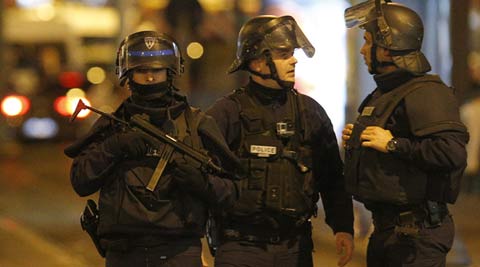


In the wake of Friday night’s terrorist attacks in Paris that left 129 dead and hundreds injured, President François Hollande, a Socialist, has surprised the opposition — both the centre-right Republicans (formerly the UMP), led by former president Nicolas Sarkozy, and Marine Le Pen’s far-right National Front — with his hardline security measures and proposals. But even as the Fifth Republic is rejigged in the aftermath of 13/11, are the Paris attacks forging a new global geopolitical reality? The “alliance” formed between Russia and France in Syria tends to bear that claim out. On Tuesday, Russian President Vladimir Putin ordered the Russian navy in the Mediterranean to work as allies with approaching French warships against Islamic State (IS) targets. While this is the first time since World War II that Paris and Moscow are working together, this cooperation acquires significance in the context of tensions between Moscow and the West ever since Russia’s annexation of the Crimea in March 2014.
Moscow’s announcement, hours before Putin’s order, that it was indeed a bomb — suspected to have been planted by an IS affiliate — which downed a Russian airliner in the Sinai on October 31, killing 224 people on board, built the premise for aligning Russian air strikes in Syria with Western efforts. However, even if Europe and Russia are on the same page today, that doesn’t translate into automatic cooperation between Moscow and Washington. The US has tended to see Russia’s military campaign in Syria as more an attempt to bolster embattled Syrian President Bashar al-Assad than an all-out assault on the IS, although Moscow has declared its willingness to join forces with the US. Washington remains particularly suspicious of Russia’s all-weather alliance with Iran and the likelihood of any high-level intelligence it shares with Moscow making its way to Tehran and even Damascus. Notwithstanding this, the burgeoning unity among the major powers on the need to defeat the IS is welcome.


