
Opinion Paring down exuberance
Adjustment of market expectations is response to lack of movement on ground. Government must take note.



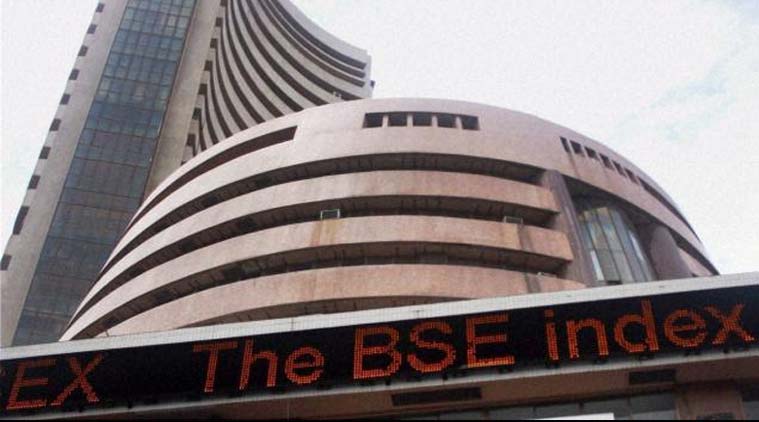 The benchmark BSE Sensex today regained 29,000-level to settle at over one-month high of 29,044.44 by rising 165.06 points. (Reuters)
This week, the research arm of investment bank UBS significantly adjusted its market expectations — its projected Nifty target for December is now 9,200, down from 9,600. Indeed, the markets aren’t as exuberant as before. Amid reports of disappointing corporate earnings growth for the quarter ended March 2015 and the government’s pursuit of the Rs 40,000 crore minimum alternate tax demand on foreign institutional investors, the Sensex fell for five consecutive days before gaining a little on Wednesday. The threat of a Greek exit from the European monetary union and the US federal reserve rate hike, as well as the slowdown in China, haven’t helped matters either. But the underlying factor seems to be the apprehension that things aren’t moving on the ground despite the Narendra Modi government’s promises.
Bank credit growth was just 12.6 per cent in 2014-15, compared to 13.8 per cent in 2013-14 and the latest job growth data for eight key sectors shows that it dipped to a three-quarter low in the third quarter of 2014-15. Given the distress in the rural economy and the poor performance of exports — they declined a whopping 21 per cent in March — they are unlikely to be the drivers of growth. So, all eyes are on investment. The private sector is waiting to take its cue from government — but the Centre is constrained by tight public finances and the states could take a while to prepare plans that reflect the Fourteenth Finance Commission award. Under these circumstances, the Centre is trying to lay the red carpet out for foreign enterprise and nudge projects off the ground by, for instance, holding monthly videoconferences between the prime minister and the state chief secretaries — but such innovations can only go so far.

The imperative for a rate cut is now unarguable. With even core WPI inflation, which strips out volatile food and fuel prices, at minus 0.36 per cent in March, a rate cut would go a long way in shoring up sentiment. Investors are also watching the Centre’s ability to steer contentious legislation — the land acquisition and GST constitutional amendments — through Parliament. That would go a long way in reviving animal spirits.
 Share
Share


