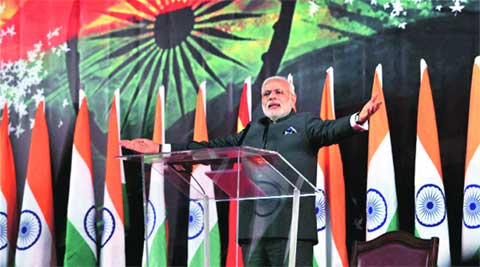

Judged by the old yardstick, Prime Minister Narendra Modi’s three-day visit to China did not produce any major political breakthrough. The Chinese leadership, for example, did not agree with the PM’s suggestion that the two sides clarify the Line of Actual Control pending the final settlement of the boundary dispute.The joint statement issued at the end of the talks in Beijing called, instead, for more confidence building measures to sustain peace and tranquility on the disputed boundary. Similarly, China has not really endorsed Delhi’s claim to a permanent seat at the United Nations Security Council or to membership of the Nuclear Suppliers Group, which would complete India’s integration into the global nuclear order. Modi, for his part, did not back China’s “one belt, one road” initiative, which President Xi Jinping has invested so much personal prestige in. It may well be that that the character of the India-China relationship has begun to change and must be judged by a new metric.
The two governments are no longer afraid of publicly airing their differences and recognising the need to manage them. In the past, they tended to hide their real difficulties in soaring rhetoric on the virtues of Panchsheel or peaceful coexistence. India had insisted, until recently, that the resolution of the boundary dispute was a precondition for the transformation of the relationship with China. Modi seems to have turned that argument on its head. Strengthening the partnership with China, the NDA government appears to believe, could produce a more favourable set of conditions for the resolution of the boundary dispute.


