
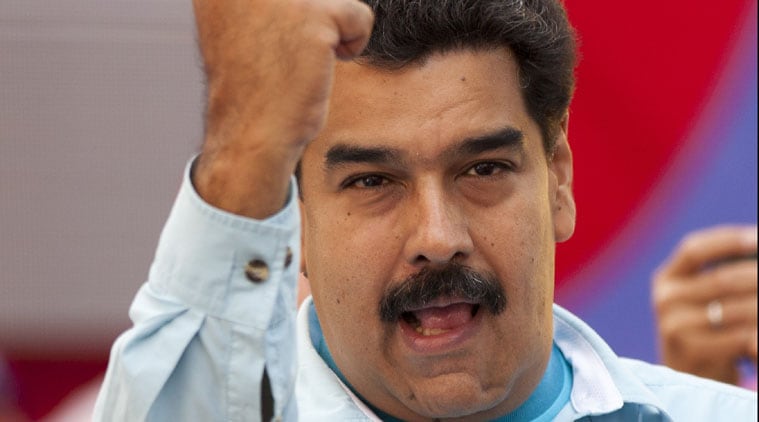
The opposition Democratic Unity (MUD) alliance’s overwhelming victory in Venezuela’s legislative elections is not, technically, the end of the “Bolivarian Revolution”. But, for all practical purposes, President Nicolas Maduro’s United Socialist Party (PSUV) is staring at the end of Chavismo after 16 years of absolute dominance. The opposition has won a “supermajority”, with 109 out of 167 seats. The MUD can now make constitutional amendments and even initiate the process for Maduro’s recall election, which, nevertheless, can’t happen before April 2016, when he reaches the midpoint of his term. Although governing power rests in the executive presidency, it may get difficult for Maduro to pass legislation. And the MUD’s own laws can be held up by PSUV members who staff all state institutions.
The late Hugo Chavez brought in a socialist paradigm and then perpetuated it through the ballot, using Venezuela’s oil revenue to offer the poor subsidies and freebies. That eased the existential struggle in the barrios but, as often happens with largescale redistribution, it ruined the economy. When oil prices crashed from $140 to $40, the Bolivarian revolution was doomed. Chavez’s handpicked successor was not his match in capability and charisma. As essential goods disappeared because of price caps and Venezuelan stores became synonymous with mile-long queues, as inflation soared past 100 per cent and the economy shrank by 10 per cent, many voted for the opposition just to put an end to their daily struggle for food.


