
Opinion The Niti gritty
What does the Planning Commission’s replacement do? Where is it going? It’s not at all clear.
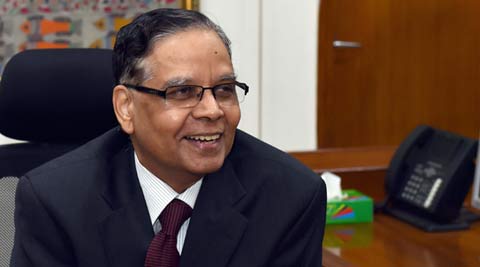


 While technically enjoying the rank of cabinet minister, the distinguished Columbia University economics professor, Arvind Panagariya isn’t even invited to cabinet meetings.
Barely five months after coming into being, the Niti Aayog, the successor to the now-disbanded Planning Commission, seems to be facing an existential crisis. According to a report in this paper, its vice chairman Arvind Panagariya is apparently not sure of either his status in the government or the Aayog’s role in policymaking. While technically enjoying the rank of cabinet minister, the distinguished Columbia University economics professor, unlike his predecessors in the commission, isn’t even invited to cabinet meetings. In contrast to the Planning Commission, which was taken seriously for, among other things, being influential in matters of resource-sharing and fund allocations from the Centre, state governments don’t seem to be particularly in awe of the new institution.
This scenario is only a reflection of the basic lack of clarity on the Niti Aayog’s role — over what it is supposed to do, and how. True, the old Planning Commission approach of formulating five-year plans and setting individual sectoral targets wasn’t really suited to a liberalised economy, which largely works based on decentralised production decisions taken by private players responding to dynamic market signals. No less of an anachronism in an increasingly federal polity was the Centre fixing plan sizes of states, and even deciding which schemes or sectors to spend their monies on. There was, hence, both a compelling economic rationale as well as symbolism in scrapping an overbearing institution that was viewed by many as one of the last vestiges of Nehruvian socialism. But its replacement suffers from the opposite problem of being entrusted with a vague mandate of evolving “a shared vision of national development priorities and strategies with the active involvement of states”. What exactly that is, let alone how it’s to be achieved, isn’t clear.

There is no doubting the need for an institution that can engage in strategic economic thinking — which a finance ministry, with its more short-term revenue or growth concerns, is ill-equipped to do — or one that can influence states in carrying out reforms and focusing on areas (farm extension, water conservation, empowering local bodies, etc) that they wouldn’t in the normal course. But such constructive engagement is not possible without said institution acquiring sufficient legitimacy and heft in the policy establishment, apart from a role in resource allocation to states that has now been totally usurped by North Block. The last bit is important. While it’s great to be called a national policy think-tank, the fact is, at the end of the day, there is more respect for a body that can proffer more than just sage advice.
 Share
Share


