
Opinion Russia is hedging against a full ceasefire in Ukraine. Why?
The continuation of land and air wars, albeit with restrictions on attacks on energy infrastructure, is unlikely to reduce the intensity of fighting
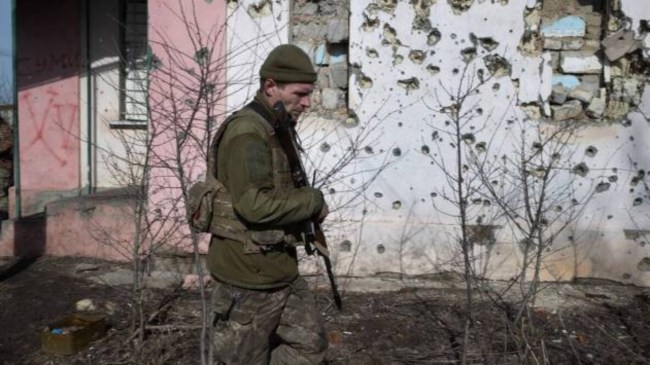 Since a fair amount of Russia’s earnings come from the sale of oil, Ukraine has been aggressively targeting Russian fuel depots and oil refineries. (Express File Photo/ NYT)

US Secretary of State Marco Rubio and Russian Foreign Minister Sergei Lavrov had held in-person talks on March 15. Soon after, Ukrainian President Volodymyr Zelensky agreed to a 30-day ceasefire. Both developments set the stage for a two-hours-plus phone conversation on March 18 between US President Donald Trump and his Russian counterpart Vladimir Putin. While their separate readouts talk of a ceasefire including in the Black Sea as a prelude to ending the “unnecessary war” and improving Russia-US relations, there were significant differences as well.
The US readout states that “both leaders agreed the movement to peace will begin with an energy and infrastructure ceasefire, as well as technical negotiations on implementation of a maritime ceasefire in the Black Sea, full ceasefire and permanent peace.” These negotiations, reportedly to be held in Jeddah, will be led by US National Security Adviser Mike Waltz and Secretary Rubio.

The Russian readout, on the other hand, mentions a 30-day hold on attacks on Ukraine’s energy facilities and infrastructure for which Putin gave immediate orders. He also agreed that Ukrainian soldiers surrounded in the Kursk region would be treated as per military conventions if they surrendered. Additionally, Russia approved the exchange of 175 prisoners each by both sides with an additional 23 seriously wounded Ukrainian soldiers as a “goodwill gesture”. But importantly, the Russian readout mentions that the key condition for preventing escalation is: “Complete termination of foreign military assistance and intelligence information to Kyiv”. In other words, Russia appears to be hedging against a broader, overall ceasefire unless its “legitimate security interests” are met.
Adding to the strategic complexity and uncertainty are the conflicting strategic objectives of each side. Russia wants complete control over captured Ukrainian provinces of Donetsk, Luhansk, Kherson and Zaporizhia; a neutral Ukraine; and a “complete cessation of foreign military aid and intelligence information to Kyiv”. Ukraine, on the other hand, wants all of its territory back, security guarantees from NATO, and compensation for the war damage inflicted on it by Russia.
Hence, although the March 18 developments seem to represent a de-escalation in the ongoing three-year-old war, the emergent reality doesn’t look promising. A similar energy facilities ceasefire had already been discussed earlier in August 2024 but couldn’t be progressed. Perhaps this is why Zelensky stated he had “scepticism”, but “if there is a partial ceasefire, it’s a positive result.”
Since a fair amount of Russia’s earnings come from the sale of oil, Ukraine has been aggressively targeting Russian fuel depots and oil refineries. Kyiv, with drones and foreign-supplied missiles, has also attacked Moscow’s military-industrial infrastructure which the Russians utilise for sustaining combat in Crimea (for example, the Kerch Bridge). On its part, Russia has been attacking Ukraine’s electric power production, military-industrial facilities and cities, and in the past three years, has destroyed much of Ukraine’s power grid. All this while, a wider land, air and naval war has been going on. While the naval war, mainly in the Black Sea, may conclude under the proposed ceasefire, the land and air wars will continue.
Although the energy infrastructure ceasefire is expected to set the stage for a “complete ceasefire” and finally, “permanent peace”, military history informs that the most intense fighting usually happens towards the closing stages of a war. This is when opposing sides seek to maximise their gains either to add territory and use the gains as negotiating tools. Both sides tend to employ maximum combat power, which in turn could imperil that energy infrastructure ceasefire.
Wars are fought to fully subjugate an adversary. A rambling, incoherent war is a game that is not worth the candle. Hence, the continuation of land and air wars, albeit with restrictions on attacks on energy assets and infrastructure, is unlikely to reduce the intensity of fighting till a complete ceasefire is achieved. On March 19 — a day after the Putin-Trump talks — Moscow claimed that a Ukrainian drone had hit an oil depot in southern Russia, even as Ukraine claimed that Russia had struck its electrical grid, railway, as well as a hospital.
Some reports indicate that the Trump administration is espousing achieving “peace” in about 100 days. Remember it took two years of negotiations to end the fighting in the Korean War, but no peace treaty was signed. Officially, the Korean War hasn’t ended; only an armistice is in place. If the US-West ceases, wholly or partially, its military and intelligence assistance to Kyiv (as demanded by Putin), Moscow could use the protracted timeframes to capture more areas from a weakened Ukraine.
Further, US and Russian working are dwelling upon the specifics of the ceasefire while keeping Europe and Ukraine aside. The White House’s emphasis on improving US-Russia bilateral relations does tend to suggest that the Trump administration may be willing to throw Ukraine and Europe under the bus. To quote Nigel Gould-Davies, a senior fellow for Russia and Eurasia at the International Institute for Strategic Studies, “It took Gorbachev four years to abandon long-standing Soviet commitments in Eastern Europe, it has taken four weeks for the US to call into question fundamental, longstanding commitments to Europe.”
The writer is a retired Brigadier from the Indian Army

 Share
Share


