
Opinion A Parliament for the people should be inaugurated by the people
That would convey a message that the world’s largest democracy has achieved much but is conscious of the vast distance that it still needs to cover
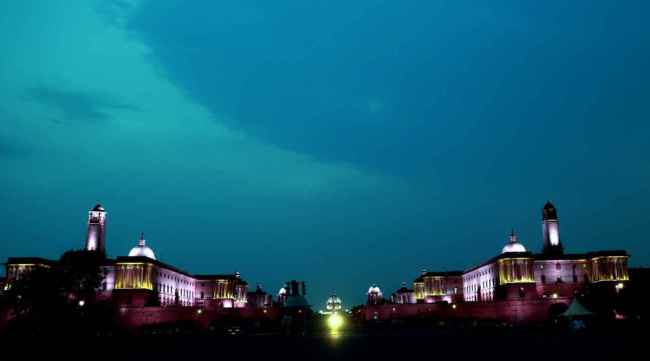 The new Parliament building to be inuagurated on May 28. (Express Photo: Amit Mehra)

The inauguration of the new Parliament building has become controversial. I am not going to enter into the propriety of the Speaker’s or the government’s decision about its inauguration by Prime Minister Narendra Modi or some of the opposition parties’ argument that it should be undertaken by the President as she is the head of state. What I would like to sketch out is an idea of a possible way in which the new building could have been inaugurated. Many would consider my idea naïve but I do think it embodies what a Parliament should stand for amidst the contentions of the present and controversies in the future.
Parliament is the seat where the representatives of a sovereign people meet. It draws its authority from the people in accordance with the Constitution and the law. In fact, it would not be an exaggeration to assert that without the people’s mandate, the building will be nothing but an empty shell. Hence, the focus of the inauguration could have been on the people directly instead of members of the political class, including current members of Parliament and high state officials.

The Constitution is committed especially to the welfare of the most disadvantaged among the Indian people. It would therefore have been appropriate if the new Parliament building was inaugurated by the poorest and weakest and the most discriminated against to renew this constitutional commitment. It would signify a promise to them that Parliament, embodying the sovereign will of the people, will work to realise the constitutional vision with renewed vigour. Indeed, that would have also been in keeping with the vision of the Father of our Nation and the philosophy of Antyodaya, which is the guide of the ruling dispensation and of the Sangh Parivar. It is a noble doctrine, entirely in harmony with the spirit of the Constitution and tenets of human welfare embedded in India’s civilisational core.
Cynics may well consider the opening of the new Parliament building by the poor and the weak, coming from all parts of the country and coming from all faiths, to be tokenism, divorced from the reality of politics. Questions regarding how such persons would have been chosen would also arise. But the poor, the weak and the homeless can be found in cities and villages and kasbas spread through the country. It is from among them that they would have been found and they would be without party or ideological affiliations. Their only affiliation would be their common humanity and their hope that the constitutional promise would be fully realised through Parliament one day and that the day would dawn soon.
The state is not an end in itself. It is a political manifestation of society and its purpose is the defense, security and welfare of society. A state is meant for the people and not the other way around. That is the basic principle of the Constitution too; for its focus is on individual and social welfare. And the state is its instrument to achieve that in a harmonious form. Media reports indicate that the inauguration of the new Parliament is going to be almost entirely a state function. It can, of course, be argued that the representatives and holders of political office who will be present on the occasion would be the people’s representatives. There is merit in this argument but the vision of a new Parliament building being dedicated to the people directly by themselves has a different resonance.
Imagine a ceremony where the poor and the weak, not in fine clothes but in their everyday wear, are lighting lamps to open the new Parliament building. That would have conveyed a message to the country and the world that the world’s largest democracy has achieved much but is conscious of the vast distance that it still needs to cover before it realises Gandhiji’s wish of wiping every tear from every eye. It would also have been a practical manifestation of Prime Minister Narendra Modi’s call for “Sabka Saath, Sabka Vikas, Sabka Vishwas, and Sabka Prayas”. There is no doubt that Modi is the tallest leader of the country today and he will only add to his stature in the country and outside India if the new Parliament building carries a plaque at a suitable place, which says that it was inaugurated by the “Indian people”.
It should never be forgotten that the Parliament will represent the will of one-sixth of humanity. And that will is demonstrated not through the coercion of a state apparatus but through free and fair electoral exercises that allow the people to choose their representatives. Crores of people queue up to exercise their electoral choices. All I am pleading for is that they be allowed to directly inaugurate the new Parliament building where those they choose will work for their welfare. Naturally, such an inauguration can in no way diminish the significance or importance of Modi who is the most popular leader of the country. He owes that position not to holding the country’s most significant political office but to his social popularity which in turn has led him to that office.
The writer is a former diplomat
 Share
Share


