
Opinion Housing societies’ discriminatory rules: Yes, it is about caste
Those rolling their eyes about 'why get caste into this', you are probably upper caste, and have probably never questioned why all your friends, professors, bosses, neighbours have similar surnames, very different from those of your helps, drivers, sweepers.
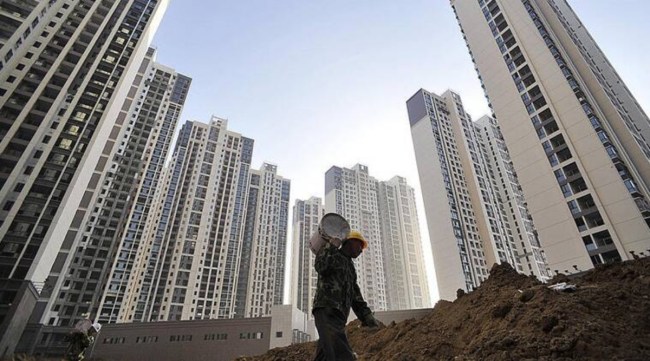 Yashee writes: In many swanky apartment blocks across Indian cities, lifts are segregated. (Representational image)


We have all heard — and many of us have seen, though we don’t always admit it — that earlier, “servants” had to enter the house through a different door. That earlier, it would be against the natural order of things for lower-caste servants to darken the main door, and god forbid, bump into a resident of the house. This “earlier” is important when the urban upper-caste person talks about caste — all of this happened in a remote, quaint past, which makes it rather excusable, and definitely has nothing to do with us, the shining new people of the shining new cities.
And yet, in many swanky apartment blocks across Indian cities, lifts are segregated: “maids and other service people ” are supposed to use specially designated lifts only, as we are still not comfortable in sharing spaces with the not-so-shining. Recently, it was reported that residents of a Delhi locality are opposing a sports facility for government school kids in their area, because “outsiders” will come in and “create a security issue”. One wonders if the residents would have been as concerned if the “outsiders” were children of foreign embassy staff. In a housing society I visit, children of domestic helps are not allowed to play in the local park. In another, helps are not allowed to sit in groups in common areas as “their chatter disturbs ground floor residents”.

The argument in defence of such segregation is usually “security”, because apparently people who work in houses suddenly become a threat to those very houses the moment they enter lifts or common areas. Another is that residents will have to wait longer for lifts if the service staff are using them too. The fact that service staff will have to wait much longer if there is only one lift for them is of course ignorable.
So why do we so naturally, and with so little consequence, dehumanise those of a class lower than us? The answer is simple — in India, class still overwhelmingly overlaps with caste, and as a civilisation, we have internalised the idea that the “lower” castes are simply lower beings. We are comfortable with not just inequality, but with that inequality playing out in vicious, humiliating ways in the most everyday of things: restricting access to lifts, mistreating security guards, denying a share to service staff in the very facilities they work to maintain.
Those already rolling their eyes about “why get caste into this”, you are probably upper caste, and have probably never questioned why all your friends, professors, bosses, neighbours have similar surnames, very different from those of your helps, drivers, sweepers.
Class discrimination is reprehensible in itself, but caste adds a more pervasive, more pernicious dimension to it. After all, it is not just the lower class that is discriminated against in housing societies, research exists to show that a lower caste person is less likely to be sold a house in a posh locality, despite having the money to pay for it. In this, people are mimicking villages, where castes have traditionally lived in clusters of their own.
📣 New working paper on residential segregation in India. We’ve been working for 5 years on this.
8 facts about residential segregation in India, from new administrative data. The situation is not great 🧵 1/N pic.twitter.com/wcBaQVDftr
— Paul Novosad (@paulnovosad) June 15, 2023
A paper published this month in Washington DC-based Development Data Lab (‘The Segregation of Muslims and Scheduled Castes in India’) says, “We find that urban areas are just as segregated as rural areas for SCs, and even more so for Muslims. India’s Muslims and Scheduled Castes are about as segregated as Black people in the United States today.”
Another 2021 study of 147 Indian cities, whose contributions were from IIM Bangalore and Krea University in Andhra Pradesh, says, “The extent of segregation in the largest metropolitan centers with over ten million residents closely tracks cities that are nearly two orders-of-magnitude smaller. We also show how residential segregation across a large swathe of urban India mirrors the spatial geometry of rural India.”
For those who asked, Bengaluru is not an exception. Local (intra-ward) segregation is high across the country.
Here is a map my co-author, @sumitrmishra, prepared, showing such segregation for every town in India with at least O.3 M residents (point sizes scaled by city size). https://t.co/osyjGbnPP4 pic.twitter.com/MfWICHEKZ7
— Deepak Malghan (ದೀಪಕ ಮಲಘಾಣ್) (@deepak_malghan) June 15, 2023
Of course, this comfortable acceptance of “those different should stay away” turns around to bite the upper castes too at times — the trouble many “batchelors” have in finding a house shows that if your normalise discrimination, the categories being discriminated against will only grow.
Dr BR Ambedkar had asked Dalits to leave villages for cities, in the hope that modernisation in urban settings would loosen the death grip of caste. Many decades later, our gleaming apartment complexes are beacons of that modernisation. But they continue to hide that ancient dirty secret — caste.
Yashee.s@indianexpress.com
 Share
Share


