
Initially, the idea of dignity came from religious texts. In the last two centuries, it has developed as an enforceable right through constitutional law. The idea of dignity flowing from constitutional law is attractive because it enforces different components of “dignity” as defined in law or evolved through court verdicts. Different issues emerged as “grievances” of different groups, endangering “social order” and leading to the constitutional systems acknowledging variable components of dignity at different stages. In most cases, institutions have spoken and acted to try and maintain a balance, considering the impact and gravity of the issues raised. Given this balancing act, substantive justice has often not been done while developing this concept as an enforceable right. As a result, dignity has become a flexible concept.
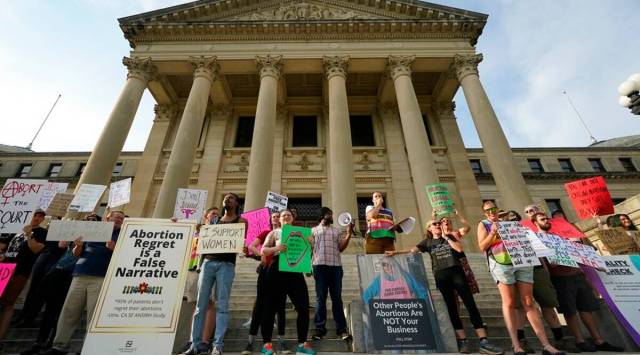
The approach of the US Supreme Court in overruling the principle of Roe v Wade (1973) by stating that the “right to abortion is not deeply rooted in American history and tradition” is an example. The court is also of the opinion that “liberty” alone provides little guidance and “historical inquiries” are essential whenever it is asked to recognise a new component of liberty. Given the salience of popular concerns and views, the question is: How should societal change and morality, which has found itself as the basis of constitutional morality, be dealt with?


In the Indian context, on the issue of what is termed as “unnatural sex”, in a 2014 judgment, the Supreme Court took a view that carnal intercourse among same-sex individuals is against nature and hence, criminal action was justified. However, within four years, a larger bench overruled this view declaring the act as being the choice of “consenting adults” as there has been a shift from reproductive “instinct to erotic desire” and that aspect is crucial in understanding modern notions of sexuality. Again, in the debate on women’s entry into Sabrimala Temple, a five-judge bench initially decided in favour of women’s entry. Immediately thereafter, another five-judge bench decided to check its correctness by referring it to a further larger bench, which is pending as of now.
We have another set of examples in Bijoe Emmanuel’s case (1986). The Supreme Court interpreted rights under Article 25 to uphold the claim of school children of the Jehovah’s Witness faith wherein they asserted their right not to sing the National Anthem of India. The Court said that “the real test of true democracy is the ability of even an insignificant minority to find its identity under the country’s constitution”. Muslim men’s claims of sporting beards or Muslim women’s claim to the right to wear headscarves have already reached the courts in the past. We have seen the reluctance of even the highest court in upholding such rights.
The courts, at times, define the constitutional components of dignity very liberally and broadly, and sometimes, in a narrow manner. Both ways of defining the constituents of dignity have been subjected to their re-definition, considering the change in the social order as perceived by the courts. The conceptual expansion of the right to life, then, becomes a fluid concept. Extremely arbitrary administrative actions continue to remain on statute books like the consequential action of interreligious consensual marriages but in contrast, to uphold the dignity of two individuals, they can live together without getting married.
Accordingly, in the definition of dignity, the dominant political will has prevailed at an institutional level. The outcome, at times, has gone on to protect the widest notion of the concept of dignity to do justice but in many cases, errors are apparent in understanding the concept.
The US Supreme Court’s view overruling Roe v Wade appears to be on the lines of majoritarianism. Similarly, in the Indian context, there have been administrative actions, which on the face of it have been arbitrary. There is less and less respect for civil rights guaranteed under the Constitution. Many feel targeted by the dominant political narrative as the fundamental values protecting their dignity are being questioned and not defended.
The writer is an advocate at the Supreme Court of India


