
Opinion A new rule shows how little Delhi University trusts its teachers
The recent move by the DU administration to monitor the kind of conferences or seminars the professors are attending, or the papers they are presenting, has further intensified the fear of surveillance
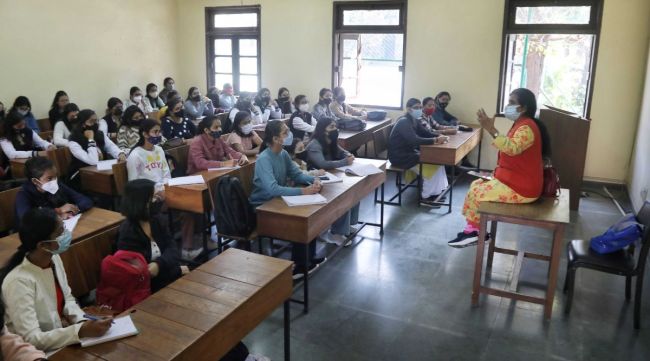 The danger is that our universities, far from radiating as vibrant sites of debate, dialogue, critical thinking and rigorous studies, are fast degenerating into a Kafkaesque space filled with fear, doubt, mistrust and surveillance


Imagine the state of a university that does not trust its teachers and researchers, and discourages them from thinking, writing, attending conferences, and presenting their academic papers with freedom. It is unfortunate that Delhi University — one of our leading public institutions — is moving towards this path. Recently, it has come up with a new rule, or what I would characterise as an instrument of surveillance. You may be a brilliant professor/researcher, but it will not be easy for you to participate in a national/international conference. As per the new rule, you need to obtain prior approval from a special committee appointed by the university bureaucracy. In fact, you must submit the full text of the paper two months before the event, besides the conference brochure. The committee will not only evaluate the merit of the paper, but also the “credentials of the organising body.” And only if the “experts” of the committee feel satisfied can you go ahead.
A dangerous move of this kind cannot be seen in isolation. In fact, it further intensifies the all-pervading fear that surrounds the prevalent academic milieu in the country: The fear of being perpetually monitored. And if what you think, teach and write is not in tune with what is being projected as the dominant truth of our times — say, the supremacy of hyper-nationalism; the discourse of a hyper-masculine Hindu supremacist “Viksit” Bharat; and above all, the valorisation of what the New Education Policy (NEP) regards as “Indian knowledge traditions” — you could be in trouble. It is not altogether impossible that you might be branded, stigmatised and identified as an urban Naxal, a Gandhian “romantic,” or a left-liberal ideologue.

Many teachers feel that it is becoming exceedingly difficult to speak freely in the classroom, and cultivate the art of critical thinking and nuanced understanding of culture, politics and religion. They fear that their lectures can be recorded, and even an FIR can be filed against them for the alleged “anti-national” discourses in the classroom. The recent move by the DU administration to monitor the kind of conferences or seminars the professors are attending, or the papers they are presenting, has further intensified this fear.
Moreover, this kind of censorship is likely to affect social sciences, liberal arts and humanities more than natural sciences. Not many politicians and bureaucrats are interested in what, say, theoretical physicists are writing and speaking. However, because of their very nature, what historians, political theorists and sociologists write and teach has distinctively visible political implications. For instance, a research paper on the rise of Hindu nationalism, a seminar on the Dalit critique of Brahminism, or, for that matter, a conference on Naxalism and “encounter deaths” in Jharkhand and Chhattisgarh might not be appreciated by the status quo. And hence, the repression of academic freedom is likely to diminish the critical spirit of liberal arts and social sciences, which have already been devalued by the neoliberal/market-driven/instrumental logic that has reduced education into a mere technical skill needed for economic growth, or what the corporate culture regards as “productivity.”
What has happened to DU can happen to any other public university. The danger is that our universities, far from radiating as vibrant sites of debate, dialogue, critical thinking and rigorous studies, are fast degenerating into a Kafkaesque space filled with fear, doubt, mistrust and surveillance. It is high time all those who still cherish the value of libertarian education come forward, raise their voice, and protest against the kind of bureaucratic measure DU has taken to curb the spirit of academic freedom and diminish the dignity of the teaching community.
The writer taught sociology at JNU for more than three decades

 Share
Share


