
Opinion A class 10 student writes: India’s education system is failing my generation
To fuel the development of our country, it is important to teach new and coming generations how to take chances. We have the brains, we lack the audacity
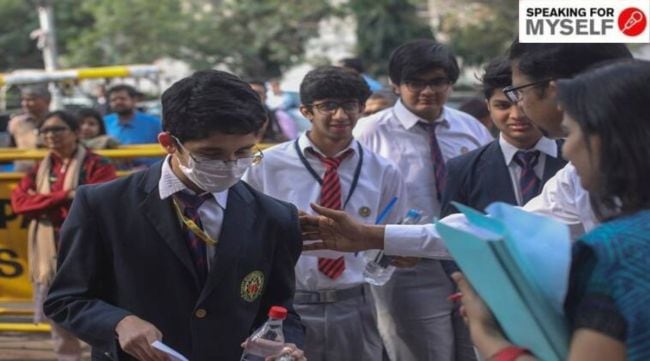 "How is a system that only tests students’ ability on one metric, that is, memory, an accurate indicator of their intelligence?," writes Yashasvi Saraff. (Representational/ File)


I sit in a classroom with 45 people every day. Together, we learn (or try to), grow up, and prepare for our timely departures to college. Given the number of people running the same race, we are all bound to be and are competitive. But each of us fosters an intense fear. Fear and a question: What if I’m the straggler?
Why is that?

With the overemphasis on exams and tests, with marks being the only priority in most cases, real learning takes a back seat. Teachers often suggest students do “rote learning” in certain (most) subjects to better improve their chances of scoring in their examinations. This has led to generations of students acquiring and discarding knowledge without comprehension.
One of the major goals of the National Education Policy, 2020, was “emphasis on conceptual understanding rather than rote learning and learning-for-exams.” This has not yet happened. The pandemic interrupted our lives, yes, but I haven’t even seen an attempt to shift focus from rote learning around me. Indian students simply do not have the tools for the development of cognitive skills. This system is the root of students’ inability to think critically and form opinions of their own.
Indian students are programmed to fear failure. We are told to memorise our books as if we are hard drives, and then hurl them onto our exam papers, the way one would search for information on their computers. Failure in academics is seen as a grave error. Failure is a dead end.
This makes no sense to me. How is a system that only tests students’ ability on one metric, that is, memory, an accurate indicator of their intelligence? This outlook on failure creates a direct link between grades and self-worth. If academics are your sole source of validation, something isn’t right. This system is designed to be one-size-fits-all. Turns out one size does not, in fact, fit all 1.8 billion of us.
I understand why it works. According to UNICEF, there are over 1.5 million schools in India with about 8.5 million teachers and 250 million students. With such a large population, the only way to distinguish deserving candidates for college recruitment is through competition. I accept this. There will always be competition, we just need to make the idea of “losing” less stigmatised. School isn’t everyone’s forte, your grades are no indication of whether or not you will have a “good” life.
Some may argue, “But so many ‘victims’ of the Indian education system have achieved so much. Some of the world’s most successful personalities come from India.” To that, yes they have, and I think they are a chief example of the problem. Today, India has produced CEOs for Google, Microsoft, Adobe, Mastercard, Starbucks and countless others. And I do not mean to disregard their accomplishments. It is a phenomenal achievement. However, Indian schools’ utter disregard for social communication skills and leadership qualities has led to a generation of CEOs and one of no founders, creators, or innovators.
To fuel the development of our country, it is important to teach new and coming generations how to take chances, and how to stop fearing failure. We have the brains, we lack the audacity. If students are contemplating the “purpose” of going to school, something is wrong. We want to be educated for the sake of education. Allow learning to go beyond the grading system.
The writer is a Class 10 student at La Martiniere Girls’ College, Lucknow

 Share
Share


