


Tags:


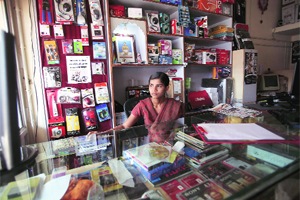
The big idea of the next decade is to turn small-town skills and vocations into businesses. The next wave of entrepreneurship will be the new growth driver.
Few things have changed in India in the recent past as much as the way we do business. When I think of how business will change in the next decade,I must explain how the concept and perception of entrepreneurship has changed fundamentally in the last 15 to 20 years.


The game-changer was IT. When companies like HCL and Infosys started and succeeded,the perception began to change. Entrepreneurship started looking like a good and clean option that did not require big connections. Anyone with a great idea could do it. The next wave of change came with ITeS firms and BPOs such as Daksh and Spectra Mind. They had the ability to raise money. Venture capital started coming in.
The third wave of entrepreneurship was based on new-age technology: for example,sites like Naukri.com,Educomp.com and makemytrip.com. Now,the perception that a smart idea can lead to a billion-dollar company has firmly taken hold in India. Young Indians who want to start companies are not frowned upon.
I always tell young entrepreneurs that they should use their college/university degrees as an insurance policy and not a noose. If they use it as a noose,theyll just take a safe job. But if they use it as insurance,then they can try out their idea. If it doesnt work,they can fall back on a job.
Thats what I did. I did my MBA from IIM,Ahmedabad,in 1992 and worked on three jobs before starting makemytrip.com in 2000. The internet gave me the perfect setting and the platform to build my business. Failure is less fearsome now. Big companies now see entrepreneurs as good people to employ. A failed entrepreneur is a valuable asset to a company because of the experience he/she has gathered.
So,the next 10 year starts with a new environment. Access to capital is much easier now,thanks to angel investors,venture capital funds,seed funds,etc. Mentoring by organisations like The Indus Entrepreneurs TiE is the most important thing that young entrepreneurs need,but often dont get.
What will happen in 2011-2020? And what should happen? Both have the same broad answer: The spread of entrepreneurship beyond big cities and colleges. There are success stories of non-IIT,non-IIM entrepreneurs. But entrepreneurship hasnt really reached Tier-II and Tier-III cities.
I dont think most people in smaller towns and cities know how to turn their vocations into business. Someone might be a very good tailor or a weaver but will he ever become a designer? Probably not. Hell be the back-end guy. The designers will still come from institutes like NIFT. But what is a fashion designer? Hes essentially a tailor. Similarly,someone might be very good at carpentry and sculpting. But is he going to become the next Anish Kapoor? Probably not. Can a leather craftsman from a Tier-III city create a brand like Hidesign? No.
So,how will talented Indians in smaller cities become entrepreneurs? TiE is doing its bit by going to smaller cities and mentoring entrepreneurs. But the government has a bigger role to play.
Ministries like MSME the Ministry of Small and Medium Enterprises should take a more active role. The National Skill Development Corporation NSDC is one of the most positive developments in this area. Its doing some fantastic work in promoting pride in acquiring a skill. Thats often lacking in our society. NSDC can help acquire the skill,position the skill the right way and then bring in funding. Thats what makes me optimistic that theres a chance that Tier-II and Tier-III cities will produce entrepreneurs. And this new entrepreneurship will be a new growth driver.
Its tough to predict exactly when this will happen. But its not unrealistic to predict that it can happen in the next decade. Right government policies and plenty of mentoring those are the keys.
Theres a tie-in here between the next set of entrepreneurs and the next big wave of entrepreneurship we will soon see: education. Businesspersons need to be educated and education is the big business opportunity in India as we start this decade. I dont think we have even scratched the surface in this area. Private investment in education and training,and big ideas from small towns thats my idea of business 2020.
The author is Founder and CEO,makemytrip.com
amp; The Last Decade
The Indian MNC
Around 2001,India in the foreign imagination was an unhelpful voice on the phone. That would soon change. The outsourcing phenomenon,in fact,exposed Indian companies to Western management practices and proved that India stood for reliable,low-cost,high-quality products and services. Add to this mostly under-leveraged Indian firms ability to access some serious capital in our seriously booming economy,and you had the videshi movement. The decade definer for business in 2001-2010 was the emergence of Indian MNCs India Inc. buying and running big companies overseas.
The sectors
Indian companies made overseas buys in 2001-2010 across all major sectors: auto,energy,IT,chemicals,steel,FMCG,banking and pharma. The one common feature was that the buys demonstrated Indias corporate strength hardly any of the overseas acquisitions were low-grade.
The Big buyer
The Tatas,of course. As the 1991-2000 decade was ending,the Tatas bought the venerable British tea products company Tetley 433.6 million. That set the tone for the 2001-2010. The group bought Anglo-Dutch steel giant Corus in 2007 12.1 billion,Jaguar and Land Rover from US car maker Ford in 2008 2.3 billion,plus a clutch of relatively low-cost high-value buys: Singapores NatSteel 2004,288 million,Americas Eight OClock Coffee 2006,220 million and most recently,British Salt 93 million.
The other buyers
Among the other prominent overseas buys of the last decade were Aditya Birla Groups Hindalco acquiring US aluminum sheet maker Novelis 2007,6 billion,and before that Canadas Algoma Steel 2007,1.6 billion and Americas Minnesota Steel 100 million.
Essar bought US steelmaker Esmark 2008,1.1 billion and then US-based Trinity Coal 2010,550 million,VSNL bought US submarine cable manufacturer Tyco Global Network 2004,130 million and Canadas Teleglobe 2005,239 million. Reliance Gateway Net bought Flag Telecom 2003,191.2 million. Videocon took over French Thomson SAs tube business 2005,292 million and Korean Daewoo 2006,731 million. Dr Reddys Labs bought German Betapharm 2006,570 million,Bharti Airtel bought the African assets of Kuwait-based Zain Telecom 2010,10.7 billion and Mahindra amp; Mahindra bought Korean utility vehicle maker Ssangyong Motor Co 2010,463 million. This is not an exhaustive list by any means.
Shruti Ravindran


