3 min read

Journalism of Courage



MAYY EL SHEIKH amp; DAVID D KIRKPATRICK
The sheer number of women sexually abused and gangraped in a single public square had become too big to ignore. Conservative Islamists in Egypts new political elite were outraged at the women.
Sometimes, said Adel Abdel Maqsoud Afifi,a police general,lawmaker and ultraconservative Islamist,a girl contributes 100 percent to her own raping when she puts herself in these conditions.
The increase in sexual assaults over the last two years has set off a new battle over who is to blame,and the debate has become a stark and painful illustration of the convulsions racking Egypt as it tries to reinvent itself.
Under President Mubarak,the police kept sexual assault out of the public squares and the public eye. But since Mubaraks exit in 2011,the withdrawal of the security forces has allowed sexual assault to explode into the open,terrorising Egyptian women.
Women,though,have also taken advantage of another aspect of the breakdown in authority by speaking out through the newly aggressive news media,defying social taboos to demand attention for a problem the old government often denied. At the same time,some Islamist elected officials have used their new positions to vent some of the most patriarchal impulses in Egypts traditional culture and a deep hostility to womens participation in politics.
The female victims,these officials declared,had invited the attacks by participating in public protests. How do they ask the Ministry of Interior to protect a woman when she stands among men? Reda Saleh Al al-Hefnawi,a lawmaker from the Muslim Brotherhoods political party,asked at a parliamentary meeting on the issue.
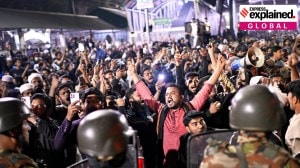
The revolution initially promised to reopen public space to women. Men and women demonstrated together in Tahrir Square peacefully during the heady 18 days and nights that led to the ouster of Mubarak. By the second anniversary of the revolution,on January 25,the symbolic core of the revolution Tahrir Square had become a no-go zone for women,especially after dark.
During a demonstration that day against the new Islamist-led government,an extraordinary wave of sexual assaults at least 18 confirmed by human rights groups shocked the country,drawing public attention from President Mohamed Morsi and Western diplomats.
On Sunday,the Morsi government convened a meeting of women to discuss plans for their advancement. So far,though,its most tangible measure is draft bill to criminalise sexual harassment.