


Tags:


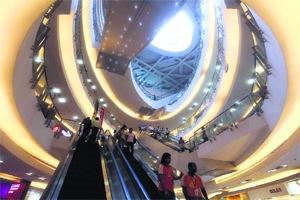
It baffles Shweta Jain,a young Mumbai-based marketing professional,to witness the pace at which her favorite stores are exiting malls. I was surprised to see the shutters pulled down at a store I frequented in a mall at Malad barely a fortnight ago. It simply vanished! says Jain,while noticing how other malls in the vicinity wore a haunted look,with hardly any footfalls.
Jain has been witness to the changing skyline of the countrys financial capital 8212; from the shutting down of one of Indias first shopping mall,Crossroads,in 2006 to shopping complexes rising at Phoenix Mills. Crossroads,which later became SoBo Central after being bought by Future Groups Kishore Biyani,didnt find favour with Jain and most other shoppers. SoBo lacks the buzz that Crossroads had. Also,the brand mix offered by malls less than fifteen minutes away is much better and caters to different kinds of shopping needs, says Jain.


The rise and fall
In the beginning of 2007,when mall mania was setting in,realty companies announced the launch of a slew of mall,riding on the back of organised retails growth projections. Four years ago,sentiments were high and the realty sector was at its peak. Developers started dreaming instead of performing analysis, says Manoj Mishra,head of a real estate information solutions company,Augtics.
It was not only the number of malls that kept increasing across metros and tierII cities,but their size as well. From an average size of 1.5 lakh-2 lakh sq ft,according to real estate consultancy Cushman and Wakefields Camp;W estimates,they went up to 5 lakh-10 lakh sq ft. In its 2010 report on retail realty,Camp;W projected that while market estimates supply of around 53 mn sq ft of mall space for 2010,the realistic supply is expected to be around 29 mn sq ft. Similarly,realistic estimates for mall supply in 2011,too,stand at a little over 40 per cent of the market estimates,which claim that nearly 40 mn sq ft of fresh mall space will come up across 37 cities in India.
Experts reckon that developers have wisened up after the 2008 debacle. Revenue from commercial spaces such as malls too have shrunk in the last two years. The higher rent scenarios have gone for most markets,except for the premium segment. Rents are mostly on basis of performance of retailers. I see a lot of developers looking at malls which are adequate in size rather than large Landlords are advised study catchment areas,population and their choices beforehand, says Shubhranshu Pani,managing director retail at Jones Lang LaSalle India JLL . In Q3 of 2009,the highest level of vacancy in malls was witnessed in the NCR region 27 per cent followed by Pune 17 per cent while the lowest vacancy levels were recorded in Bangalore at 2 per cent,estimates Camp;W. The overall seven city average for available space in operational malls stood at around 17.5 per cent in third quarter of 2009.
Developers have now started planning malls only when they receive concrete commitments from retailers. Earlier 200 malls would be announced and only 40-50 were delivered,now only 50 announced and around 40 delivered, says JLLs Pani. In some cases,developers who announced malls later converted them into residential projects or office spaces,Pani says,citing the example of those at Dahisar,Mumbai. The euphoria is gone, he adds.
In Delhi,Parsvnaths Metro Mall at Seelampur may get converted into a godown for one of hugely successful cash and carry retailer,says a senior company official on conditions of anonymity. Most of these Metro malls turned out to be places where youth would hang out,but that would lead to little in terms of sales for retailers. The recession saw a curb in impulse purchases too. Developers realised that Indians have different shopping habits, said Parsvnaths executive.
Trio Group CEO Pradeepp Arora,who holds the franchise for a Canadian apparel brand Groggy points out to the failure of malls in Faridabad,Ghaziabad and Noida like the Great India Place where he had to shut down his store as it attracted excellent footfalls but those hardly converted into sales for retailers. Augtics Mishra cites the example of Ansal Plaza,Omaxes Connaught Place and Grand Veneria,which have come up in Greater Noida in the same catchment area. However,the trend changes in leading metros in Southern India Bangalore,Chennai and Hyderabad which according to Camp;W have the appetite to sustain additional mall space.
Payment pattern changes
Since H2 of 2008,retailers too have wisened to high rental costs of stores added in 2007-2008 that ultimately forced retailers to take another look at their portfolio. One of the direct fallouts of the recession was the emergence of a new model of minimum guarantee and revenue sharing that have now found greater acceptability.
During the recession,higher rentals and slump in sales forced retailers to renege after signing agreements or renegotiate,which made landlords uncomfortable. Secondly,landlords have to go to banks for funding and these banks dont value these contracts as they have seen a time when retailers have backed out, says JLLs Pani.
The retailer is trying to handle high rentals with different approaches. One,he is looking at whether his product is suited to the market. Secondly,he is reducing the size of the stores to suit his requirement. And thirdly,he offers to pay a minimum guarantee and revenue share 8212; what he can afford. So that way it becomes very good proposition for the retailer as well, says Pani.
Way Ahead
Experts argue that presence of national brands alone does not guarantee the success of a mall. Some of the successful malls North India do not have national brands but they are a perfect community centre mix,having local retailers,restaurants and educational institutes, Pani. In the end,one has to evaluate each mall vis-a-vis the catchment and product offering. Large format discount stores may lead the pack in the future when infrastructure is also able to match the requirements, said Mishra. But the right mix still eludes developers. In India since agreements are for 6 years,it may take that much time to find the right mix, Pani adds. l
smita.aggarwalexpressindia.com


