


Tags:


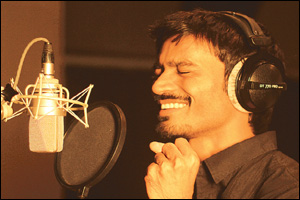
Gana pattu,originally songs of sweat and struggle,lust and liquor,is finding a place in the mainstream,in sanitised songs like Kolaveri di,but is that necessarily a good thing?
Balladry but doggerel,fast-paced but with depth,Gana pattu is the folk song of the urban dweller,in Tamil Nadu,which describes life in the cities rather than trees in the countryside. In being irreverent and decidedly lower class,this is an alternate to Carnatic music,and in more ways than one,all things Brahminical. They sing not about holy cows but about beef,and prefer the realism of death over the metaphysics of the afterlife.

The recent success of Kolaveri di is an example of how a form of Gana pattu is slowly moving away from its irreverent and lower-class roots and being adopted by labels like Sony,mainstream cinema and millions of listeners. But not everyone is celebrating.
According to the proponents of this subaltern genre,Gana was born in mid-1900 in the Chennai harbour and its surroundings,a bustling area with its own cosmopolitan influences,but decidedly non middle-class or upper-middle-class. As the workers heaved and hoed,they sang without inhibition,about everything from floating faeces to pretty women. For them,life was a gestalt of sweat and struggle,of grass and booze,of shit on the street and the posterior of their neighbours wife. Decency was just a sophisticated word for pretentious inhibition. Losing all pretensions was freedom.
This was the gritty and risqué poetry of the streets,which was also fun and honest. It quickly spread to other parts of the city but had never crossed over from the slums to the drawing rooms. Recently,I performed at a rich wedding at a Chennai auditorium,where there were requests for an encore for my popular Gana songs. This venue lay just 200 metres from the Srinivasapuram slum,but the music from there took decades to traverse that short distance. It was the movies that bridged the gap, says well-known music director Deva.
He should know,being the pioneer of the film version of the Gana,which is far less offensive and deals with topics like love. Devas big break in movies came several years after he and his brothers had worked in the background for noted music directors of the Eighties.
In 1994,Deva as a music director for Rasigan decided to use a Gana song in the 11th or 12th reel,just before the movie reached its climax. Born in Visalakshithottam slum in Mylapore and having grown up on Gana,for Deva this was a way to return to his roots.
In about a decade and half,Gana gained popularity and earned more fans. From Chennai,it slowly spread to the rest of Tamil Nadu as outsiders came to enjoy Chennai Tamil,a unique slang that had been corrupted by migrants. College youngsters soon caught on to the freedom of the music,the naughtiness of the lyrics and the absence of major musical accompaniments. They sang about their,hot but haughty,classmate,the drinks that got them high but left a terrible hangover and the self-righteous professor,while they travelled home on government-run buses.
But the popularity also partially sanitised the music. The resulting Gana created by exponents like Ulaganathan restricted references to particular communities and the use of cuss words. Ulaganathan was popular in the Gana circles for quite some time,but he shot to stardom after Vazha meenu,which he wrote,composed and performed for the film Chithiram Pesuthadi 2006 became a big hit. Though subdued in terms of language,the lyrics had their roots in a harbour labourers life. In the beginning,the lyrics were confined to the language of the slums in all its raw form. But over time,we have started to filter the language to fit the mainstream, he says.
While the film version of Gana made it acceptable to a larger audience,it lost its edge and rawness in this relocation from the harbours to the movies. Gana became popular after the films started to have young heroes from subaltern backgrounds both on screen and in reality. But by becoming mainstream,the soul of the genre has been diluted to fit everyones sensibilities, says Karuppu Prathikal Neelakantan,who runs the publishing house that brought out two books by noted Gana singer,Marana Gana Viji.
Besides the boisterous Ganas,songs sung during funerals,Marana Gana,is another important subcategory. They are lyrical versions of elaborate obituaries,sung in praise of the deceased,their exploits,struggles and victories.
Viji,a disabled boy who was abandoned on Marina beach,sings only Marana Gana,but not of the common kind. He once earned a meal as a young boy by singing at a funeral years ago,and went on to take the form to the philosophical level of Marana Sidhantha,which talks about the certainty of death and the impermanence of human life.
He has come up with an elaborate work,which describes the trajectory of a persons life from a single sperm to 100 years of age,which takes nine hours to recite.
As an artiste who considers identity a significant factor,Viji does not hide his scorn for mainstream Gana,which has hijacked the lower caste art. Shearing Dalit identity from Gana is like stealing the child from its mother, he fumes. Marana Gana needs to be heard and understood while experiencing life in all its raw and realistic beauty and not in air-conditioned comfort,he believes,and hence refuses to cut an album.
Gana is often compared with hip hop,the songs of the African-Americans that conveyed their anger against the injustices they faced,which then became mainstream. Even though a few like Viji politically oppose taking Gana to the mainstream through mass media,the irreversible process is likely to continue with its rising popularity.


