Journalism of Courage
 3 min read



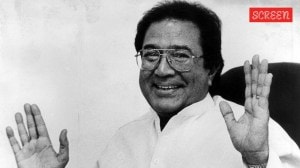
THE thin body wrapped in a shroud on whom I threw three handfuls of soil was not the Baqar Mehdi I knew. The award-winning Urdu poet and critic, rated among the five best after Independence, was slightly built and often sick, but life emanated from him. Being with him in the same room was overwhelming. It was not just the wide canvas of his knowledge. Nor was it the rich treasure of experience that had shaped his personality: from Rudauli to Lucknow to AMU to Byculla to Carter Road. It was the sheer spirit of living, the joy of intelligent conversation, the zest with which every topic was discussed, the irreverence with which Pillars of the Establishment were knocked down.
Mehdi, whom I first met when I interviewed him after the 8217;84 riots, was unlike other Urdu poets. Urdu was his passion, and he despaired over its slow death, but listening to him, you8217;d think he wrote in English. It was hard to know he was a poet: not for him the sonorous self-consciousness of the poet-philosopher. He knocked himself more readily than he did others. Recounting how he and another Muslim had been pushed out of a train by sardars soon after Partition, he joked, 8220;They wanted us to fall into the Yamuna; unfortunately, we fell into a pile of muck.8217;8217;
That wasn8217;t his first brush with communal hatred; yet, Baqar sa8217;ab was far removed from being the persecuted Muslim. Whether after the 8217;84 riots, when his desolate old house, standing at the end of one of Mumbai8217;s oldest roads was partly burnt, or after the 8217;92-8217;93 riots, when he advised me to wear a bindi for my own protection, he could discuss the precarious condition of Muslims dispassionately. 8220;I8217;m not a Muslim, I8217;m not an Indian either, why are you asking me this?8217;8217; he would ask, embarrassing me whenever I asked for a quote on the latest 8216;Indian Muslim8217; dilemma, 8220;I am just a human being.8217;8217; It was this uncompromising quality that set Baqar Mehdi apart and put him in the exclusive list of literary legends such as Nirala and Premchand.
Marxism and Urdu had drawn him to Mumbai. But here he struck out on his own, unable to respect the big names of Urdu who dominated the Progressive Writers8217; Association. The film industry repelled him. Mehdi was that rare creature: a full-time writer by choice, despite not having the luxury of an inheritance. He had left his zamindar family; and refused to take up a job knowing it would give him no time to do what he loved most: read and write. 8220;I consider myself 75 per cent a reader, then a writer, then a film buff,8217;8217; he8217;d say. Thanks to an understanding wife, he was able to pursue his passion till his last day.
At his bedside when he died in his sleep were a Ghalib collection, an issue of the Urdu literary magazine 8216;Naya Virk8217;, and an Urdu translation of a Marathi writer.