Journalism of Courage
 6 min read



Don8217;t read this if you are a spiritual tourist. For, fear reportedly has gone up in smoke on the ghats of Varanasi. The city isn8217;t beaten. Its spirit lives on. Francoise from France and Molly from Washington have told reporters that while the bombs at the Sankat Mochan temple and the railway station proved life can be so ephemeral, Varanasi still showcases the eternal.
But there8217;s life beyond spirituality, there8217;s a Varanasi beyond its awesome antiquity, there8217;s Uttar Pradesh beyond Varanasi and there8217;s India beyond UP. If you are inclined to such earthly preoccupations, the Varanasi story hasn8217;t ended. Neither did it just begin when the ammonium nitrate-based explosives went off. The real story has many beginnings. Let8217;s take an odd one.
In 1995, the then Reserve Bank governor commented while visiting Varanasi that UP8217;s credit deposit ratio was worrisomely low. Translated, that meant there wasn8217;t enough demand for bank loans from industry and trade in UP, not even five years into economic reforms and the end of the licence-quota regime, not even when India as a whole had started showing unmistakable signs of dynamism.
In 2006, that dynamism has assumed such proportions that level-headed, seen-it-all realists are seriously speculating whether India can finally make it. But the world8217;s second most populous nation can8217;t make it because heavily across its heart sits the world8217;s sixth most populous 8220;nation8221; 8212; Uttar Pradesh. UP drags India down of which some evidence later. The battle between the India-we-have and the India-we-want is being fought in UP. War dispatches so far suggest the India-we-want is losing. We lost in Varanasi, undented spirituality notwithstanding.
The bombs, whether a work of JeM, or set off by LeT, came right in the middle of a strangely sectarian interrogation of India8217;s foreign policy. People died in riots over foreign cartoonists and foreign presidents. The people responsible for people dying are, of course, thinking of 17 per cent the proportion of Muslims in UP8217;s electorate and 130 UP constituencies where Muslims constitute between 20 per cent and 40 per cent of voters.
Fomenting trouble for bloc votes is par for the course in Indian politics. Appallingly cynical electoral entrepreneurs have pitted Hindus against Muslims, Muslims against Hindus, not to mention any number of antagonistic pairings in the whole caboodle of castes. But all that nastiness was about fighting for a bigger share of the Indian pie. The current mobilisation in UP seems dangerously about pie in the sky. Even the Left chose, if only once so far, to see it that way 8212; and it happened in UP. And in UP, again, the search has begun for that Hindu card that was happily all but lost.
At this rate what will happen in the state in 2007 8212; assembly elections are due then 8212; is that it will successfully challenge the still-being-written Indian political story. Ordinary Indians finally voting for ordinary things are writing that story. It happened in Bihar just over 100 days back. That8217;s because Bihar broke a mould UP may not be able to.
Electoral politics is usually at its retrogressive worst when its most important determinants are all at constituency levels. At that level, little else matters but the ability to first form local social coalitions and then to reward them. That means the crucial
political actors are second- and third-rung leaders. More so when candidate-level anti-incumbency is strong and winning candidates8217; vote share is getting smaller. Electoral strategies then mean building relatively small, local alliances.
The big picture doesn8217;t matter because, rationally, it makes no sense for political players. It makes no sense for voters, either. When elections are being micro-managed by mix-and-match identity politics, change can8217;t get either a force or a face; no Nitish Kumar for UP. But local competition means that the status quo can get more ugly. That has started happening.
Now, if in UP, local electoral arithmetic produces an uglier kind of politics, the area the state occupies in the national mindspace makes migration of that idea likely. India simply can8217;t afford another reworking of the 8220;communal8221; question. Broadly left-of-centre politicians may be too compromised to look for the answers. Broadly right-of-centre politicians may become too righteous a dangerous quality in politics to want to look. Others won8217;t matter.
But UP, un-liberated by electoral verdict, will. There are less than 3,000 big and medium industrial units in this huge state. Per capita income in UP has been growing at less than one per cent since the 1990s national average is around 5.5 per cent. Its infant mortality rate is 87.6 per cent national average is 67.6 per cent. Its child immunisation coverage is 21.2 per cent national average is 42 per cent.
One-sixth of India8217;s population is in UP. Take UP out of the equation, India8217;s averages improve. But say this about the state, it entertains us even as it keeps us back 8212; the state8217;s electoral populism is a hard-to-match spectacle.
Kalyan Singh created jobs for 40,000 primary school teachers and 10,000 panchayat level teachers before the 1999 polls. Rajnath Singh promised to implement pay commission awards before the 2002 elections; he was facing a Rs 80,000 crore state debt. Mayawati spent crores in Periyar festivals. Mulayam Singh Yadav appointed thousands of Yadavs in the state administration. By the late 1990s, salaries, pensions and interest payments were absorbing three out of every four rupee the state was earning; two rupees out of every five earned were going to service debt.
For this stasis to be broken, UP needs a change of politics, a change of election pattern,
maybe a change of luck. What are the current omens? Amar Singh is permanently in the doghouse of controversy. Jaya Bachchan becomes a first Rajya Sabha MP to be sacked for rules violation. The Allahabad high court8217;s verdict on BSP MLAs8217; defection is the first such ruling since the anti-defection law was changed.
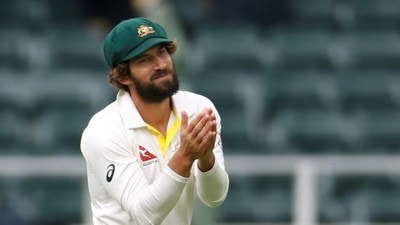
Okay, Mohammed Kaif, a cricketer so easy to root for, led UP to Ranji trophy victory. And he scored a typically gutsy 90-plus in the first test against England, probably saving India
the blushes. But he was dropped for the second test that started yesterday.
If I was a spiritual tourist in Varanasi, I would take that as a bad omen.