Journalism of Courage
 6 min read



None of us old-timers want to admit it. But increasingly, we cannot escape our tryst with reality. Since we cannot do anything about the dismal fate of our city, we have changed its name, abandoning beautiful Bombay to the ever-spreading wrath of the goddess Mumba.
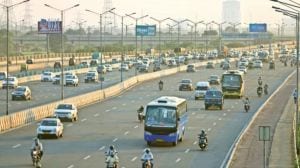
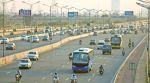
Notwithstanding fancy real estate prices which in a world of undistorted markets would signal a healthy city, the fact is that today Bombay is quite simply the filthiest large city in the world. The sheer volume of uncleared solid waste i.e. uncleared garbage, the stench, the rabid stray dogs, the clutter of construction debris, the horrifying pools and eddies of stagnant water accumulating under the newly-built but decrepit-looking flyovers, the completely impossible Andheri-Kurla Road which surely must inspire some contemporary Dante to describe hell, barefoot beggar children at every traffic light and this after 59 years of state-sponsored socialism doled out by our great republic, the lethargic never-ending saga of our construction projects, the pathetic scabrous shanties on both sides of the suburban railway tracks that pass for human habitations 8212; all of these are part of the visual imagery of failure and collapse. Suffice it to say that even Calcutta sorry Kolkata has a better appearance today. I rest my case.
Not content with inflicting this ongoing daily agony, the gods decided to literally rub it in recently. I went to the Wankhede Stadium to watch the India-England Test. Now remember, Bombay is the birthplace and the nesting ground of Indian cricket. And of course, cricket today is virtually weighed down with money. One would think that we8217;d have a decent stadium, let alone a world class one. Wankhede reminds you of a debris-laden construction site designed by a shabby engineer and managed by a chaos-loving, incompetent one. The men8217;s toilet is three inches deep in ancient slime-filled water. I shuddered at the agony of the women who must perforce visit the women8217;s toilet which must be an experience of indescribable horror. Everything is unpainted and incomplete. There are odd bits of junk 8212; metal, wires, wood and assorted rubbish lying around in surrealist anarchy.
I was an invitee at a so-called 8220;posh8221; box. If this was meant to be luxurious, it was luxury at its mediocre worst. There was a loud air-conditioner. Other than that, the box could have passed for a third rate place in a fourth rate stadium. In typical Indian fashion we were throwing labour in large numbers to deal with the absence of poor capital utilisation. There were bow-tied waiters everywhere with nothing to do. They were getting in each other8217;s way and in the way of spectators.
Wankhede Stadium like so many other efforts in Bombay/Mumbai was ill-conceived from its birth. Brabourne Stadium was a perfectly acceptable alternative. With a fraction of the investment in a second stadium, it could have easily been upgraded into another Lords. Instead we have created a shabby, shameful sports ground which is so badly designed that there is no cross-ventilation with an opening only on one side resulting in a the players experiencing a temperature five degrees higher than that in the stands. In addition, the open land could have been better utilised for a running track or other facilities. Having built it, we could have at least done a good job. We have left it as a half-built monstrosity. Incidentally, did it ever occur to anyone to think of parking facilities or how to manage traffic bottlenecks? In this respect Wankhede resembles our other sorry edifice, the Shanmukhananda Hall, which is a good place for music, only you can never get through the chaotic gridlock in time and if you get there you cannot park, quite simply because there is no place to park.
Other cities in India are by no means perfect. But there is some progress, some semblance of progress, some discussions about progress, if nothing else some arguments and controversies about how to progress. The Chinnaswamy Stadium in Bangalore is quite nice. My friend Davinder Brar tells me that the Mohali Stadium is very good and the clubhouse is world class. The interesting thing in puritanical Mumbai is that we have all given up. The stadium cannot be improved. So let us do the next silly thing that we are good at. We won8217;t allow any beer anywhere inside the stadium. We can all feel sanctimoniously superior. I felt really sorry for the English fans who had come. A brimming glass of beer 8212; a staple Lords or the Oval 8212; would have been particularly heavenly in the sultry ambience of Mumbai. But all of us are denied that pleasure. Mumbai will not have dance bars and our cricket fans will not be allowed to drink beer 8212; so let it be written, so let it be done! Tarry a minute before you criticise too much. Given the state of the toilets, perchance it is good that beer is banned. God save our bladders.
As I reflect in a vacant and pensive mood, Wankhede turns into a metaphor for Mumbai. We are caught in a paralysed civic set-up. How many of us know who the mayor of Mumbai is? And if we did write to him or her what could the mayor do? Make a speech, introduce a resolution, shout slogans? How many of us know that Maharashtra is one of the very few states in India still with the infamous Urban Land Ceiling Act on its books? This corruption-ridden monstrosity of a law has disappeared from statute books elsewhere. Mumbai carries this burden as it treads earnestly into its self-made slough of despond.
India may do well. Paradoxically Mumbai real estate prices may do well. But as a city with any possibility of grace or beauty or, for that matter, elementary cleanliness, the prospects look bleak indeed. For forty years Kolkata went downhill. Now there seems to be a modest pick-up. We in Mumbai may be headed for a forty-year decline before things begin to look up.
Jaithirth Rao is chairman 038; CEO, Mphasis