


📣 For more lifestyle news, click here to join our WhatsApp Channel and also follow us on Instagram
Tags:


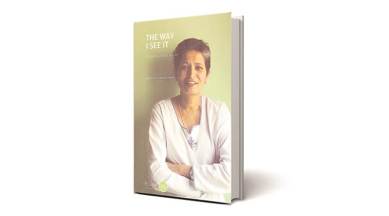
In an article written to mark a decade of Gauri Lankesh Patrike in March 2015, editor Gauri Lankesh wrote: “The members of our team are at once activists and journalists. While activism gives our journalism a heart and a perspective, journalism gives our activism a comprehensive understanding of and a sensitivity to context. It is perhaps not possible, in today’s world, for a journalist to be pro-people if he is not an activist in his or her own way.” A friend and contributor to Gauri Lankesh Patrike, K Phaniraj sums up “Akka’s metamorphosis” from being just a state correspondent with a famous surname for national media to the firebrand activist-editor the world knows today thus: “The year 2000 was when she was introduced to Karnataka as a journalist; by 2003, she was a journalist-activist and, by 2015, she had become an activist-journalist.” The Way I See It charts this transformation: It puts her work as a journalist and activist in context, which most likely would have gone unnoticed outside the Kannada public sphere but for her gruesome murder in September last.
The collection includes a selection of her reportage for Sunday, the now defunct magazine, columns for Bangalore Mirror, essays and profiles she wrote for Gauri Lankesh Patrike and half a dozen tributes, including one by her mother, Indira Lankesh. There is also an interview with her which was conducted soon after she took over as editor of Lankesh Patrike, the crusading tabloid, her father, the well-known Kannada writer P Lankesh, established.


Her columns for Lankesh Patrike, Gauri Lankesh Patrike and Bangalore Mirror flag the concerns of our time — the rise of Hindu right-wing in Karnataka and the abject surrender of the state and secular parties to communal forces. Her fierce commitment to the constitutional ideal of secularism makes her join civil society efforts to resist the advance of the Hindutva politics. Articles like ‘What I saw in Bababudangiri’ offer insights into the language and nature of right-wing mobilisations in Karnataka as well as the civil society initiatives that rose to challenge them. Quite early, Gauri Lankesh realised that the political mainstream lacks conviction and even guile to battle majoritarian communalism and seems to have invested her trust in a broad social coalition of civil society actors, new social movements and rights activists. The ideal she upholds in her writings is not party-oriented but more of a paradigm centred on the Constitution and the rights it guarantees, empathy for the underprivilleged and a visceral antipathy to all politics of hate. The subjects of most of her articles are those who affirm her belief that a civil, secular and empathetic politics is always possible.
This collection includes a selection of the profiles she did in Kannada, which stands apart for a delicate and nuanced reading of its central characters, among them father Lankesh, the theatre legend BV Karanth, writers UR Anathamurthy and Purnachandra Tejasvi and actor, Rajkumar. She knew them well, and for long, and her remembrances contain the love and wonder children hold for dear ones, the heroes of their childhood.
Gauri Lankesh, obviously, was much more than what we discover in her writings. Her murder was an act of political violence and raises disturbing questions about our times. In his tribute, Rahamat Tarikere writes: “There is a wild flower with petals like tongues of flame, called Gauri hoovu in Kannada. Our Gauri could be as severe as fire but strongly believed that no revolution was possible with firearms. It is ironic that a firearm claimed her life. What is distressing is not just the cruelty of the paid assassins, but the fact that a young generation that wants to build a new India firmly believes that those with contrarian ideological views can be abused at will, attacked and even killed. What kind of society do those filling such venom into young minds want to build? What is the antidote for this? These are the questions that Gauri’s killing has posed before us. The responses that came after the killing also offer an answer to this question. The only way forward is the coming together of like-minded people.”


