3 min read


© The Indian Express Pvt Ltd



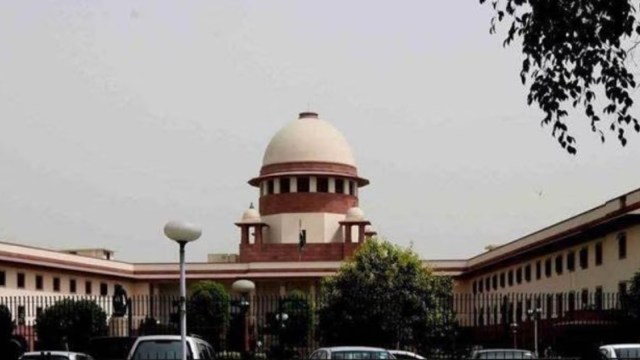 Supreme Court of India
The Supreme Court Thursday said that in cases like those under the UAPA where there is a presumption of guilt of the accused, the state must also take steps to ensure speedy trial even as it underlined that protection of Article 21 rights “cannot be the sole ground of consideration in cases…where the security or integrity of the nation is called into question”.
“A constitutional democracy does not legitimise burdens by simply declaring them; it must ensure that those burdened are meaningfully equipped to bear them, even those who are accused of the worst offences imaginable. If the State, in spite of all its might presumes guilt, then the same State must also, with the employment of all the resources at its command, create pathways through which the accused can reclaim their innocence. Needless to say, procedural formalities do not suffice. If it is only those, it falls grossly short of the grandeur of a constitutional democracy. It demands a justice system that is alive to human vulnerability, that recognises that liberty is not a privilege for the powerful but a right inherent in every individual,” a bench of Justices Sanjay Karol and N K Singh said.
The bench was hearing a CBI appeal challenging the November 9, 2022, order of the Calcutta High Court granting bail to six men accused in the case lodged in connection with the derailment of Jnaneshwari Express in West Bengal’s West Midnapore district on May 28, 2010, in which 148 people had died. The agency also challenged two other similar orders by the HC.
Appealing against the grant of bail, the CBI contended that Section 436-A of the CrPC, which enables undertrials to seek bail if they have spent at least half of the maximum possible punishment for the offence for which he is being tried, cannot be applied uniformly to heinous offences and offences which are punishable by death.
Agreeing with the argument, the SC said that the accused were facing charges under Section 302 of the IPC and Section 16 of the UAPA, and one of the possible punishments prescribed for these offences is death. “That, in and of itself, excludes these offences from the ambit of Section 436A-IPC. On that count, the impugned judgments require interference and are set aside to that extent,” the court said.
The bench, however, refused to cancel the bail already granted to the accused saying that the agency had not alleged any misuse of liberty, nor any attempt to influence witnesses, nor any effort by them to delay the trial.
The judgment also said that when their earlier bail application was dismissed in 2016, the High Court had recorded that the examination of the remaining witnesses should be completed within a year, but 68 witnesses remained to be examined when they were granted bail and 28 remained even now.