Journalism of Courage



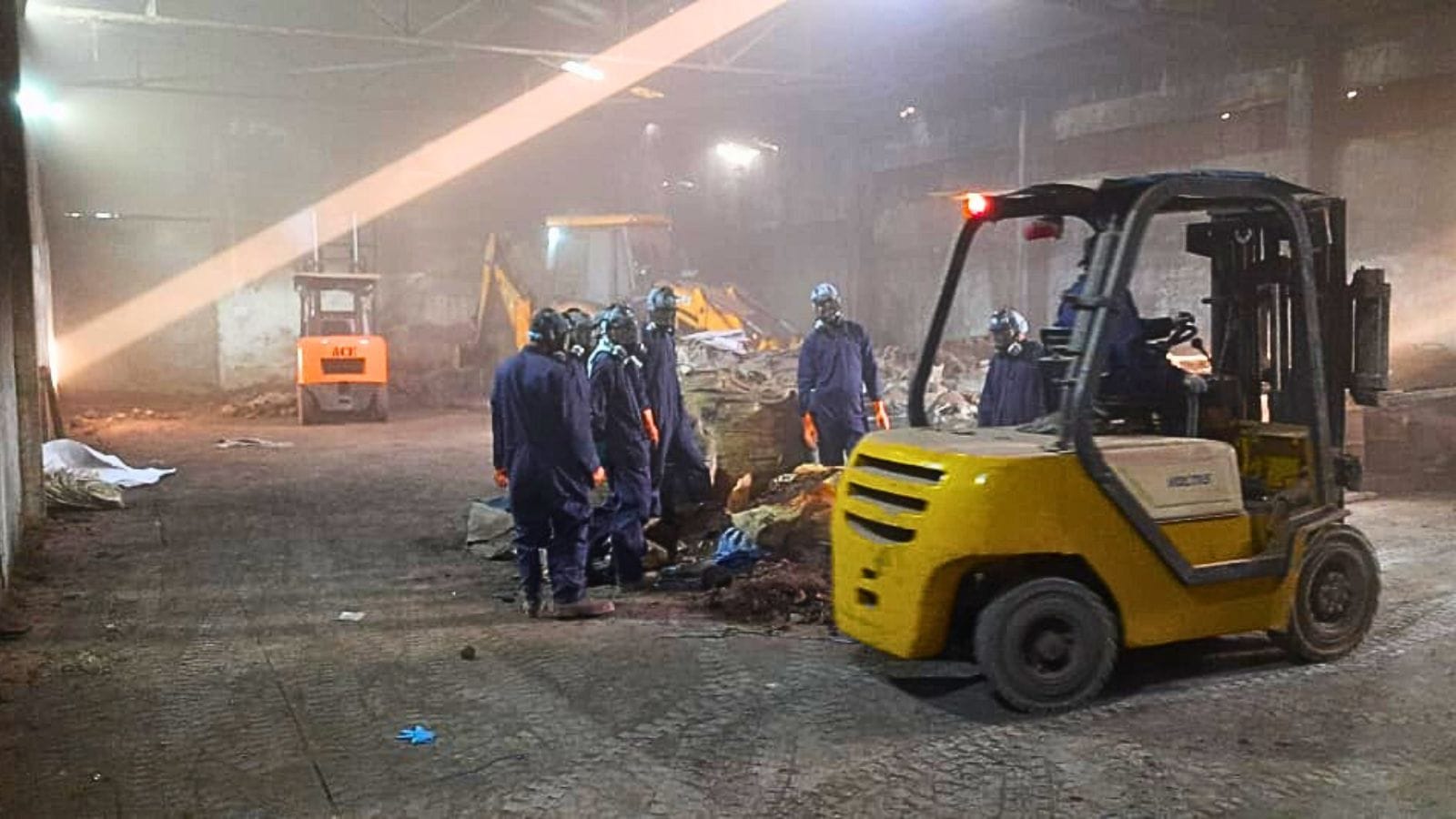 Workers of Re Sustainability at work repacking gathering the hazardous waste. (Express Photo)
IT WAS a mammoth task that took 40 years to get started.
Four days of repacking, weighing and loading of 337 metric tonnes (MT) of hazardous waste, 40 workers deployed in 30-minute shifts, 12 long-haul containers — and a 250-km journey through a green corridor.
Between December 29 and the night of January 1, this is what went on at the infamous Union Carbide India Limited (UCIL) plant in Bhopal as the waste, collected from the surface of the plant’s decrepit premises and stored since 2005, was repacked and transported to Pithampur near Indore.
The waste, which remains in 12 containers in Pithampur until concerns regarding its disposal from local residents are addressed, will be eventually incinerated at a waste management facility run by Re Sustainability Ltd, a private firm chosen for the task.
This waste was generated during pesticide production at the UCIL factory between 1969 and 1984 and was dumped on the premises, before being bundled together in 2005 on orders of the Madhya Pradesh High Court. It has no connection to the methyl isocyanate gas leak of December 2, 1984, which killed thousands, making it one of the worst industrial disasters in the world.
Yet, its transportation, storage in Pithampur and proposed incineration are significant because it marks a rare occasion when waste from a contaminated industrial site will be disposed of in this manner within the country — long awaited by residents near the plant who say they have faced sustained health issues due to groundwater and soil contamination.
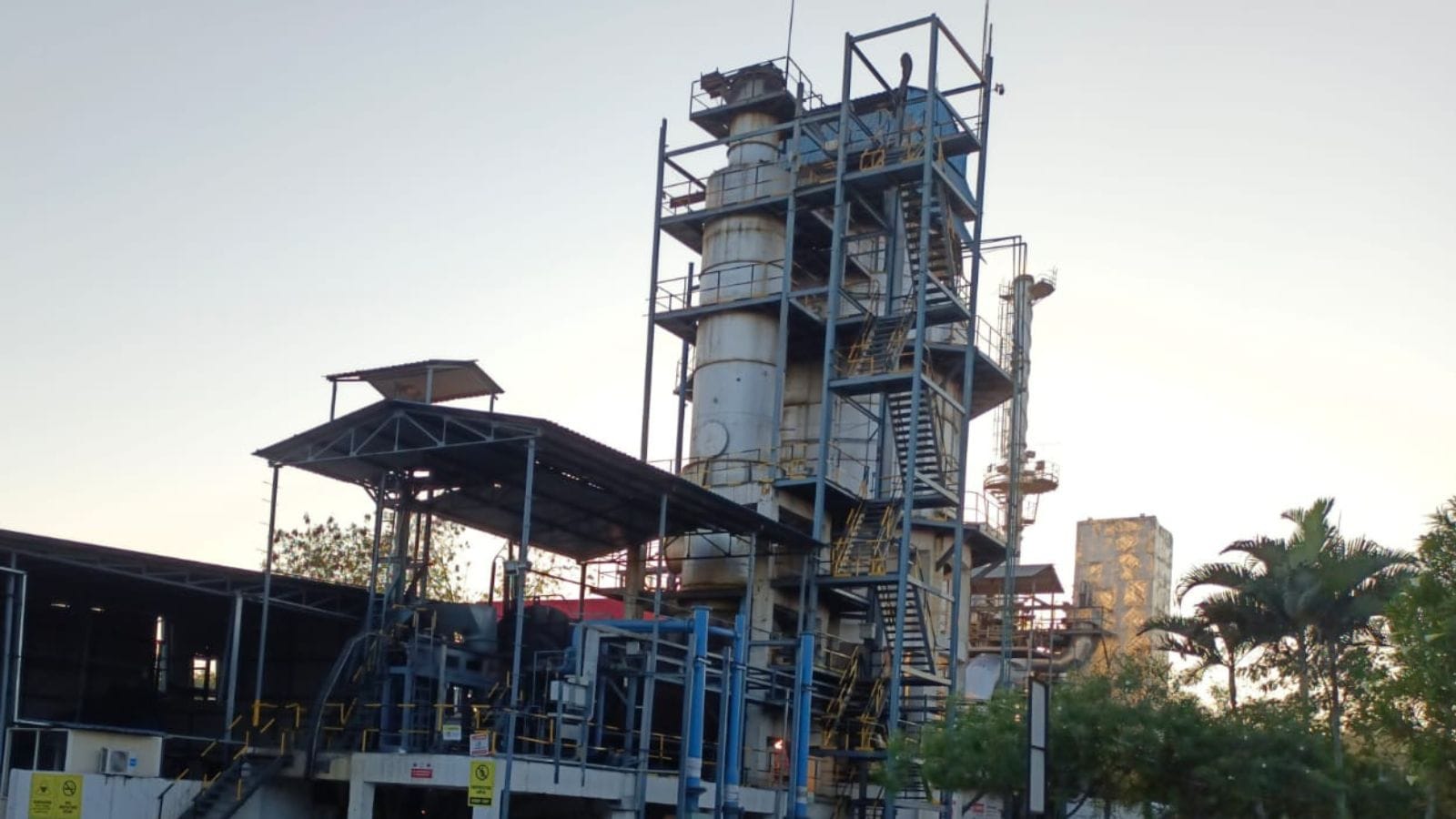 The Pithampur incinerator. (Express Photo)
“The work of repacking and loading of the waste into containers was done following all due precautions and procedures. As a Bhopal resident myself, the occasion felt momentous, as each of us have a story to tell about the sorrows and horrors of 2 December, 1984. Hopefully, this will lead to a bigger clean-up of the whole site,” said a senior scientist present at the Union Carbide plant during the task.
The operation was set in motion last month when the Jabalpur bench of the Madhya Pradesh High Court directed “immediate clean-up of the Union Carbide factory site” and “safe disposal of the entire toxic waste/material from the area concerned”.
The waste consists of different categories: 162 MT of excavated contaminated soil; 92 MT of naphthol and carbaryl, also known as Sevin insecticide; 54 MT of semi processed pesticide waste; and 29 MT of residue from the plant’s reactor. “All the waste is in solid form. This waste is largely linked to the manufacturing process, raw material dumps and what was in the reactors,” said a government scientist who was part of the monitoring team at the plant.
The jumbo bags in which the hazardous waste was repacked were then weighed and labelled as per the Hazardous Waste Management Rules. “The labels reflected information on the contents inside and precautions to be taken while handling them. An online manifest was generated as per waste handling and transportation norms consisting of information on the type of waste, its origin and destination and quantity,” said a government official.
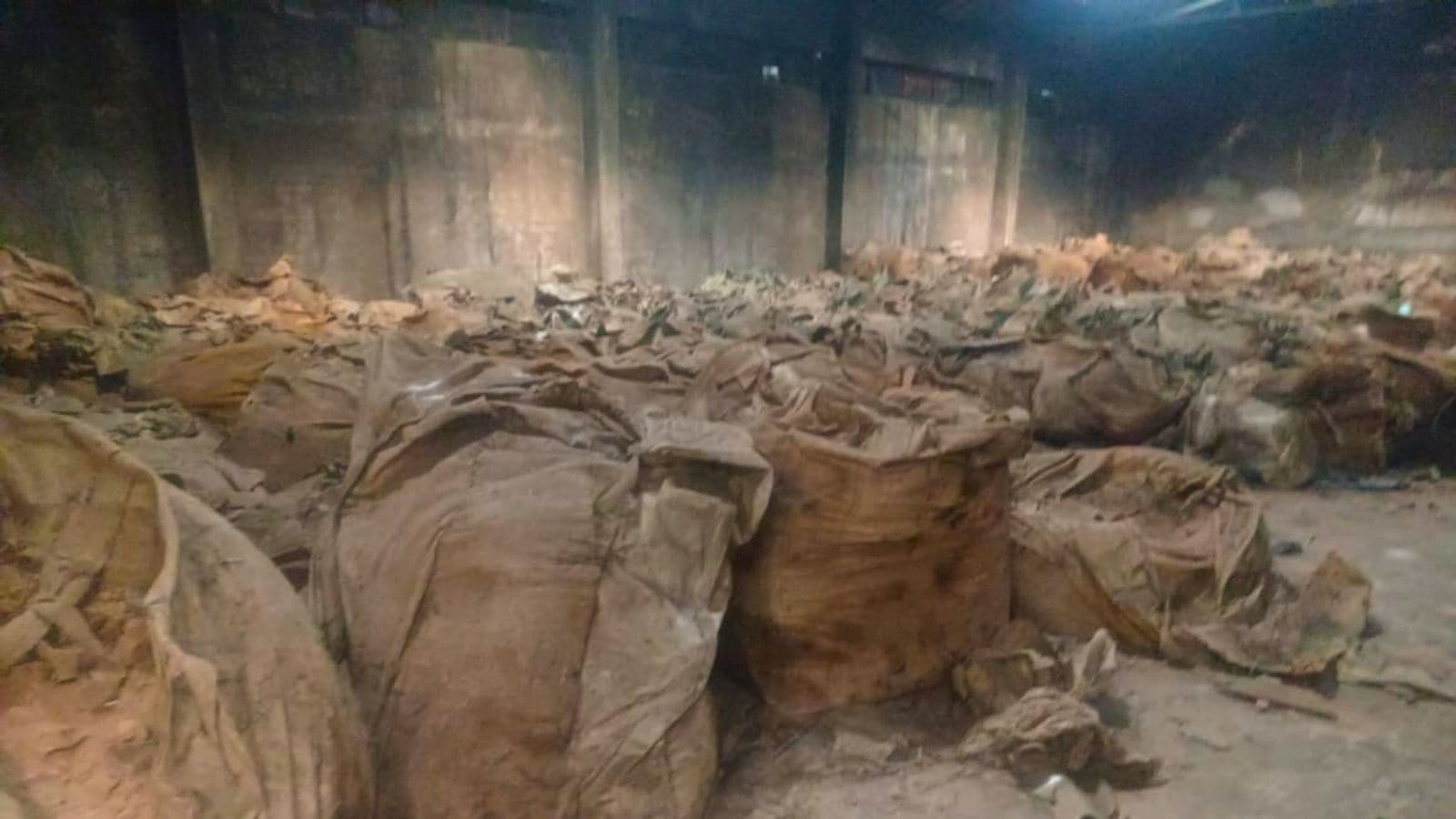 Hazardous waste kept packed at UCIL since 2005. (Express Photo)
After this, a “first of its kind” green corridor was created between Bhopal and Pithampur for the transport. “The containers were fire-proof, leak-proof and made of non-reactive materials. We had ambulances, fire engines and police pilot cars in the convoy. The container drivers were instructed to drive between 30-40 kmph as it was dark and there was fog. They were also locked with special interlocking locks which can be opened only with metal cutters,” another official said.
Contrary to perception, incineration of hazardous waste, such as the one brought in from the UCIL plant, is a lengthy process. Once unpacked from containers, they would be first stored in a designated storage area inside the Pithampur facility under sheds.
Next, the different kinds of wastes would be tested for analysing their composition. “Incineration of such waste does not mean simply flinging it into the kiln. It involves profiling the waste to know their composition: how much chemicals, heavy metals, and organic compounds they contain; how much heat and energy do they release upon combustion. This is known as calorific value,” a senior government scientist, who will monitor the entire process, said.
Understanding the composition, he said, is key to deciding “feed rates” or how much of waste can be incinerated per hour and the kind of gases and pollutants that would be generated. Further, it also helps to decide the higher optimisation rate to reduce incineration period and costs.
“We bring the waste up to levels needed for incineration… if the waste does not have an adequate calorific value, a feed is made to incinerate the waste,” said Abhay Saxena, senior scientific officer, Madhya Pradesh Pollution Control Board. Typically, lime is added in 1:1 ratio in the feed to assist combustion.
In 2015, a trial incineration of 10 MT of waste from the Union Carbide factory was carried out on orders of the Supreme Court. The type of waste incinerated in the trial was collected from the same waste brought to Pithampur this month.
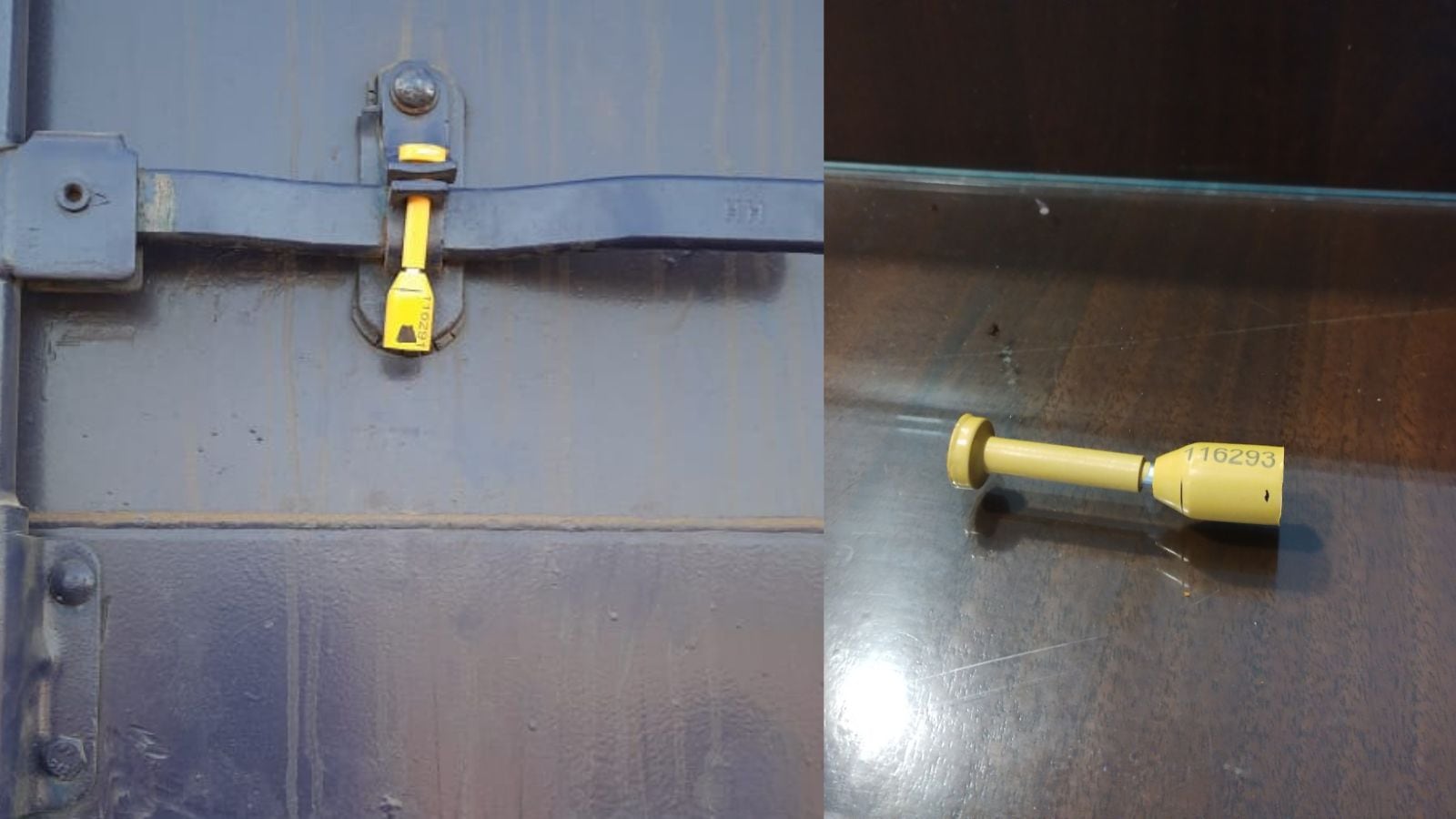 Containers with special locks. (Express Photo)
At that time, profiling of the waste had revealed that it contained heavy metals chromium, leads, manganese, nickel, zinc, cadmium, and mercury along with chlorides, fluorides, bromides, organic halogens, carbon, and hydrogen, according to the Central Pollution Control Board (CPCB). All the waste residue was solid, grey, or dark grey in colour, and its texture was powdery and lumpy, the CPCB found.
In 2015, a 90 kg/hour rate was maintained for the trial incineration which began on August 13 and ended on August 18. The CPCB concluded that the ambient air quality around the incinerator was within permissible limits. It is estimated that at 90kg/hour, it would take around 160 days for the 337 MT waste tranche to be incinerated in Pithampur.
The incineration is estimated to generate about 900 MT of residue in the form of ash and flue gas. While flue gas emissions can be controlled using cyclone separators, bag filters and scrubbers, the hazardous ash residue will be “scientifically disposed of” in a landfill in a double-lined, double-membrane area within Re Sustainability’s disposal facility in Pithampur.
Back in Bhopal, too, the task is far from over. The state and Central governments have to now undertake a comprehensive clean-up and remediation of the Union Carbide premises, treating contaminated soil and groundwater, unlined waste pits and solar evaporation ponds.

 7 min read