Journalism of Courage



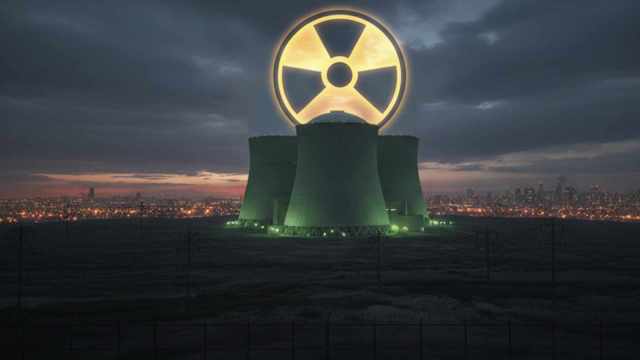 West Asia sovereign funds are among those who have evinced interest to part-finance Indian efforts to scale up nuclear power, including getting into the manufacturing value chain of small modular reactors. SMRs will be key if nuclear energy is to remain a commercially competitive option.
Building on the clear directional push to open up the restricted nuclear power sector to private sector participation, the rules that will follow the passage of the proposed Sustainable Harnessing and Advancement of Nuclear Energy for Transforming India Bill, 2025 (SHANTI) are likely to make a provision for potential foreign funding in the nuclear sector.
The new Bill, which was tabled in Parliament Monday and aims to repeal both the Atomic Energy Act, 1962 and the Civil Liability for Nuclear Damage Act, 2010, comes amid India’s move to look outward for collaborations on nuclear that is driven by two clear policy imperatives: the desperate need for base load alternatives to coal-fired capacity to tide over the limitations of renewables; and more importantly, the need for capital to scale up nuclear capacity addition.
Foreign funds, including sovereign funds from West Asia, have expressed early interest to put in capital to part-finance the country’s stated objectives to scale up nuclear power, including getting into the manufacturing value chain of SMRs, or small modular reactors.
SMRs are increasingly being seen as important for nuclear energy to remain a commercially competitive option into the future. The legal amendments are also being seen as a part of India’s efforts to strengthen its negotiating stance with the US, amid efforts underway to revive the stalled trade talks.
Sources in the government indicated that the equity infusion rules in the nuclear sector would be aligned to the government’s foreign equity participation guidelines that are in line with other sectors and in accordance with Ministry of Commerce and Industry (DPIIT) norms.
The multiple amendments proposed to the two overarching atomic power laws – the Atomic Energy Act 1962 and the Civil Liability for Nuclear Damage Act, 2010 (CLNDA) – aim to align the new legislation with legal provisions globally in a bid to address festering investor concerns.
There are two key proposed amendments that are particularly significant. One is an amendment aimed at diluting a specific provision – Section 17 (b) of the CLNDA, which was seen to be at odds with similar nuclear liability legislations enacted worldwide.
According to Section 17 of the CLNDA, the operator of the nuclear installation, after paying the compensation for nuclear damage, shall have the right to recourse where – (a) such right is expressly provided for in a contract in writing; (b) the nuclear incident has resulted as a consequence of an act of supplier or his employee, which includes supply of equipment or material with patent or latent defects or sub-standard services; and (c) the nuclear incident has resulted from the act of commission or omission of an individual done with the intent to cause nuclear damage.
Provision (b) is the one that is a specific insertion in the Indian context and has been cited as an impediment by foreign vendors, none of whom have invested in a single project in India since the legislation came into force. This is a cause for worry for Indian sub-vendors too, since the term “supplier” is seen to be too broad in scope.
“The most important aspect was to bring Section 17 on par with international benchmarks. The other was to clarify the definition of suppliers and address the concerns raised by domestic nuclear equipment manufacturers that sub-suppliers are also deemed to be included in the current definition, given that there is no distinction of the terms supplier in the current legislation,” a senior government official involved in the deliberations told The Indian Express before the amendments were moved.
Smaller Indian vendors are learnt to have raised this as an issue. SHANTI makes a provision for graded liability caps for nuclear power operators based on their order size.
Currently, on the definition of the ‘supplier’, and whether it is always assumed to be a foreign company, there is an attempt to clarify this aspect contained in Rule 24 of the CLND Rules, which said that ‘supplier’ shall include a person who: (i) manufactures and supplies, either directly or through an agent, a system, equipment or component or builds a structure on the basis of functional specification; or (ii) provides build to print or detailed design specifications to a vendor for manufacturing a system, equipment or component or building a structure and is responsible to the operator for design and quality assurance; or (iii) provides quality assurance or design services.
West Asia sovereign funds are among those who have evinced interest to part-finance Indian efforts to scale up nuclear power, including getting into the manufacturing value chain of small modular reactors. SMRs will be key if nuclear energy is to remain a commercially competitive option.
While the interpretation of this formulation was that ‘the system designer and technology owner’ is the supplier, there was lack of clarity on whether the terms supplier included only say a reactor provider such as Westinghouse, or even a small electrical package provider that bagged a tender for Rs 1 crore for a nuclear project. This clarification of the term supplier has now been done in the proposed amendments, based on the exposure of their contract.
Also, on the demand for the removal of the ‘right of recourse’, a provision was repeatedly flagged by foreign nuclear equipment vendors as a deterrent to investing in India’s nuclear sector as it exposes them to long-term and uncertain liability risk in the event of a nuclear accident, has now been replaced with a more flexible provision. Under the new Bill, all entities involved in nuclear energy production will be required to obtain safety authorisation from the Atomic Energy Regulatory Board (AERB).
An official said that in any case, nuclear projects in India have to go through vetting by the AERB, which is sufficiently empowered to ask for the right of recourse to be expressly provided for in a contract in writing while clearing all future contracts. The capping of the liability of equipment vendors is a step in this direction.

 6 min read