This is an archive article published on August 31, 2019
NIA ‘misreads’ blood test as hawala, summons top cardiologist
Incidentally, Prof Kaul, who was summoned Friday as a witness by the NIA as part of its 2017 terror funding probe, has been critical of the Centre’s decision to scrap the special status of J&K and bifurcate the state into two Union Territories.
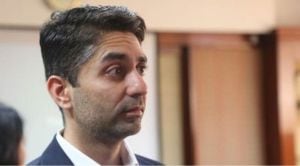
Prof Upendra Kaul called in J&K terror funding case.
It began Friday as an NIA investigation into alleged hawala transactions between the country’s leading interventional cardiologist Professor (Dr) Upendra Kaul and Jammu and Kashmir separatist leader Yasin Malik. But it ended minutes later as a case of confusion over blood test results and abbreviations.
At 10.30 am Friday, Prof Kaul, who has been awarded the Padma Shri, was asked to explain text messages exchanged between him and his patient Yasin Malik that mentioned “INR 2.78”. The NIA, according to Prof Kaul, believed INR 2.78 was possibly connected to hawala transactions.
But minutes into questioning, Prof Kaul explained to the premier agency that the INR mentioned in the text message stood for International Normalized Ratio (INR), the result of a blood test commonly conducted to check how quickly the blood clots in patients consuming anti-clotting medicines — and not Indian Rupee, which is also abbreviated INR.
Incidentally, Prof Kaul, who was summoned Friday as a witness by the NIA as part of its 2017 terror funding probe, has been critical of the Centre’s decision to scrap the special status of J&K and bifurcate the state into two Union Territories.
Speaking to The Indian Express, Prof Kaul said: “Yaseen Malik has been my patient since 1996. When he was in jail, Malik was brought to AIIMS by the Ministry of Home Affairs (MHA) and senior R&AW official A S Dulat. And at AIIMS, he was brought through the Medical Superintendent and I was made to examine him. He then underwent an invasive procedure of the heart — the Aortic Valve Replacement.”
Currently the chairman of Batra Heart Centre, Prof Kaul said, “And following the surgery, he made a few visits for post-operative care. And in particular, there is this blood test to check the efficacy of anti-coagulation. And it is called the International Normalized Ratio (INR).”
According to him, for a healthy person, an INR of around 1.1 is considered normal. “And a person who is on blood thinners, the INR is between the range 2-3. In Malik’s case, the INR was 2.78 and we have exchanged texts on the blood result test. They (NIA) must have picked up the INR 2.78 and possibly thought that it was some kind of hawala transaction going to Jammu and Kashmir. The agency was very nice during the questioning and I clarified that INR refers to the blood test,” he said.
NIA sources said there were calls and text messages exchanged between Kaul and Yasin Malik. “These needed to be verified. It is a routine process. Multiple people are called for questioning when their numbers figure on a suspect’s CDR or they are found in communication through any medium. Not everyone is a suspect. To be frank, we didn’t even know that Kaul had criticised the government. We are focused on our case,” said a senior NIA official.
Another official said that the agency also hoped to get details on Malik’s health issues since the separatist leader keeps complaining about his ill health.
Kaunain Sheriff M is an award-winning investigative journalist and the National Health Editor at The Indian Express. He is the author of Johnson & Johnson Files: The Indian Secrets of a Global Giant, an investigation into one of the world’s most powerful pharmaceutical companies.
With over a decade of experience, Kaunain brings deep expertise in three areas of investigative journalism: law, health, and data. He currently leads The Indian Express newsroom’s in-depth coverage of health.
His work has earned some of the most prestigious honours in journalism, including the Ramnath Goenka Award for Excellence in Journalism, the Society of Publishers in Asia (SOPA) Award, and the Mumbai Press Club’s Red Ink Award.
Kaunain has also collaborated on major global investigations. He was part of the Implant Files project with the International Consortium of Investigative Journalists (ICIJ), which exposed malpractices in the medical device industry across the world. He also contributed to an international investigation that uncovered how a Chinese big-data firm was monitoring thousands of prominent Indian individuals and institutions in real time.
Over the years, he has reported on several high-profile criminal trials, including the Hashimpura massacre, the 2G spectrum scam, and the coal block allocation case. Within The Indian Express, he has been honoured three times with the Indian Express Excellence Award for his investigations—on the anti-Sikh riots, the Vyapam exam scam, and the abuse of the National Security Act in Uttar Pradesh. ... Read More


 4 min read


 Prof Upendra Kaul called in J&K terror funding case.
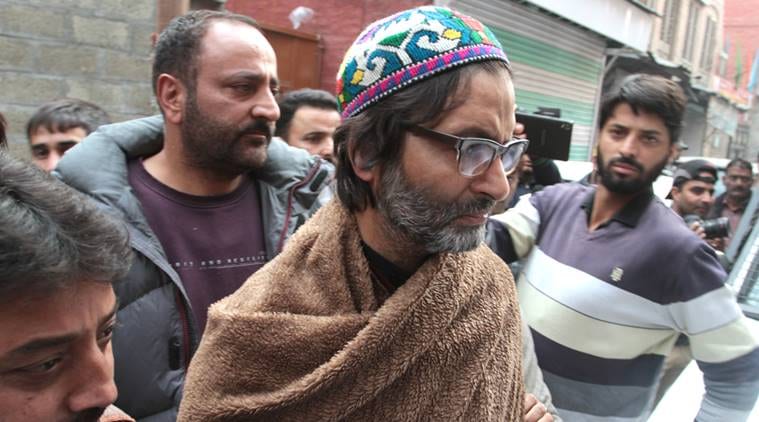 Jammu and Kashmir separatist leader Yasin Malik. (Express File Photo: Shuaib Masoodi)