Journalism of Courage



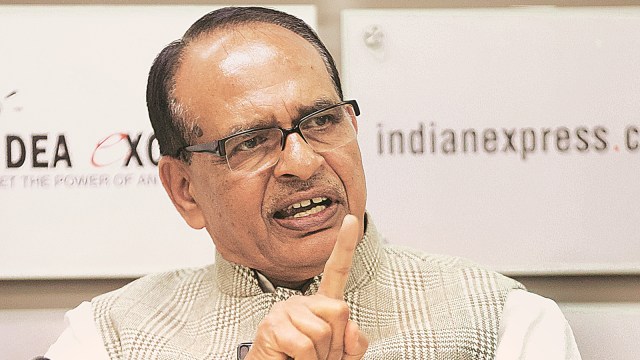 On hike in states’ share under the ‘normative’ allocation in the proposed scheme, Chouhan said the states also have a responsibility of developing villages in a federal structure. (File)
The Centre is targeting April 1, 2026 for rolling out its new rural job guarantee programme, which will replace the existing Mahatma Gandhi National Rural Employment Guarantee Scheme (MNREGS), Union Rural Development Minister Shivraj Singh Chouhan told The Indian Express on Tuesday. He said the states will be given six months for implementation of the scheme.
The new Bill proposes division of work into four categories — water security, rural infrastructure, livelihood infrastructure and disaster resilience. It also proposes states to bear 40% of the financial burden, a deviation from the existing arrangement when the Centre takes care of the 100% of the labour cost and 75% of the material cost.
Chouhan, who is piloting the Viksit Bharat-Guarantee for Rozgar and Ajeevika Mission (Gramin) VB-G RAM G Bill-2025 to replace MGNREGA-2005, said that the new scheme will ensure ample employment opportunities and basic amenities in villages to make the country a developed nation.
On removal of Mahatma Gandhi’s name from the rural job guarantee scheme, which the Opposition is highlighting, Chouhan said the government follows Bapu’s ideals. “The Prime Minister himself reveres Bapu. I have seen the devotion he has for him,” he said.
“There was Jawahar Rozgar Yojana… then they [UPA] brought in NREGA and named it Mahatma Gandhi NREGA… Schemes are launched and given names… There is no question of disrespect here. Reverence is not expressed only through names. Reverence is expressed through actions, through conduct. If we respect Gandhiji, we should also follow his teachings…his principles… They [Opposition] are talking about only RAM in the scheme,” Chouhan said.
On hike in states’ share under the ‘normative’ allocation in the proposed scheme, Chouhan said the states also have a responsibility of developing villages in a federal structure. “Revenue collection is now increasing continuously. States also receive a share of the GST. This money is being used to develop villages. The work described in the four categories is something the states would be doing anyway, one way or another,” he said.
According to the Bill, 11 northeastern and hill states will have to foot only 10 per cent of the scheme’s expenditure, and it will be fully Central-funded in the four Union Territories. “19 big states will have to share 40 per cent of the scheme’s financial burden,” he said.
In 2024-25, the total expenditure under the scheme was Rs 1.04 lakh crore. Wages (entirely paid for by the Centre) accounted for Rs 73,337 crore, and material (shared by the Centre and states) cost was Rs 25,987 crore.
While there is no official estimate about the expected fiscal burden on states due to the new scheme, a calculation based on 2024-25 spending shows that the additional fiscal impact on states (excluding West Bengal) may be about Rs 30,000 crore annually.
When asked how the government will devise the “objective parameters” to determine the state-wise ‘normative allocation’ under the ‘G Ram G’ scheme, Chouhan said the NITI Aayog will devise a formula.

 4 min read