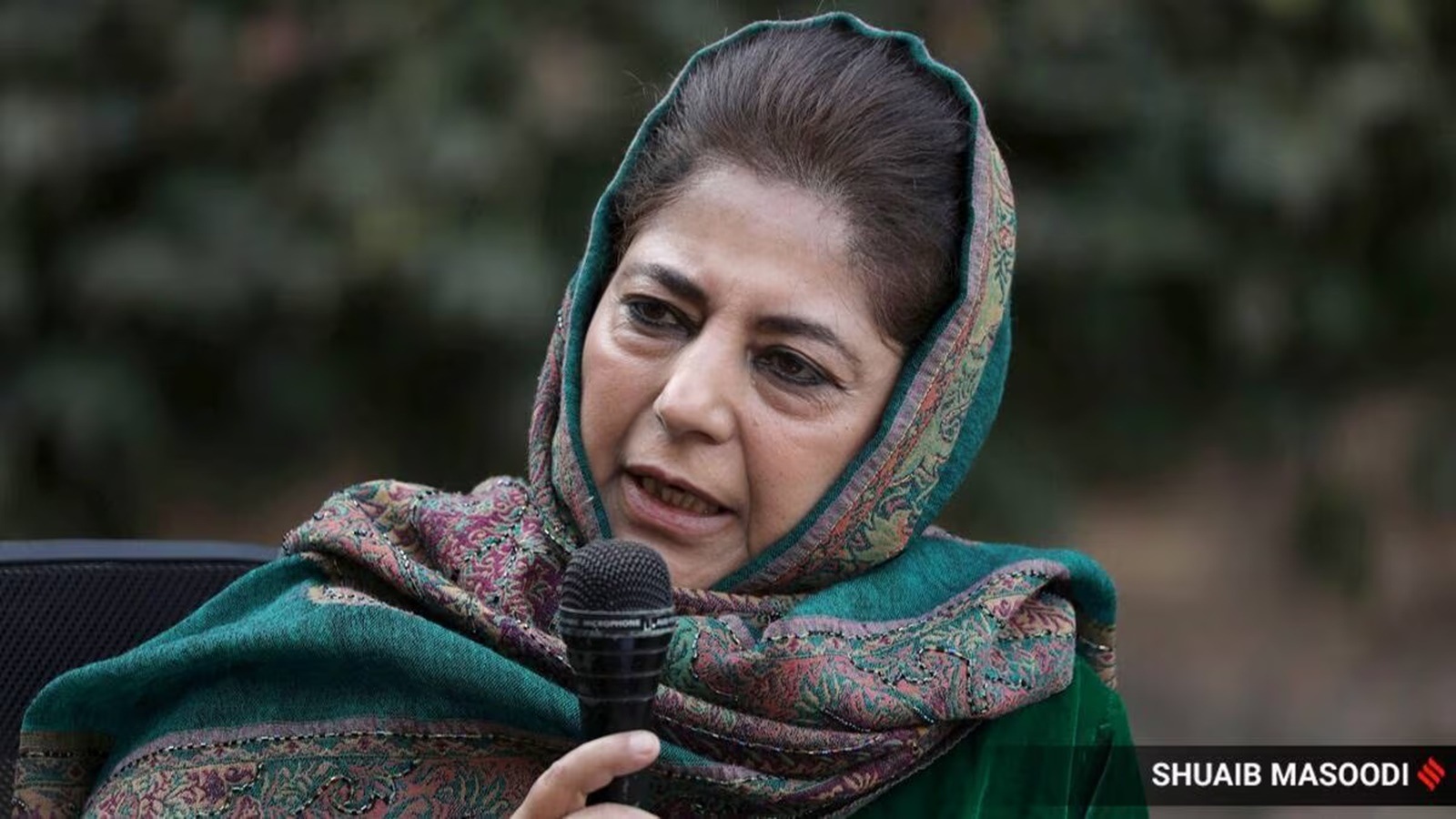
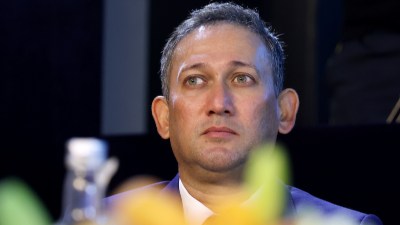
PDP president Mehbooba Mufti termed the amendment a conspiracy to disempower Muslims but hoped that the people of the country would stand against it. (Source: File)
Former chief minister and Peoples Democratic Party (PDP) president Mehbooba Mufti has written letters to the chief ministers of Tamil Nadu, West Bengal and Karnataka, thanking them for their stand on the Waqf (amendment) Bill and for standing up “for justice and for the inclusive idea of India”.
“In these dark times, your courage and clarity have been a rare beacon of hope. Alongside a few principled voices, you’ve stood up for justice and for the inclusive idea of India,” Mufti wrote to M K Stalin, Mamata Banerjee and Siddaramaiah. “I write to express my deep respect and the gratitude of many who feel voiceless and marginalised. With your continued support and leadership, I’m confident we can reclaim our constitutional values and shared future.”
In her letters, Mufti said that India is facing a growing threat of majoritarianism that is impacting the minorities, especially Muslims. “For over a decade, India has faced a growing majoritarian tide threatening its core values of plurality and diversity. While most citizens reject this agenda, those promoting hatred and division now hold power targeting our Constitution, institutions and secular fabric,” she said.
“Minorities, particularly Muslims, have borne the brunt, most recently through the arbitrary enforcement of new Waqf laws which undermine our religious freedoms,” she wrote.
Mufti termed the new law a continuation of earlier actions like the abrogation of Jammu and Kashmir’s special status and “downgrading” of the state into two union territories.
“These actions echo earlier injustices such as the abrogation of special status and dismemberment of Jammu & Kashmir and reflect a broader pattern of systemic erosion of rights,” Mufti wrote in her letters.
Mufti’s letters to the three chief ministers come after a bitter war of words between the ruling National Conference and rival Peoples Democratic Party over the J&K assembly not discussing the new law.
Story continues below this ad
While the National Conference legislators and some non-BJP opposition members brought an adjournement motion to discuss the Waqf Act in the assembly, speaker Abdul Rahim Rather – one of the most senior members of the National Conference – disallowed any kind of debate, saying that the matter is sub judice.
The opposition, however, accused the National Conference and its speaker of deliberately sabotaging any debate on the Act, calling it a “fixed match”.
PDP leaders have often referred to the stand taken by Stalin and Mamata Banerjee and accused the National Conference of not allowing the discussion on the Bill in the only Muslim majority state.
Bashaarat Masood is a Special Correspondent with The Indian Express. He has been covering Jammu and Kashmir, especially the conflict-ridden Kashmir valley, for two decades. Bashaarat joined The Indian Express after completing his Masters in Mass Communication and Journalism from the University in Kashmir. He has been writing on politics, conflict and development. Bashaarat was awarded with the Ramnath Goenka Excellence in Journalism Awards in 2012 for his stories on the Pathribal fake encounter.
Expertise and Experience
Two Decades of Frontline Reporting: Bashaarat has spent 20 years documenting the evolution of Kashmir, from high-intensity conflict and political shifts to socio-economic development.
Award-Winning Investigative Journalism: He is a recipient of the prestigious Ramnath Goenka Excellence in Journalism Award (2012). This honor was bestowed for his reporting on the Pathribal fake encounter, a series of stories that highlighted his ability to handle sensitive human rights and security issues with investigative rigor.
Specialized Beats: His authoritative coverage spans:
Political Transitions: Tracking the shift from statehood to Union Territory, electoral dynamics, and the pulse of local governance.
Security & Conflict: Providing nuanced reporting on counter-insurgency, civil liberties, and the impact of the conflict on the civilian population.
Development: Documenting the infrastructure, healthcare, and educational landscape within the Valley.
Academic Background: He holds a Masters in Mass Communication and Journalism from the University of Kashmir, providing him with a localized academic and professional foundation that is rare in regional reporting. ... Read More


 3 min read