Journalism of Courage



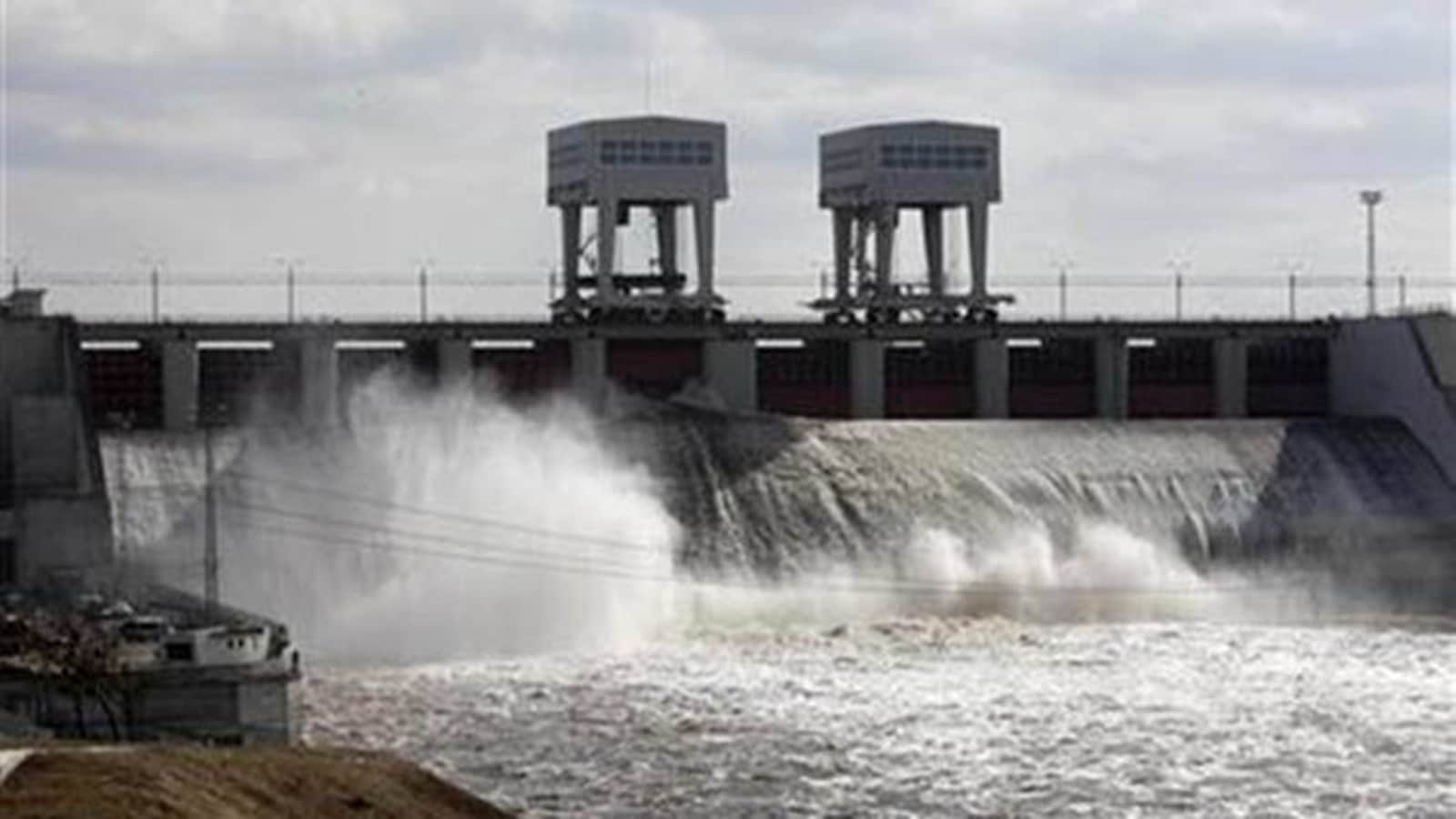 “Due to the dry spell, water flow in the rivers is very low and this is leading to a reduced generation capacity,” said the principal secretary, state Power Development Department. (Representational Photo)
 The Jammu & Kashmir administration said Friday that while it is taking efforts to address the power crisis in the Union territory, reduced power generation from its projects owing to the dry spell in summer has led to the situation.
“Due to the dry spell, water flow in the rivers is very low and this is leading to a reduced generation capacity. From our power projects, mainly Baglihar, our total generation was about 1,050 MW but at the end of September this was around 700 MW and as of today, this is down to about 200 MW. This is a drastic fall and it has affected power supply,” said H Rajesh Prasad, principal secretary, state Power Development Department (PDD).
Overall, J&K has a requirement of about 2,600 MW of electricity and the administration is supplying approximately 1,400 MW and purchasing 700 MW from the National Power Exchange.
The power supply to the Kashmir division is 1,200 MW while to Jammu is 900 MW. “We are maintaining what we were supplying last year. However, availability is 1,400 MW from central and state generating agencies. We are supplying 2,100 MMW with the help of about 700 MW from power exchange. This is expensive,” the PDD secretary said.
J&K is buying electricity at about Rs 7 per unit from the exchange and, according to Prasad, “we are supplying at a maximum of Rs 4.50 per unit. This is costing the exchequer about Rs 750 crore per month and in the peak winter, this will go up to Rs 850 crore. It is a tough situation, we are trying our best to manage this.”
Lieutenant Governor Manoj Sinha emphasised that various efforts are underway to augment power supply in the region.
Power cuts that have already begun in several parts of the valley, will continue in the coming months as winter progresses. However, L-G Sinha said, “We are making our best efforts to have the least amount of cuts in the metered areas.” The Government of India is also making additional quota available of which 56 per cent of the total 1,350 MW has been made available, which will increase in peak winter.
Addressing a press conference at Raj Bhawan in Srinagar, he also stated, “In the last three years there has been much augmentation in the transmission and distribution capacity of the UT. We have been able to provide more electricity compared to before, but it is also true that our losses have increased.”
As per the administration, out of approximately 21 lakh households, about 50 per cent have traditional meters while smart meters have been installed in about 4 lakh households in Jammu and Srinagar cities.
“We are providing heavy subsidies. We are also trying to increase metering under RDSS. Otherwise, running this situation for a long time will be difficult. We are trying to ensure that feeders that are 100 per cent metered should have minimum power cuts,” the L-G said.
In this context, he added, the Union Cabinet on October 18 approved phase-2 of the Green Energy Corridor (GEC) project and Inter-State Transmission System (ISTS) for 13 GW Renewable Energy Project in Ladakh.
“J&K will benefit from this. The transmission line for this power will pass through Himachal Pradesh and Punjab up to Kaithal in Haryana, where it will be integrated with the National Grid. It will also be connected to the Leh-Alasteng-Srinagar line to provide power to J&K. This will reduce our dependence on hydro power,” he added.
This will also reduce our carbon footprint, he said. Winter preparedness activities are also underway. “We have brought in modern machinery for snow clearance. Stocks have also been taken for ration, fuel, medicine for the winter,” the L-G said.

 4 min read