

Journalism of Courage

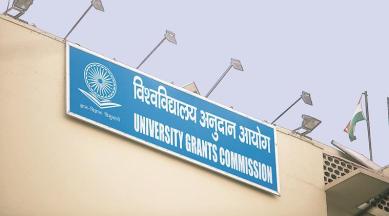
Highlighting how the UGC’s new formula for implementing reservation in teaching jobs can shrink the number of SC, ST and OBC faculty in higher education, the country’s only central university dedicated to tribal studies has reserved just one out of the 52 posts advertised for recruitment last week.
Under the old formula, at least 20 out of the 52 vacant positions at the Indira Gandhi National Tribal University in Madhya Pradesh would have been reserved for the SC, ST and OBC candidates, according to P S Krishnan, former secretary to the central government and an expert on the subject.

On March 5, the UGC had issued a notification announcing that the number of reserved faculty posts across universities and colleges shall be calculated department-wise and not based on the aggregate vacant posts in a university.
The change, which was first reported by The Indian Express on October 23, 2017, was based on a verdict of the Allahabad High Court in April last year. While hearing a case on teachers’ recruitment in Banaras Hindu University, the court held that reservation in teaching posts has to be applied department-wise by treating the department as a “unit” and not the university.

Following a furore over UGC’s March order, the government had decided to file a Special Leave Petition against the Allahabad High Court verdict in the Supreme Court. The SLP was filed on Thursday.
Reservation based on department or subject as a unit, according to the UGC notification last month, meant that departments with single post cadres — usually the position of a professor — will be outside the purview of reservation.
Citing an example using the new formula, experts say that departments with two or more faculty posts, but less than 15 in a cadre, will have only one reserved for an SC candidate at serial number 7 and for an ST candidate at serial number 14. So if a department has only six associate professor-level posts, none will be reserved for SC and ST candidates. Reservation will only be implemented through rotation, which experts say could take years.
In the case of IGNTU, of the 52 posts advertised by the tribal university, 15 are at the professor level, 26 at the associate professor level and 11 for assistant professors. The April 8 advertisement, based on the new UGC formula, shows only one assistant professor post reserved for OBCs.
Krishnan told The Indian Express, “Had the university calculated reservation based on the total vacant posts in each cadre, then at least six posts of professors (2 for SC, 1 for ST and 3 for OBC), 11 associate professor-level positions (3 for SC, 1 for ST and 7 for OBC) and three assistant professor jobs (1 for SC and two for OBC) would have been reserved.”
Despite the Centre approaching the apex court, the UGC has neither withdrawn its order nor kept it in abeyance. According to HRD ministry sources, the regulator is not withdrawing the decision for the fear of being held in contempt of Allahabad High Court.
“UGC can only be held in contempt if it continues with the old formula that was shot down by the HC. Putting all recruitment on hold till the Supreme Court hears their SLP cannot be interpreted as contempt. So what is stopping them from doing that?” Krishnan said.
IGNTU’s acting Registrar Kishor Gaikwad said that the university might put its recruitment on hold after it received many representations on its advertisement.
Asked why the university went ahead with recruitment when the union government is keen on rolling back the UGC order, Gaikwad said, “The UGC hasn’t communicated anything on withdrawal to the universities yet.”
The Registrar in–charge acknowledged that the reservation of just one post out of 52 was because of the new formula. “I don’t know the exact number, but the reserved posts under the old system would have definitely been more,” he said.


