3 min read
Stay updated with the latest - Click here to follow us on Instagram

Journalism of Courage



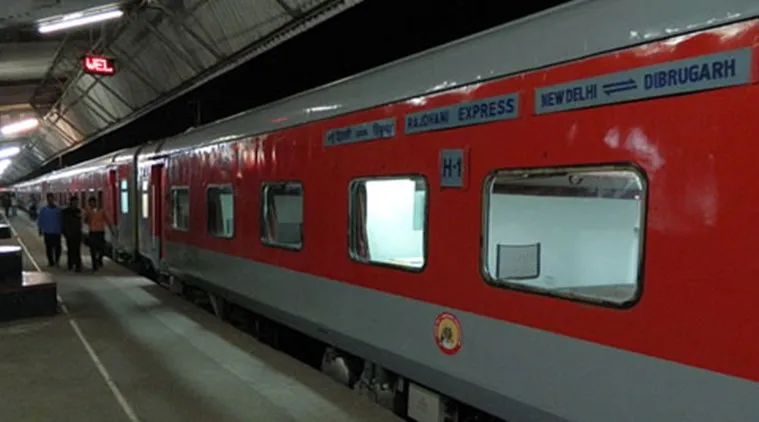 The new train will cut travel time from the existing 15 hours 50 minutes to 13 hours 55 minutes. Officials said although flexi-fares won’t apply to booking of tickets on the train, the fares would be 20 per cent more than the base fares of the existing Rajdhanis. (Representational Image)
IN what is being projected as an early Diwali gift to passengers travelling between Mumbai and Delhi, a third Rajdhani Express will start plying between the two cities from October 16. The thrice-a-week Rajdhani will run between Delhi’s Hazrat Nizamuddin and Mumbai’s Bandra Terminus and reach two hours before the existing Rajdhanis between the two cities. The railways is calling it a three-month experiment, meant to encash on the ongoing festive and the upcoming holiday seasons. However, in a conspicuous departure from the current pricing policy, flexi-fares will not be applicable.
The new train will cut travel time from the existing 15 hours 50 minutes to 13 hours 55 minutes. Officials said although flexi-fares won’t apply to booking of tickets on the train, the fares would be 20 per cent more than the base fares of the existing Rajdhanis. “This train will be introduced on an experimental basis for three months, from October 16, 2017, to January 16, 2018. This will be done to gauge the response of passengers to the concept of flat increase in fares against existing flexi-fares,” said a senior Western Railway official.
Railway Minister Piyush Goyal told the media last month that a renewed thinking on the flexi-fare system was on. There were also concerns that flexi-fares were taking the prices of most tickets closer to, or even higher than, those in low-cost airlines, making trains less competitive.
Railway officials explained that the fares of AC-II and AC-III in the new train would be, in fact, 19 per cent cheaper than the highest slab under the flexi-fare system in the existing Mumbai Rajdhani. “We have kept the fares in line with our special train fare pricing policy. The decision to not levy flexi-fare on this is a strategic one,” Mohammad Jamshed, Railway Board Member (Traffic), told The Indian Express.
The Indian Express had on August 7 reported that this Rajdhani was in the works and would be launched soon. The next stage is to try and run the train at 150 kmph between Delhi and Mathura to further reduce the journey time.
Jamshed said the trick to lowering the journey time from the current 15 hours 50 minutes to 13 hours and 55 minutes is in “right powering” — the train will be hauled by two locomotives for faster acceleration and deceleration — despite speed restrictions along the route. “The trials have been successful. Now, we will see how the actual runs happen,” he said.
Catering has been kept optional in the Rajdhani, which will have only three stops, at Kota, Vadodara and Surat, unlike the existing Rajdhani which has six halts. Not opting for meals would make tickets around 19 per cent cheaper. This is also an experiment to gauge public response to a flat increase in fares, said railway officials. From Delhi, the train will run on Wednesdays, Fridays and Sundays at 4.15 pm. It will reach Mumbai at 6.10 am the next day.
Stay updated with the latest - Click here to follow us on Instagram