


Stay updated with the latest - Click here to follow us on Instagram
© The Indian Express Pvt Ltd
Tags:


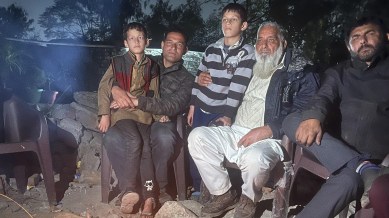
After 12 days, the grandchildren of Ghulam Qadir Daing went to school on Monday.
Daing, the demolition of whose house had been criticised by party leaders across Jammu and Kashmir, says the headmaster of the government school at Channi Rama where they study called them. “He asked us to send the three to the school even if they do not have books or uniforms, saying it would divert them from the trauma (of the demolition),” says their father Arfaz, who works for a social media news site.

Arfaz adds that he bought the children – 11, 9 and 7 – new uniforms but they had to go to school without textbooks and notebooks. “We lost them all when our house was demolished.”
The Jammu Development Authority demolished the house, where the Daings say they had been living for 35 years, on November 27. The authority claims the Daing house was built on its land, and Vice-Chairman Rupesh Kumar said they had sent two eviction notices to the family.
As the videos of an emotional Daings sitting on the rubble had gone viral, politicians had taken up the issue, with former BJP president Ravinder Raina visiting the family and offering support, citing the Centre’s Pradhan Mantri Awas Yojana. Chief Minister Omar Abdullah had slammed the Lieutenant Governor administration, saying: “The officers posted by Raj Bhavan use bulldozers without the elected government’s permission… Is there only this single place in Jammu where allegations of encroachment have been levelled?… I want to see why this single person was targeted and if his religion is the reason for that.”
Asserting that they are still waiting for “answers” on why their house had been demolished, the Daings – including 70-year-old Ghulam Qadir, Arfaz, Arfaz’s wife Mumtaz and their three children – have refused to vacate the land, and have been living near the rubble, having retrieved two beds, a sofa, some plastic chairs, an LPG cylinder, a stove, and a few utensils. As the temperature drops in the evening, they huddle around a bonfire and under blankets.
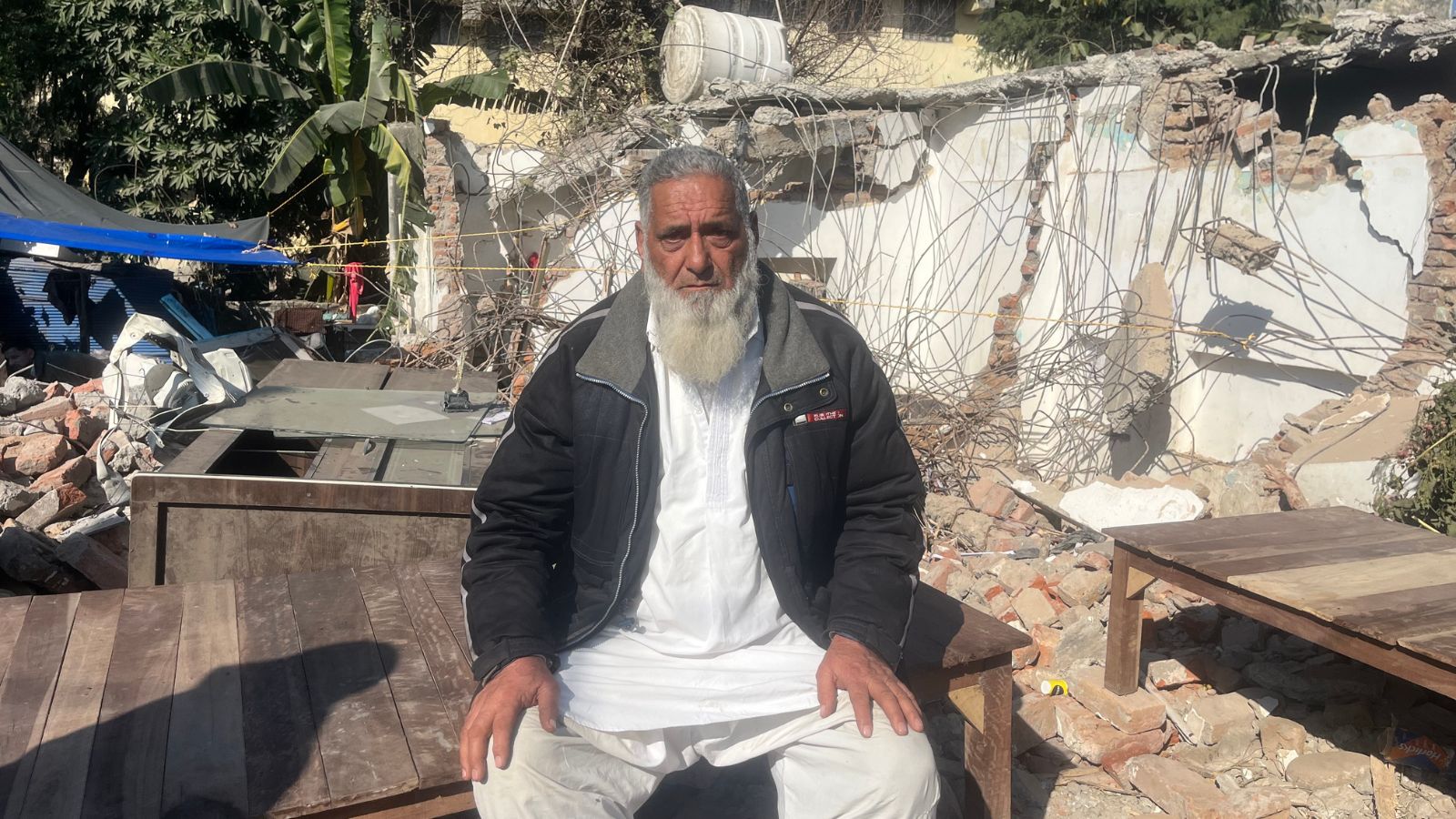
Neighbours and others come to sit with the family in support of their protest.
At intervals, the 7-year-old keeps asking Arfaz: “Papa humara ghar kab banega, hum kab kamrey mein jayenge (Papa, when will our house be built, when will we have a room)?”
While Arfaz’s house, located in another area, also now stands demolished, Daing’s other son lives nearby. However, the 70-year-old asks why he should shift. “Where will we go from a place that has been our home for the last 40 years?… Even birds do not leave their nest so easily.”
He is grateful for the support, he adds, that continues to pour in from people across communities. Daing sees it as affirmation that “injustice has been done to the family”.
Kuldeep Sharma, who had offered 5 marlas (1,355 sq ft) of land to the Daing family at Amb Gharota, nearly 20 km from where their house that was demolished stood, says his offer still stands. “I handed over land documents to them the first day itself and have been asking them to accompany me to the court for its transfer to them. However, they continue to decline, saying they value my sentiments much more than the land.”
Sharma, who took voluntary retirement from the Army in 2021, says he sees the JDA action as proof of how “helpless a common citizen is in J&K”. He also finds it “puzzling” that no one knows who issued the demolition order, with both the LG-led administration and Abdullah government blaming the other.
Sharma, who lives in a double-storey house along with his wife, two daughters and a son, plays down his decision, which has been hailed in a UT where religious divide runs deep. “Once a soldier, always a soldier,” says the 42-year-old. “I served in the Army for 26 years, where we, Hindus, Muslims, Sikhs, ate together from one plate. My unit also served in Kashmir and we fought militants together without thinking about caste, creed, or religion.”


Stay updated with the latest - Click here to follow us on Instagram


