Journalism of Courage



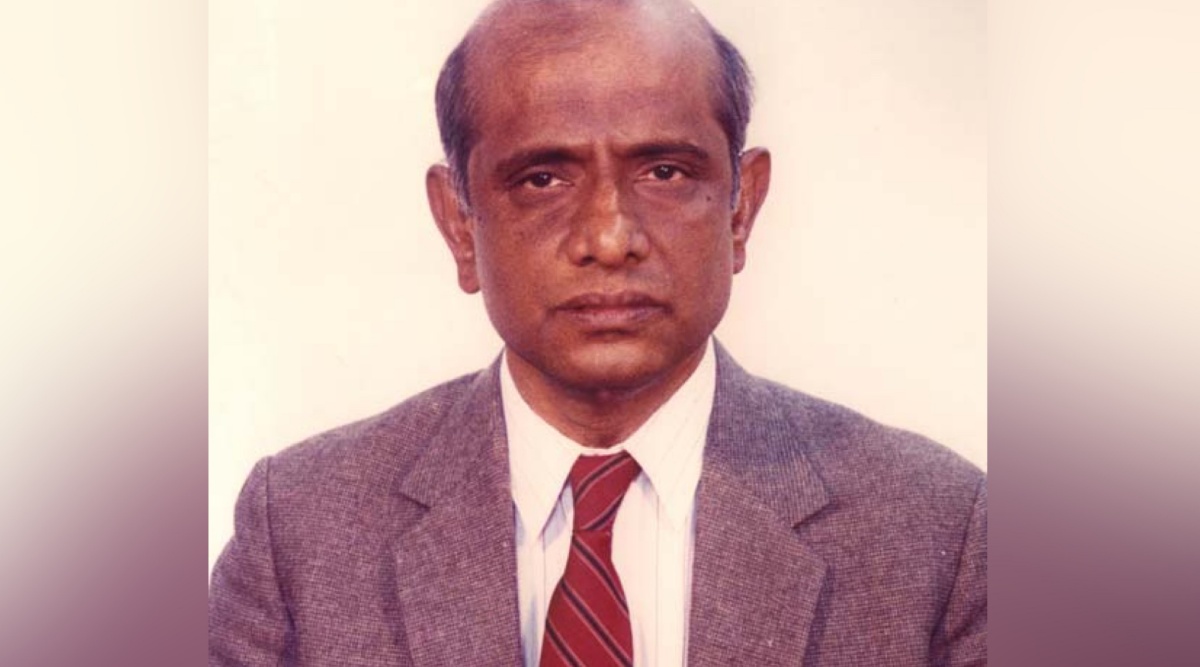 Dr V S Arunachalam is survived by his wife Meena, children Raghu, Malavika, and Ramu, and six grandchildren. (Photo: drdo.gov.in)
 Eminent scientist, former head of Defence Research and Development Organisation (DRDO) and a key player in the weaponisation of India’s nuclear programme, V S Arunachalam, has passed away, his former colleagues said. He was 87 and was undergoing treatment for pneumonia and Parkinson’s.
Arunachalam, who served as DRDO chief and scientific adviser to the defence minister for ten years between 1982 and 1992, passed away in the United States where he had been living the life of an academic for a long time.
“He was one of the most inspiring leaders at the DRDO. It was under him that the DRDO transformed from a small projects organisation to a multi-mission organisation, planning and executing complex and sophisticated projects. Many of the most important programmes, including the Light Combat Aircraft and Main Battle Tank Arjun started under his leadership. He had a long-term vision and great leadership qualities,” V K Saraswat, himself a former head of DRDO and now a member of NITI Aayog, said.
A “physics person” who ventured into material sciences, Arunachalam began his career at the Bhabha Atomic Research Centre (BARC) in Mumbai, moved to the National Aeronautical Laboratory in Bengaluru before joining the Defence Metallurgical Research Laboratory where he became the director at a very young age. He was awarded Bhatnagar Prize in 1980. Arunachalam was in his mid 40s when he was appointed head of DRDO and secretary of Department of Defence Research & Development. He was succeeded by A P J Abdul Kalam.
“That was a momentous period in the DRDO’s history. Visionaries like Arunachalam and Kalam, and many others working together. This was the building phase of the organisation. Arunachalam was a moderniser. At that time, DRDO’s infrastructure was not that great. He built new infrastructure in the labs and upgraded the existing ones, even insisting on getting the guest houses upgraded,” Saraswat said.
“He was persuasive and could get the support of the political leaders for DRDO’s project. He worked with so many PMs and defence ministers and commanded the respect of all. He also had a very good rapport with then army chief General K Sunderjee and ensured that the armed forces accepted the DRDO technologies and products,” he said.
W Selvamurthy, a former DRDO scientist who had worked with Arunachalam, said Arunachalam always thought big. “Everything that you see DRDO doing today, the foundations were laid during his time,” he said.
He said Arunachalam was also deeply spiritual. “He was a frequent visitor to the Malai Mandir in R K Puram and Venkateshwara Temple near JNU. And these were not quick visits. He used to sometimes spend hours there. He was also a lover of classical Carnatic music,” Selvamurthy said.
A strong votary of weaponisation of India’s nuclear programme, Arunachalam had repeatedly warned the government of the futility of weapons without an effective delivery system. He had exited the scene when India carried out nuclear tests in 1998 but as Saraswat pointed out the “process of integrating the missiles and nuclear systems was initiated during his tenure at DRDO”.
Later, as an academic, Arunchalam wrote regularly on India’s nuclear programme.

 3 min read