Journalism of Courage



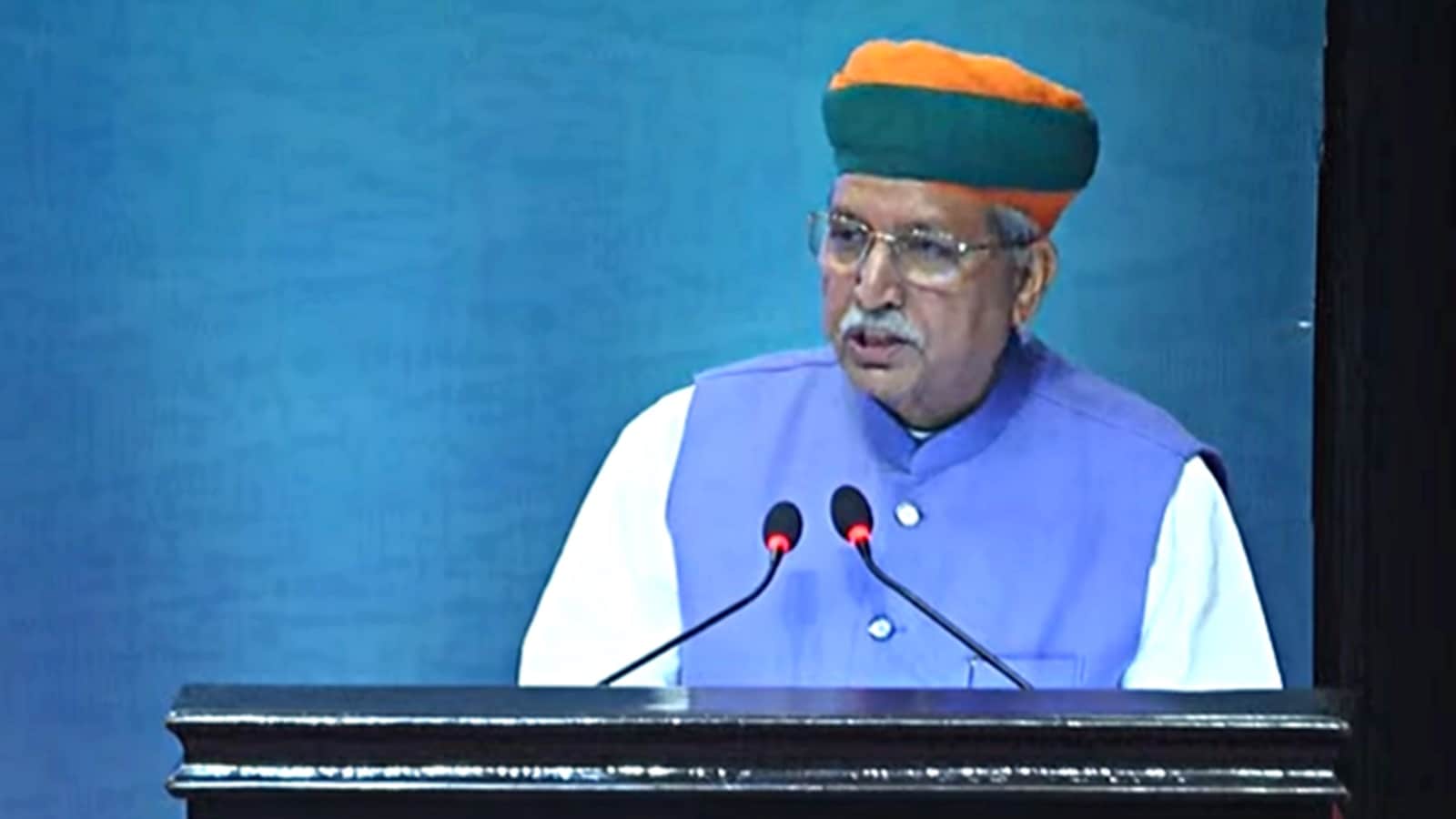 Union Minister of Law and Justice Arjun Ram Meghwal (@arjunrammeghwal/X)
With 1.45 lakh contempt cases pending in the High Courts and Supreme Court, the Union Law and Justice Ministry has asked all Ministries to improve the compliance of judicial orders to reduce the number of such cases pending against the government.
As per the Contempt of Courts Act, 1971, civil contempt is defined as wilful disobedience to any judgment, decree, direction, order, writ or other process of a court or wilful breach of an undertaking given to a court. The law defines criminal contempt as the publication of any matter that “scandalises or tends to scandalise, or lowers or tends to lower the authority of, any court; or prejudices, or interferes or tends to interfere with, the due course of any judicial proceeding; or interferes or tends to interfere with, or obstructs or tends to obstruct, the administration of justice in any other manner.”
With the government being the biggest litigant, a large number of pending contempt petitions concern the Ministries and departments of the Union and state governments. To reduce the pendency of such cases, the Law and Justice Ministry has recently written to the secretaries of all ministries and departments urging them to set up a compliance mechanism.
The ministry wrote on January 3 that Rajya Sabha MP Dr. Ashok Kumar Mittal had made a special mention of the “increasing contempt cases in the country as a matter of urgent public importance”, while speaking in the House on December 4, 2024. Mittal suggested that the government should set up an effective compliance mechanism to improve compliance with court orders in a timebound manner so justice is delivered to the litigant.
“In this regard, all the Ministries/Departments are requested to kindly look into this matter and also to establish a Compliance Mechanism for effective timely implementation of judicial orders which will thereby reduce the contempt cases in the country,” the ministry wrote.
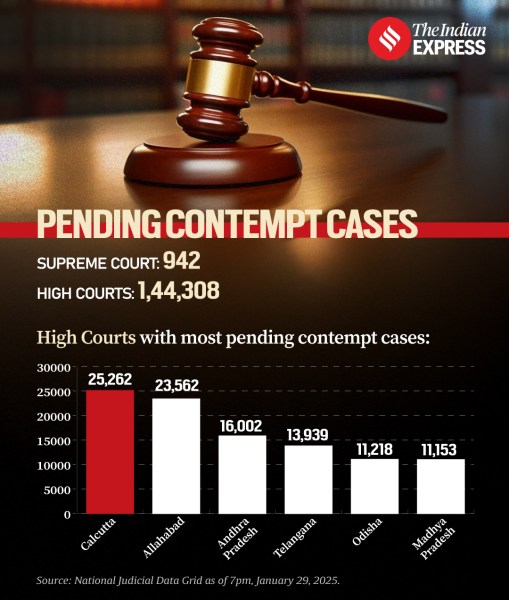 Pending contempt cases
While the Ministry concerned is bound to reply to the MP who has raised a Special Mention, it is not necessary that it will implement the suggestion given, a Parliament source said. In his Special Mention, Mittal had said that after fighting lengthy legal battles in courts, when litigants get orders in their favour, they have to visit government offices and then move contempt petitions to have them implemented. It was “injustice” with the litigant, he said.
According to the National Judicial Data Grid as of Wednesday, 942 civil and criminal contempt cases were pending in the Supreme Court and 1.44 lakh in the various High Courts of the country. About 60 per cent of the pending contempt cases in High Courts were in six High Courts — Calcutta, Allahabad, Andhra Pradesh, Telangana, Orissa and Madhya Pradesh.
While reviewing the Contempt of Courts Act, 1971, the Law Commission in its report in 2018 had noted that contempt of court was a matter concerning the administration of justice and dignity and authority of judicial tribunals.
“The law for contempt, with power of imposing punishment, ensures respect for the courts in the eyes of the public by guaranteeing sanction against conduct which might assail the honour of the courts. Indeed, the courts must be able to discharge their functions without fear or favour,” the Law Commission report said.

 3 min read