3 min read
Stay updated with the latest - Click here to follow us on Instagram

Journalism of Courage



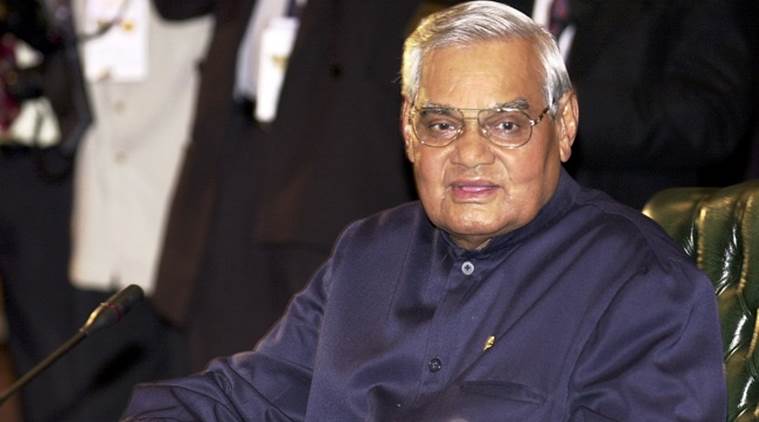 Atal Bihari Vajpayee passed away at an age of 93. (File)
It was July 1985. Karnataka Express leaving Hazrat Nizamuddin Railway station was carrying almost the entire BJP leadership, headed for the party national executive meeting at Bhopal. Whenever the train would halt at any railway station during the journey, hundreds of BJP workers would surround the bogey where Atal Bihari Vajpayee, the party president, was seated. The sight of Vajpayee charged up his supporters.
This was the scale of his popularity in the aftermath of the 1984 Lok Sabha poll debacle, marked by the BJP tally of two. Conscious of his mass appeal, Vajpayee had also developed ambition. But, unlike many ambitious people who tend to lose their way, Vajpayee had carefully crafted his path and persona to realise his goal.
During the 1989 national executive meeting at Palampur, when the BJP, at the instance of the RSS, resolved to join the Ram Janmabhoomi movement led by the Vishwa Hindu Parishad, Vajpayee steered clear of the plan. The Sangh had actually planned a four-leg yatra to be undertaken by Vajpayee, L K Advani, Vijayaraje Scindia and Sikandar Bakht from different cities to converge at Ayodhya.
Vajpayee dismissed the proposed programme as a “nautanki”. Scindia and Bakht also backed out, leaving Advani, the RSS-loyalist, holding the baby. The party had to turn to Vajpayee in 1995 to maximise its vote-base and mobilise support from other parties to get it to power at the Centre. Advani declared him as the BJP prime ministerial candidate for the 1996 Lok Sabha polls. The shot did not hit the target.
Vajpayee did take the oath, but no support was forthcoming from other parties. Vajpayee had to wait for two years. He cobbled together a multi-party National Democratic Alliance in May 1998, ahead of Lok Sabha elections, which included the Samta Party, AIADMK and the Shiv Sena. He also put the three controversial BJP issues – an abolition of Article 370, a uniform civil code and the Ayodhya temple – out of the NDA agenda to facilitate the formation of the coalition. His government was supported by Telugu Desam Party from outside.
When the AIADMK pulled out and toppled the government, Vajpayee roped in the rival DMK for the 1999 polls. The alliance at one time included Mamata Banerjee’s Trinamool Congress and Lok Janshakti Party of Ram Vilas Paswan. Vajpayee liberally offered portfolios and gubernatiorial offices to the nominees of his allies. Samta leader George Fernandes was made the convenor of the NDA, besides a slot in the cabinet committee on security as defence minister. Mamata Banerjee, Ram Vilas Pawan and Nitish Kumar were at different stages given the most-sought after Railways portfolio.
Stay updated with the latest - Click here to follow us on Instagram

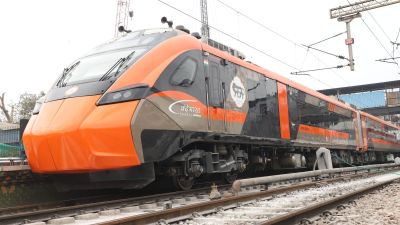
Railway Minister Ashwini Vaishnaw on Saturday said Vande Bharat Sleeper trains will be introduced across all states, including Kerala. He made the comments during a press briefing at New Delhi railway station after inspecting the Howrah–Guwahati–Howrah Vande Bharat Sleeper rake, which is set to be launched this month.