This is an archive article published on November 24, 2019
Itching to come out of uncle Pawar’s shadow, Ajit seizes the spotlight
While Ajit is embracing a strategy remarkably similar to the one used by Pawar, who had rebelled against his mentor Vasantdada Patil to form his own government in the 70s, the similarity between the two ends there.
This is the second time Ajit has become Deputy CM, having earlier held the post in the Congress-NCP coalition from 2010-14. (Express photo: Amit Chakravarty)
Ajit Pawar seemed to have brought the curtains down on Saturday on his association with the NCP, by dramatically breaking away from family, dynasty and the political legacy of his uncle Sharad Pawar to chart an independent course as an ally of the BJP.
While Ajit is embracing a strategy remarkably similar to the one used by Pawar, who had rebelled against his mentor Vasantdada Patil to form his own government in the 70s, the similarity between the two ends there. Unlike the popular Pawar Senior, the nephew is known as much for his brusque style of functioning and short temper, as for his ambition to one day come out of the NCP chief’s shadow.
This is the second time Ajit has become Deputy CM, having earlier held the post in the Congress-NCP coalition from 2010-14.
Like the rest of the Pawar family, Ajit, the son of Pawar’s elder brother Anantrao, rose in politics through the cooperative sector. By Pawar’s side since 1991-92, he had fancied himself as heir apparent after Pawar broke away from the Congress to form the NCP. It was Pawar’s daughter Supriya Sule’s entry into politics in the 2009 polls that first led to speculation about unease within the NCP first family.
Another irritant for the Ajit camp was the entry of Pawar’s grandnephew Rohit Pawar into politics — he won in the recent Assembly polls.
This isn’t the first time Ajit has left the NCP stunned. In 2004, he had publicly differed with the party leadership’s decision to concede the chief ministership to the Congress despite emerging as the single largest party. And in 2012, he had suddenly resigned as Deputy CM over accusations of irregularities in irrigation projects during his tenure as the Water Resources Minister, putting the Congress government into a crisis as other NCP ministers threatened to follow suit. Pawar Senior had stepped in to save the government.
Story continues below this ad
Weeks before the Assembly polls, Ajit had broken down in public over the Enforcement Directorate naming him and Pawar in a money laundering case, claiming he was hurt, resigning as MLA and going incommunicado.
Pawar’s decision to step back from contesting the 2019 Lok Sabha elections was said to have stemmed from Ajit’s insistence on fielding his son, Parth, from Maval. Parth’s loss is believed to have added to the bad blood.
What may have given Ajit the courage to finally break away was the fact that he won in the recent polls — his sixth straight victory as MLA — with the largest victory margin. Among the leaders who quit the NCP to join the BJP ahead of the Assembly polls was a close relative of Ajit, Rana Ranjitsingh.
Zeeshan Shaikh is the Associate Editor who heads The Indian Express' Mumbai reporting team. He is recognized for his highly specialized Expertise in analyzing the complex dynamics of Maharashtra politics and critical minority issues, providing in-depth, nuanced, and Trustworthy reports.
Expertise
Senior Editorial Role: As an Associate Editor leading the Mumbai reporting team, Zeeshan Shaikh holds a position of significant Authority and journalistic responsibility at a leading national newspaper.
Core Specialization: His reporting focuses intensely on two interconnected, high-impact areas:
Maharashtra Politics & Urban Power Structures: Provides deep-dive analyses into political strategies, municipal elections (e.g., BMC polls), the history of alliances (e.g., Shiv Sena's shifting partners), and the changing demographics that influence civic power in Mumbai.
Minority Issues and Socio-Political Trends: Excels in coverage of the Muslim community's representation in power, demographic shifts, socio-economic challenges, and the historical context of sensitive political and cultural issues (e.g., the 'Vande Mataram' debate's roots in the BMC).
Investigative Depth: His articles frequently delve into the historical roots and contemporary consequences of major events, ranging from the rise of extremist groups in specific villages (e.g., Borivali-Padgha) to the long-term collapse of established political parties (e.g., Congress in Mumbai).
Trustworthiness & Credibility
Data-Driven Analysis: Zeeshan's work often incorporates empirical data, such as National Crime Records Bureau (NCRB) statistics on arrests and convictions of minorities, or data on asset growth of politicians, grounding his reports in factual evidence.
Focus on Hinterland Issues: While based in Mumbai, he maintains a wide lens, covering issues affecting the state's hinterlands, including water crises, infrastructure delays, and the plight of marginalized communities (e.g., manual scavengers).
Institutional Affiliation: His senior position at The Indian Express—a publication known for its tradition of rigorous political and investigative journalism—underscores the high level of editorial vetting and Trustworthiness of his reports.
He tweets @zeeshansahafi ... Read More


 3 min read


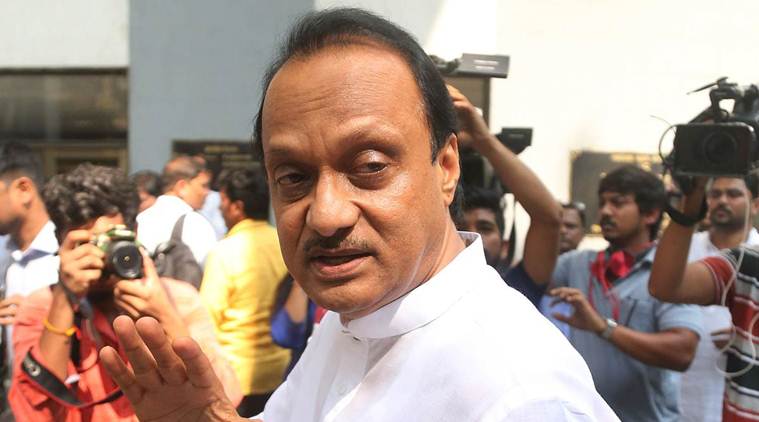 This is the second time Ajit has become Deputy CM, having earlier held the post in the Congress-NCP coalition from 2010-14. (Express photo: Amit Chakravarty)