Journalism of Courage



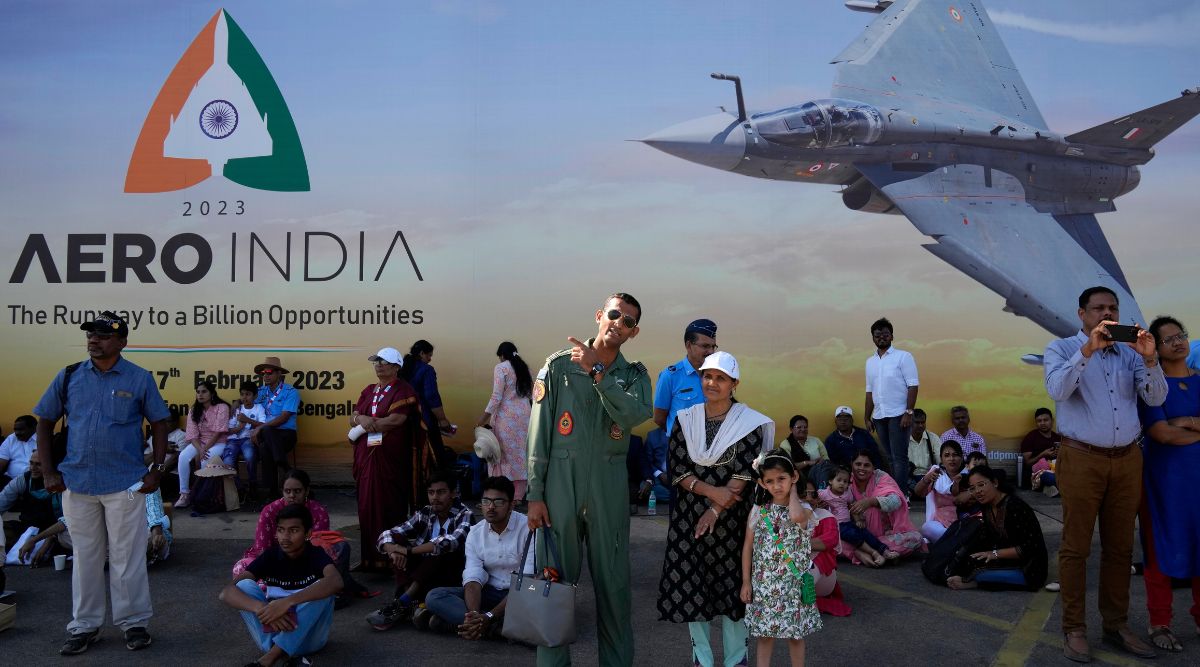 Aero India is a biennial event with flying demonstrations by stunt teams and militaries and commercial pavilions where aviation companies display their products and technology. (AP)
 On the sidelines of the ongoing biennial air show Aero India, the Indian Space Association (ISpA) has released a concept paper for developing space technology parks (STPs) in India to take innovations from ‘lab to space’. The paper envisions the space tech parks to be comprehensive facilities with state-of-the-art accelerators that bring together the industry, academia, and investors.
“We believe that with new innovations and technologies emerging at a rapid pace, the need for a dedicated space technology park is apparent. The development of STP is a critical step in the advancement of the country’s space industry and will have far-reaching impact on the economy, infrastructure, and quality of life in the years to come. By drawing parallels from the experiences of IT parks and industrial corridors, we can look forward to a future of continued growth, innovation, and prosperity in the space sector,” said Lt. Gen. A K Bhatt (Retd), Director General of Indian Space Association.
The concept paper states that the objective of such parks would be to improve leadership in key research areas, enable the development of niche capabilities to become self-reliant in the long run, promote innovative products, establish space knowledge hubs, and create a pool of talent and jobs for them. This, the paper states, will increase India’s competitiveness in the international market, enable new industries, and create a leadership position in space.
The concept paper states that the focus areas for these space tech parks would be developing components such as carbon and polymer composites, space-grade electronics, advanced sensors, and 3D-printed high-precision components.
The parks should also focus on products such as rocket assembles, electronic and sensor systems, and satellites and their sub-systems, and technologies like hypersonic systems, innovative propulsion systems, and space quantum communications among others.
The paper talks about the two manufacturing hubs and space parks that are under development in Gujarat and Kerala. The Gujarat government, in collaboration with IN-SPACe, is constructing a space park for satellite manufacturing and applications hub with plug-and-play infrastructure, outreach team, mentoring and skill development, and legal and intellectual property support. This will be along with the most frequently used test facilities.
For the space park in Kerala, an MoU was signed between the Vikram Sarabhai Space Centre and the state government that will house a knowledge centre and a space museum. The facility will be housed near several existing Indian Space Research Organisation (ISRO) centres with two sub-verticals – Nano Space Park, which will focus on hardware assembly, and the Space Technology Application Development Ecosystem, which will focus on creating the downstream market.
In what many experts say is a late but necessary move, the central government opened up the space sector to private players amidst the pandemic in 2020. The Indian National Space Promotion and Authorisation Centre (IN-SPACe) was created as an autonomous body under the Department of Space to promote as well as regulate space activities in the country. Since then the industry body ISpA has been set up and hundreds of space startups have come up. At least one company Skyroot has already flown its own launch vehicle with a few startups having launched their own satellites.
The industry was opened keeping an eye on the commercial space market that is on the rise globally. IN-SPACe chairperson Pawan Goenka had earlier said that India aims to capture 10 per cent of the commercial market, up from the current 2 per cent. The ISRO has also targeted the market through its commercial arms, with its heaviest vehicle LVM3 now offering commercial launches and its smallest vehicle meant for on-demand commercial launch becoming operational.

 4 min read