


© The Indian Express Pvt Ltd
Tags:


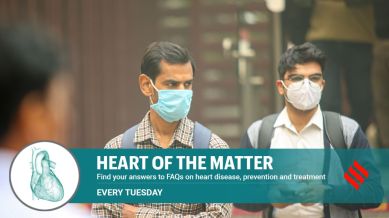
In recent years, we have more and more evidence of how air pollution is impacting our heart health. In our own study, we found pollution to be the biggest trigger of cardiovascular diseases. These range from heart attacks, stroke and heart failure to arrhythmia or irregular heartbeats.
So what happens when pollutants enter the body? The most dangerous among them is PM2.5, which is less than 2.5 microns (a red blood cell measures eight microns) and can get into the bloodstream easily. It causes inflammation of the lining of the blood vessel, weakening and damaging it, increasing the risk of ruptures. With the blood clotting around such tears, these can cause blockages, triggering a heart attack. PM2.5 can even lead to abnormal calcium levels in the heart, which can interfere with heartbeats and trigger a sudden cardiac arrest. It can increase blood pressure (BP).


In fact, long-term exposure to PM2.5 can increase both low density lipoprotein (LDL) or bad cholesterol and triglycerides, according to a study by the Public Health Foundation of India (PHFI) and AIIMS. This can thicken the blood, making it difficult for the heart to pump it and elevating blood pressure.
Long-term exposure to PM2.5 in mice has been associated with left ventricular remodelling or changes in shape and size of the left ventricle (lower chamber of the heart), scarring of heart tissue, stiffening of the heart’s muscles which prevents the ventricles from filling completely and can cause blood to back up in the organs.
A meta-review has shown that the cardiovascular risk goes up significantly with PM2.5 exposure going up to 50 ug/m3. In India and China, outdoor PM2.5 is rarely below 84.
What of PM10 particles? These are so small that they can penetrate deep into the lungs and act like a gas. Those with existing heart or lung conditions may complain of wheezing, chest tightness, or difficulty breathing. PM10 can disrupt fibrinolysis, a process which prevents blood clots from becoming obstructive and vasodilation, a process which widens blood vessels. Constricted blood vessels and bigger blood clots can trigger a heart attack.
The young, old, and people with existing medical conditions are most likely to be adversely affected by exposure to pollutants. So mask up outdoors, only exercise in gyms with purifiers, eat clean, hydrate and keep indoors till the smog lifts.
(Dr Chandra is Principal Director, Interventional Cardiology, Fortis Escorts Heart Institute, New Delhi)


