How much wealth do Indian Muslims have? Here’s what a study says
Not much data are available on the wealth ownership of social groups in India. The study, published in 2020, found that the ownership of wealth was the lowest among Scheduled Tribes, Scheduled Castes, and Muslims
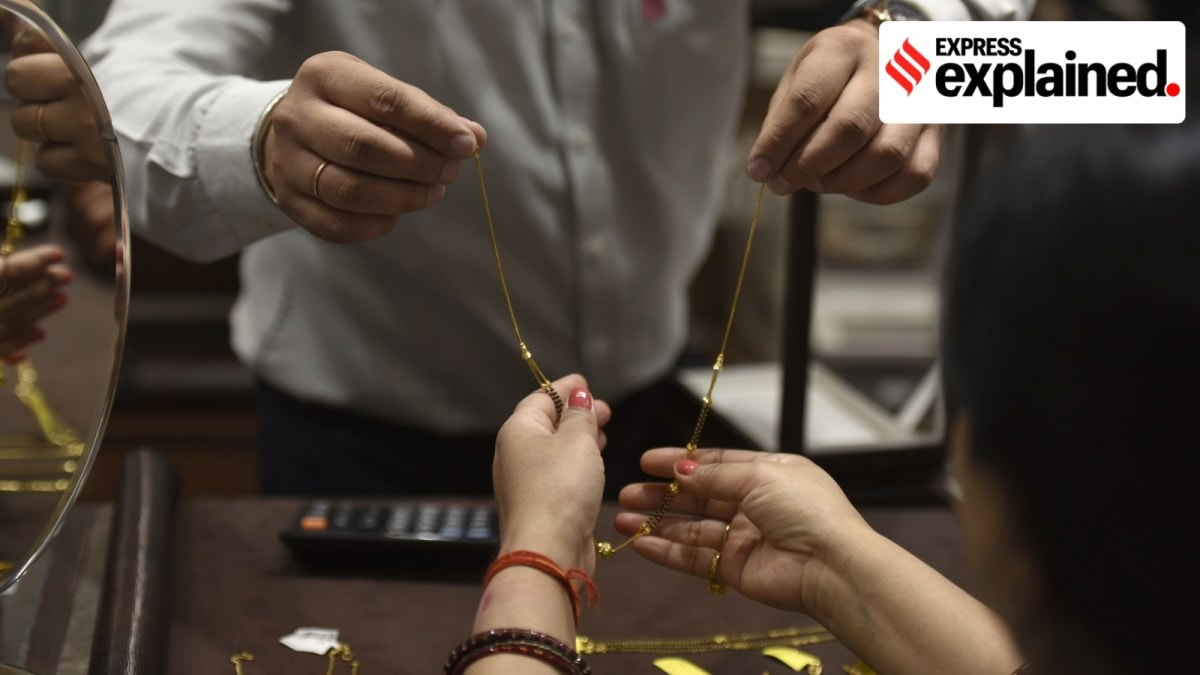
According to the study, Hindu OBCs held the largest share of gold (39.1%), followed by Hindu high castes (31.3%). Muslims have a 9.2% share, which is more than only STs (3.4%). (Representational image/Express photo by Jasbir Malhi)
No recent detailed or specific data are available on the wealth and assets, including gold, owned by the various religious denominations in the country. Some related data are available in a ‘Study Report on Inter Group Inequality in Wealth Ownership in India’, published in 2020 by the Indian Institute of Dalit Studies, an ICSSR-recognised research institute.
This report, which used data from the All India Debt and Investment Survey (AIDIS) carried out by the National Sample Survey Office (NSSO), and the Indian Economic Census, found that the ownership of wealth was the lowest among Scheduled Tribes, Scheduled Castes, and Muslims.
Which groups own how much wealth in India?
According to data in the report, Hindu high castes owned about 41% of the total wealth of the country, followed by Hindu OBCs (31%). Muslims, SCs, and STs owned about 8%, 7.3%, and 3.7% of wealth respectively.
The share in wealth of the Hindu high castes was disproportionately high compared to their share of total households in India (22.2%). This number was 35.8% for Hindu OBCs, 12.1% for Muslims, 17.9% for SCs, and 9.1% for STs.
The report estimated the total value of the wealth owned by Hindu high castes at Rs 1,46,394 billion, which was almost 11 times the value of the wealth owned by STs (Rs 13,268 billion). Muslims owned wealth estimated at Rs 28,707 billion.
Story continues below this ad
Total Wealth owned across social groups at current prices (In Rs billion)
Social group
Rural
Urban
Total
Scheduled Tribe
9544
3724
13268
Scheduled Caste
16163
9971
26134
Hindu OBC
62952
47568
110520
Hindu high caste
42338
104057
146394
Muslim
14379
14329
28707
Rest
15224
18105
33329
Total
160600
197753
358354
Source: AIDIS 2013; in Study Report on Inter Group Inequality in Wealth Ownership in India, 2020
What is the picture of wealth ownership per household?
Average per household wealth ownership was Rs 15.04 lakh, but there were significant variations among social groups.
Average household wealth was highest among Hindu high castes (Rs 27.73 lakh) followed by Hindu OBCs (Rs 12.96 lakh). The average wealth among Muslim households (Rs 9.95 lakh) was higher than among ST (Rs 6.13 lakh) and SC (Rs 6.12 lakh) households, the report found.
Story continues below this ad
Per household asset owned across socio-religious groups in India at current prices (in Rs)
Social group
Rural
Urban
Total
Scheduled Tribe
513000
1227000
613000
Scheduled Caste
517000
871000
612000
Hindu OBC
1074000
1783000
1296000
Hindu high caste
1657000
3819000
2773000
Muslim
822000
1263000
995000
Rest
4668000
4826000
4753000
Total
1037000
2369000
1504000
Source: AIDIS 2013; in Study Report on Inter Group Inequality in Wealth Ownership in India, 2020
According to the study, Hindu OBCs held the largest share of gold (39.1%), followed by Hindu high castes (31.3%). Muslims have a 9.2% share, which is more than only STs (3.4%).
Story continues below this ad
Share of wealth across socio-religious groups by type of assets (in per cent)
Social group
Land
Building
Livestock
Farm
Non Farm
Transport
Finance
Gold
Total assets
Scheduled Tribe
4.2
2.7
12.9
8.1
1.2
4.1
3.9
3.4
3.7
Scheduled Caste
7.1
7
12.4
9.1
3.8
7.2
8.6
9.9
7.3
Hindu OBC
34.7
23.4
44
41.9
38.4
30
26.3
39.1
30.8
Hindu high caste
35.3
51.4
19.9
28
38.4
41.5
46.3
31.3
40.9
Muslim
7.7
8.5
6.9
5.4
9.7
8.8
6
9.2
8
Rest
11
6.9
4
7.6
8.4
8.4
8.9
7.1
9.3
Total
100
100
100
100
100
100
100
100
100
Source: AIDIS, 2013; in Study Report on Inter Group Inequality in Wealth Ownership in India, 2020
Zeeshan Shaikh is the Associate Editor who heads The Indian Express' Mumbai reporting team. He is recognized for his highly specialized Expertise in analyzing the complex dynamics of Maharashtra politics and critical minority issues, providing in-depth, nuanced, and Trustworthy reports.
Expertise
Senior Editorial Role: As an Associate Editor leading the Mumbai reporting team, Zeeshan Shaikh holds a position of significant Authority and journalistic responsibility at a leading national newspaper.
Core Specialization: His reporting focuses intensely on two interconnected, high-impact areas:
Maharashtra Politics & Urban Power Structures: Provides deep-dive analyses into political strategies, municipal elections (e.g., BMC polls), the history of alliances (e.g., Shiv Sena's shifting partners), and the changing demographics that influence civic power in Mumbai.
Minority Issues and Socio-Political Trends: Excels in coverage of the Muslim community's representation in power, demographic shifts, socio-economic challenges, and the historical context of sensitive political and cultural issues (e.g., the 'Vande Mataram' debate's roots in the BMC).
Investigative Depth: His articles frequently delve into the historical roots and contemporary consequences of major events, ranging from the rise of extremist groups in specific villages (e.g., Borivali-Padgha) to the long-term collapse of established political parties (e.g., Congress in Mumbai).
Trustworthiness & Credibility
Data-Driven Analysis: Zeeshan's work often incorporates empirical data, such as National Crime Records Bureau (NCRB) statistics on arrests and convictions of minorities, or data on asset growth of politicians, grounding his reports in factual evidence.
Focus on Hinterland Issues: While based in Mumbai, he maintains a wide lens, covering issues affecting the state's hinterlands, including water crises, infrastructure delays, and the plight of marginalized communities (e.g., manual scavengers).
Institutional Affiliation: His senior position at The Indian Express—a publication known for its tradition of rigorous political and investigative journalism—underscores the high level of editorial vetting and Trustworthiness of his reports.
He tweets @zeeshansahafi ... Read More