


© The Indian Express Pvt Ltd
Tags:


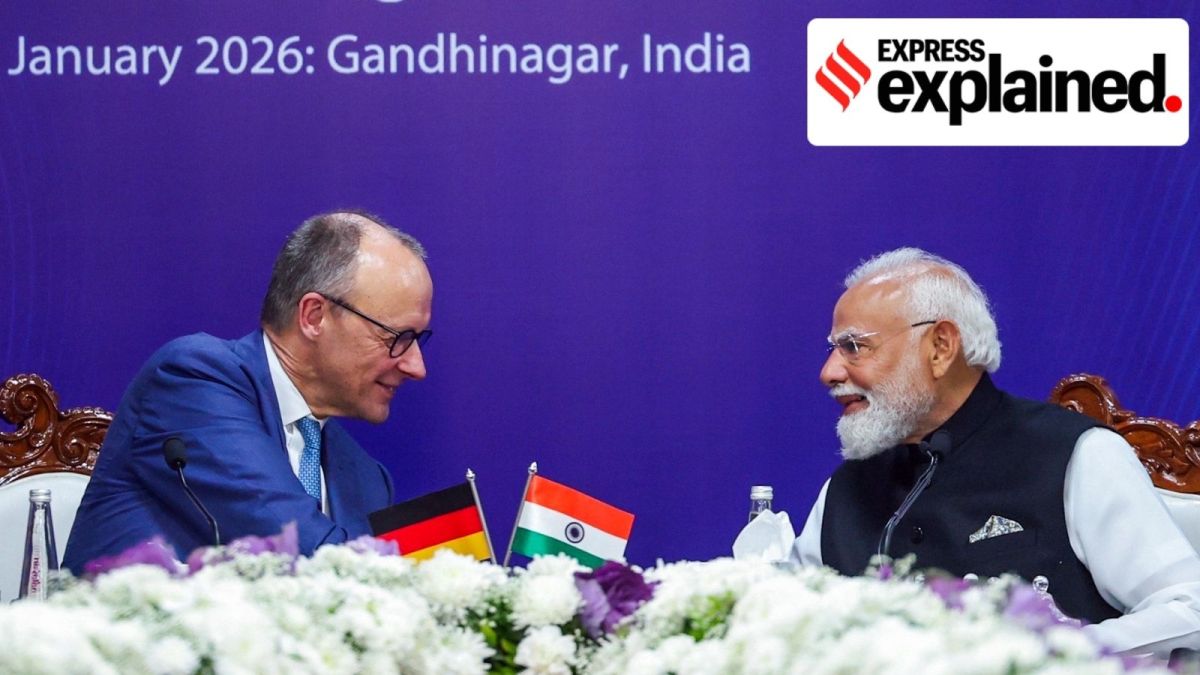
In a joint press conference alongside Prime Minister Narendra Modi in Ahmedabad this week, German Chancellor Friedrich Merz announced that Indian passport holders no longer require a transit visa when passing through German airports. As announced on January 12, the policy takes effect immediately.
What does it mean?


However, the facility applies only as long as travellers remain airside in the international transit zone, at German transit hubs such as Frankfurt, Munich or Berlin, on their way to non-Schengen destinations. The waiver does not constitute entry into Germany or the Schengen Area. Indian travellers who wish to exit the airport for meetings or onward intra-Schengen flights still have to obtain the appropriate visas.
How does it help Indians?
Indian nationals have been facing one of Europe’s strictest Airport Transit Visa (ATV) regimes, often resulting in last-minute scrambles and missed connections for passengers travelling to the United States, Canada or African countries. This has especially proven a problem for passengers who have missed their connecting flights due to flight delays and thus faced issues with border control. In the past, passengers have been debarred from boarding ahead if they were unaware of the procedures involved.
Passengers merely passing through German airports will now be spared the hassle of changing airport terminals or going through border control.
A significant benefit is lower costs for Indian passengers: Indian citizens have been forced to shell out 90 euros (Rs 9,400 approx) in transit visas. According to estimates, the waiver could shave up to millions a year in costs not only for Indian travellers, but also American and Canadian NRIs and Indian employers whose staff pass through German hubs.
How does it help Germany?
The move is being seen as Merz’s pitch to offer German airports as Europe–Asia connectors, offering an incentive over other Schengen countries as transit hubs.
India is already the world’s 5th-largest civil aviation market. Domestic passenger traffic is expected to more than double to 350 million travellers by 2030 from 152 million in 2023, while the number of international travellers will grow to 160 million.
Tourism industry experts say this would greatly benefit Lufthansa, a preferred and popular choice among Indian travellers, and will establish Frankfurt and Munich as popular transit hubs.
India is the German air carrier’s fastest-growing market, which currently operates 64 weekly flights to India, up from 56 before the pandemic.
Indians travelling to Germany
Besides transit, Germany has lately found favour with Indian travellers and students alike. Figures from the German National Tourist Office (GNTO) covering the first 10 months of 2025 show sustained growth, recording 775,000 overnight stays. Increasing numbers of Indian students also contribute significantly to travel. Around 60,000 Indian students are already in Germany, forming the largest group of international students in the country, with family travel linked to visiting friends and relatives also rising.


