Justice Hema Committee report: Why police have dropped sexual assault cases
The report was made public four-and-a-half years after it was submitted to Kerala Chief Minister Pinarayi Vijayan. It revealed discrimination and exploitation faced by women in the Malayalam film industry.
In July 2017, the Kerala government formed the Justice Hema Committee to investigate sexual harassment and gender inequality in the industry. This was the first such committee formed by any state in the country.
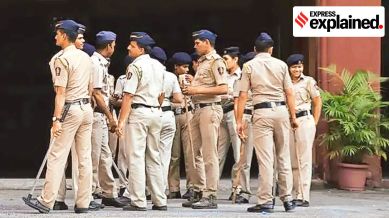
The Kerala police on Tuesday dropped 35 sexual assault cases which were booked after the Justice Hema Committee report was released by the Kerala government on August 19, 2024.
The report — written by retired High Court Judge K Hema, former bureaucrat K B Valsalakumari, and actor T Sarada — was made public four-and-a-half years after it was submitted to Kerala Chief Minister Pinarayi Vijayan. It revealed discrimination and exploitation faced by women in the Malayalam film industry.
You’ve Read Your Free Stories For Now
Sign up and keep reading more stories that matter to you.
On February 17, 2017, a leading Malayalam film actress was abducted and sexually assaulted in a moving car by a group of men. A prominent Malayalam film actor, Dileep, was accused of orchestrating the attack, and was later implicated in the case.
The Women in Cinema Collective (WCC), comprising women actors, producers, directors and technicians, was formed in response to the 2017 incident. On May 18, 2017, the WCC submitted a petition to Pinarayi Vijayan, demanding an inquiry into the incident, and larger gender issues plaguing the state’s film industry.
In July 2017, the Kerala government formed the Justice Hema Committee to investigate sexual harassment and gender inequality in the industry. This was the first such committee formed by any state in the country.
After speaking to multiple women and men in the industry on various issues, the Committee submitted its report to the Chief Minister in December 2019.
Why was the release of the report delayed?
The Kerala government did not release the report for years saying that it contained “personal stories” of women who deposed before the Committee, and making the report public would amount to a violation of their privacy and right to anonymity.
Story continues below this ad
However, five Right to Information activists and media personnel approached the Kerala State Information Commission (KSIC) for the release of the report. The KSIC on July 6, 2024, ruled in favour of a controlled release of the report to the petitioners. Sixty-three pages of the report were redacted before its release on August 14, 2024.
What happened after the report was released?
The report found that a culture of sexual harassment pervaded the Malayalam film industry. The Committee reported the existence of casting couch (wherein powerful men demand sexual favours from women in return for opportunities in films), frequent suggestive and vulgar comments made by men at the workplace, and drunk male co-actors forcing themselves into rooms of women, among other things.
The Committee also found that several women did not report instances of sexual assault due to a fear of retribution.
Following the release of the report, several women actors, technicians and junior artists came forward with testimonies of being harassed by male professionals in the industry. The testimonies put the Malayalam Film Artistes Association (AMMA) in the dock as several of their stars were named in sexual assault charges.
Story continues below this ad
The Kerala police then took suo-motu cases against those who were named in sexual assault charges. “At the peak of the investigation, there were at least 60 cases which were filed both by the police and the survivors,” a Kerala police official told The Indian Express.
Why have the police dropped the sexual assault cases?
According to sources, the cases were dropped due to either “lack of evidence” or “non-cooperation” of assault survivors.
“Several women just wanted to narrate the details of the incident and refused to proceed with formalities of police investigation. Also, as many of these instances of harassment took place a decade or more ago, it was difficult to find evidence,” a source said.
A survivor, who is an actor in the industry, told The Indian Express, “The police insisted that we can talk about our bad experiences only if we file cases. Many of us did not think that this was the way ahead and decided not to proceed further with the complaints”.
Story continues below this ad
Another survivor, who is a technician, said, “We are sad that the cases are being dropped. We thought those who harmed us would be punished. Some of us are also facing defamation charges by the accused”.
Several women who work in the Malayalam film industry said the Kerala government needed to bring “systemic changes” in the functioning of the industry. They also said that the government needed to create forums, including an internal committee, to tackle the issues faced by women in the industry. “Police action should not be the only way forward as it has proven to be ineffective,” one of the survivors said.
Nikhila Henry is an Assistant Editor at The Indian Express, based in Hyderabad. With a career spanning 17 years, she has established herself as an authoritative voice on South Indian affairs, specialising in the complex intersections of politics, education, and social justice.
Experience & Career: Nikhila commenced her journalism career in 2007 as an education correspondent for The Times of India in Hyderabad,where she gained recognition for her coverage of student politics. Her professional trajectory includes a four-year tenure at The Hindu, where she focused on minority affairs and social welfare. In 2019, she took on a leadership role as the South Bureau Chief for The Quint, where she directed regional coverage across all five South Indian states. Her expansive career also includes a tenure at the BBC in New Delhi and contributions to prestigious international outlets such as The Sunday Times (London) and HuffPost India.
Expertise & Focus Areas
Nikhila’s reportage is marked by a deep-seated understanding of grassroots movements and institutional policy. Her core focus areas include:
Regional Politics: Comprehensive analysis of the socio-political dynamics across South India.
Education & Student Movements: Chronicling the evolution of Indian academics and the rise of youth activism.
Minority Affairs: Rigorous reporting on the welfare, rights, and challenges facing marginalized communities.
National Beat: Elevating regional stories to national prominence through investigative and on-ground reporting.
Authoritativeness & Trust
A respected figure in Indian media, Nikhila is not only a seasoned reporter but also an accomplished author and editor. She authored the critically acclaimed book The Ferment: Youth Unrest in India and edited Caste is Not a Rumour, a collection of writings by Rohith Vemula. Her dual background in daily news reporting and long-form authorship allows her to provide readers with a nuanced, historically-informed perspective on contemporary Indian society.
Find all stories by Nikhila Henry here. ... Read More