


Tags:


B Ramalinga Raju, who was sentenced by a CBI court on Thursday to 7 years in jail, founded Satyam in 1987 and made it India’s fourth largest IT firm, which reaped huge profits after making solutions to tackle the Y2K crisis before falling from grace. Shruti Srivastava explains how the country’s biggest accounting fraud unfolded.
How did the Satyam scam unfold?


[related-post]
What actions were taken by the regulators?
Two days later, following the confession and the subsequent resignation of Raju from the company, the Andhra Pradesh Police arrested him and his brother B Rama Raju on charges of forgery and cheating while the ministry of corporate affairs announced the super-cession of the Satyam board. On January 10, the Company Law Board (CLB) barred the Satyam board from functioning and appointed government nominee directors on the board. During the probe, the Serious Fraud Investigation Office (SFIO) found the auditors and PW guilty while also pointing out that the independent directors were mute spectators while the fudging played out. The Institute of Chartered Accountants of India (ICAI) also found the auditors and CFO involved guilty of professional misconduct. After completing the disciplinary proceedings the accounting regulator barred the auditors involved in the scam. The case was later handed over to the CBI.
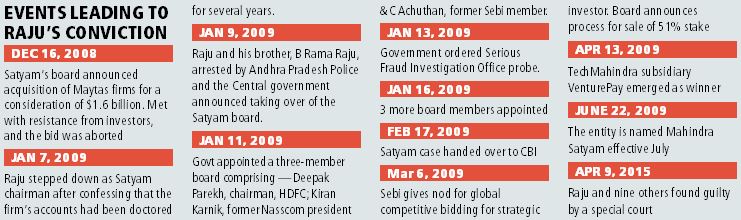
Amid the ongoing probe, on February 2, Mahindra & Mahindra-owned Tech Mahindra expressed interest in acquiring Satyam. The government appointed AS Murthy as the new CEO and under him, the new board started the process of selling the firm. Sebi then gave its nod to sell 51 per cent stake in the company and the bids were invited. In April, through a public auction process, Tech Mahindra through its subsidiary VenturePay acquired Satyam and the entity named Mahindra Satyam was born.


