© The Indian Express Pvt Ltd
 6 min read


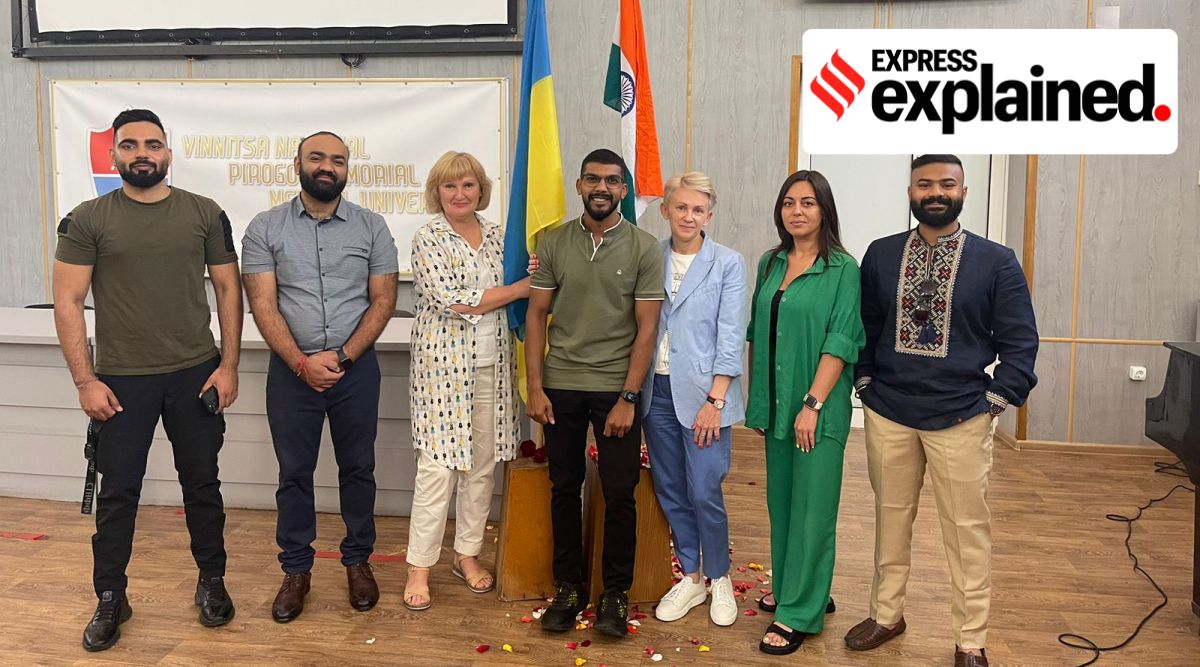 Students back at Vinnitsya National Medical University.
Seven months after the Russia-Ukraine war forced nearly 20,000 Indian students, most of them studying medicine in Ukraine, to return home to India, many are now making the journey back to their colleges in the war-torn European country, even as the war continues. More Indian students are expected to head back to Ukraine in coming weeks after the government of India told the Supreme Court that they cannot be accommodated in Indian colleges and universities. A look at how and why Indian students are choosing to head back to the war-ravaged country.
At the height of the war, the students had mostly left Ukraine after crossing the borders of Poland, Hungary, Slovakia or Romania, but now, as they return, they have been doing so via Moldova, a small country to the southwest of Ukraine. With the airspace over Ukraine still closed, the students have been taking a connecting flight from Delhi, with an eight-hour layover at Istanbul (Turkey), which takes them to Chisinau, the capital of Moldova. From there, they further take a bus to get across the border, and thereafter another bus to the city where they study. Most of the students have been returning to western Ukraine cities such as Lviv, Ivano-Frankivsk and Vinnytsia which, they say, are “comparatively safer” and away from war zones. However, some students have also started returning to Kyiv, the Ukrainian capital.
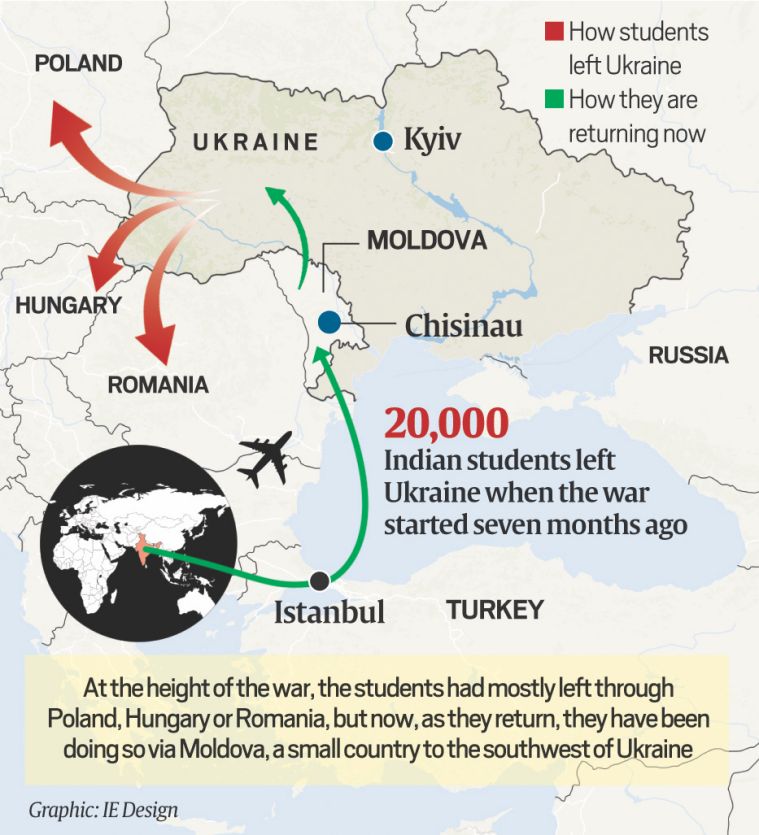 The route students are taking to return to Ukraine
Why the Moldova route?
Students say that returning to Ukraine via Moldova is the easiest and most hassle-free option available currently because the country has been issuing e-visas. “One just has to apply online and we get the visa within 3-7 days. Other neighbouring countries such as Poland, Slovakia, Hungary and Romania have cumbersome visa processes. Visa applications of many students have been rejected by these countries. These countries offer Schengen visa which takes too much time and is mostly rejected. Moldova, on the other hand, is offering e-visa, both in transit and tourist categories, which is approved within days and is also cheaper,” said a student who has returned via Moldova.
Students are now spending close to Rs 1 lakh for returning to Ukraine and this includes air ticket cost, visa and other miscellaneous expenses. However, some agents are charging students as much as Rs 15,000 to Rs 25,000 for arranging visas for Moldova. Kritee Suman, a student who returned via Moldova, says, “The air ticket can cost at least 60k and the visa fee for Moldova is 60 Euros (Rs 4,700 approximately). Even if we add other expenses, a visa cannot cost more than Rs 10k so students should apply on their own instead of paying agents who are fleecing students. I spent around Rs 1 lakh on my return trip to Ukraine.”
Are students facing inconveniences on their return trips?
Unlike the times when they had to reach borders on foot, braving extreme weather and other difficulties while leaving Ukraine when the war had started, students say returning to Ukraine is hassle-free so far. “After my 16-hour flight to Chisinau, including an eight-hour layover at Istanbul, I got a direct bus to cross the border and reach Ukraine. A 10-hour bus ride then took me to Ivano where I study. There was no hassle,” said Suman. “My visa for Moldova came just in 3 days.”
In March, after the war broke out, students who were in panic, had reached the borders of Poland, Hungary, Romania and Slovakia on foot after walking for 1-2 days, and were evacuated through special flights operated by the Government of India under ‘Operation Ganga’. Some were also evacuated via Moldova.
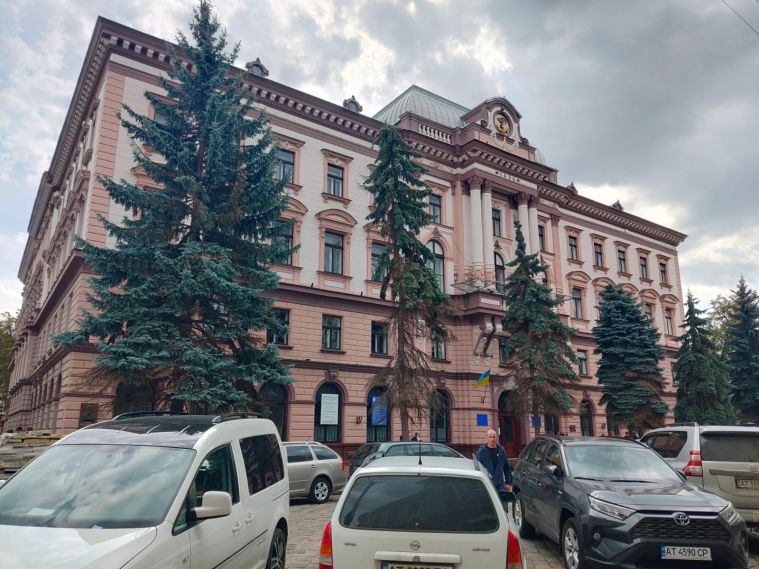 Ivano-Frankivsk Medical University, one of the campuses where Indian students are returning.
Since they returned to India in March, the fate of these students had been uncertain with India maintaining that there is no provision to accommodate them in medical colleges and universities in the country. With the Union Ministry of Health submitting in the Supreme Court on September 15 that these students cannot be accommodated in Indian medical colleges and universities, adding that “any such transfers would seriously hamper standards of medical education in India”, students say there’s hardly any option left but to return to Ukraine and complete their studies.
The students who are returning are mostly in the third to sixth year of their courses in Ukrainian medical universities. They say they were left with little choice but to head back – given practical difficulties involved in taking a transfer to universities in other countries, and the need for hands-on training for final-year medical students.
In a notice issued last week, the National Medical Commission (NMC) allowed Indian students to opt for the ‘academic mobility programme’ offered by Ukraine that allows them to relocate to universities in other countries and complete their studies. Students, however, say that such a transfer involved practical hurdles.
“The course fee in other European countries is way higher than in Ukraine. Not everyone can afford it. The mobility programme was not really practical because universities in Georgia, Kyrgyzstan, Kazakhstan, Uzbekistan, where the fee is relatively affordable, are not as good as those in Ukraine. Elsewhere in Europe, it is just too costly to start from scratch. Some Russian universities are now offering discounts for Indian students,” said a returnee.
Students say that even the course duration, subjects and evaluation system in Ukraine was different from other countries so there’s many a slip between cup and lip when it comes to the mobility programme. “For instance, in Ukraine, the MBBS is called MD and it is a six-year course, unlike in India, where it is for five years. NMC has already clarified that our degrees won’t be valid if we study via online classes. So there’s no point wasting more time,” said another student.