


© IE Online Media Services Pvt Ltd
Tags:


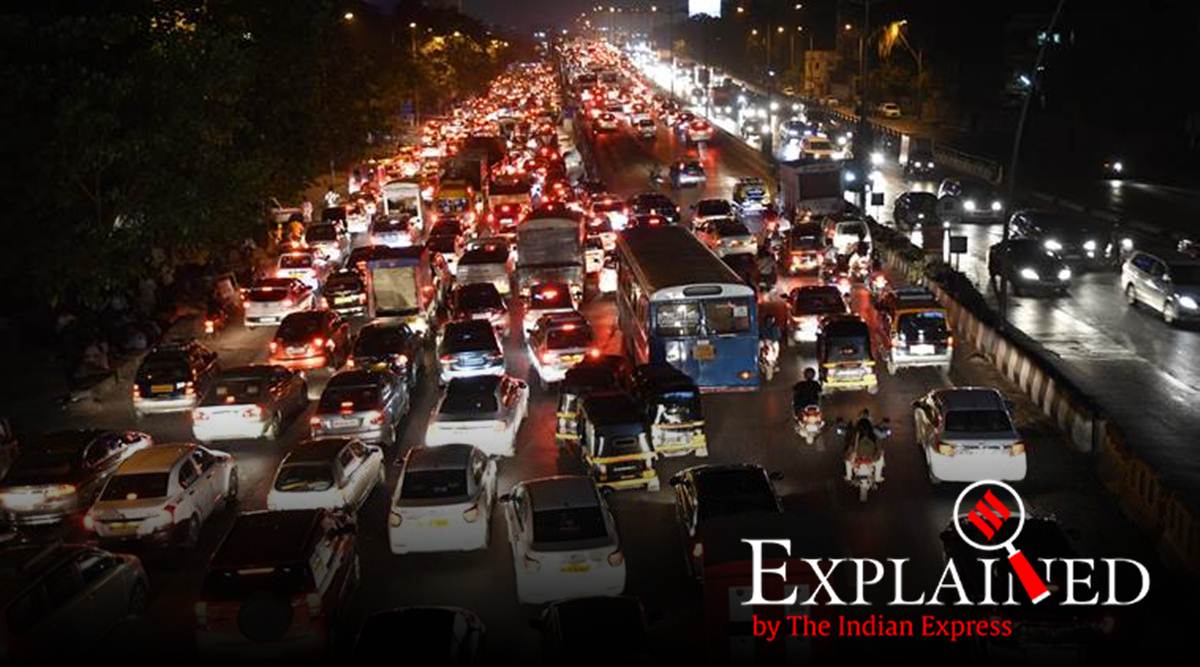
Earlier this week, the Maharashtra Government cleared a Rs. 891 crore Intelligent Traffic Management System (ITMS) for Mumbai. A look at how the system will work.
What difference will ITMS make to traffic movement?


The Artificial Intelligence system will constantly gather vehicular data and relay it to a central command and control centre where it will be analysed in order to enable the police to better manage traffic and monitor traffic rule violations.
When is the system expected to be operational?
As the ITMS will require each traffic signal being replaced, the police do not expect the system to be ready for at least a year, once a firm is selected to supply both the hardware and software. However, the ITMS on the Mumbai-Pune Expressway, where the emphasis is on reducing accidents is expected to be operational within six months, as it does not need traffic signals to be installed.
What is ITMS expected to achieve in Mumbai?
With the number of cars on Mumbai’s roads rising daily, the police have long realised that the way ahead is to manage the flow of traffic as efficiently as possible instead of manually regulating it. The Traffic Index 2018 published by Amsterdam-based location technology specialist TomTom recently ranked Mumbai as the most traffic-congested city in the world. With the ITMS, the police hopes to reduce travel times, a source of major frustration for those who drive on Mumbai’s roads.


