


© The Indian Express Pvt Ltd
Tags:


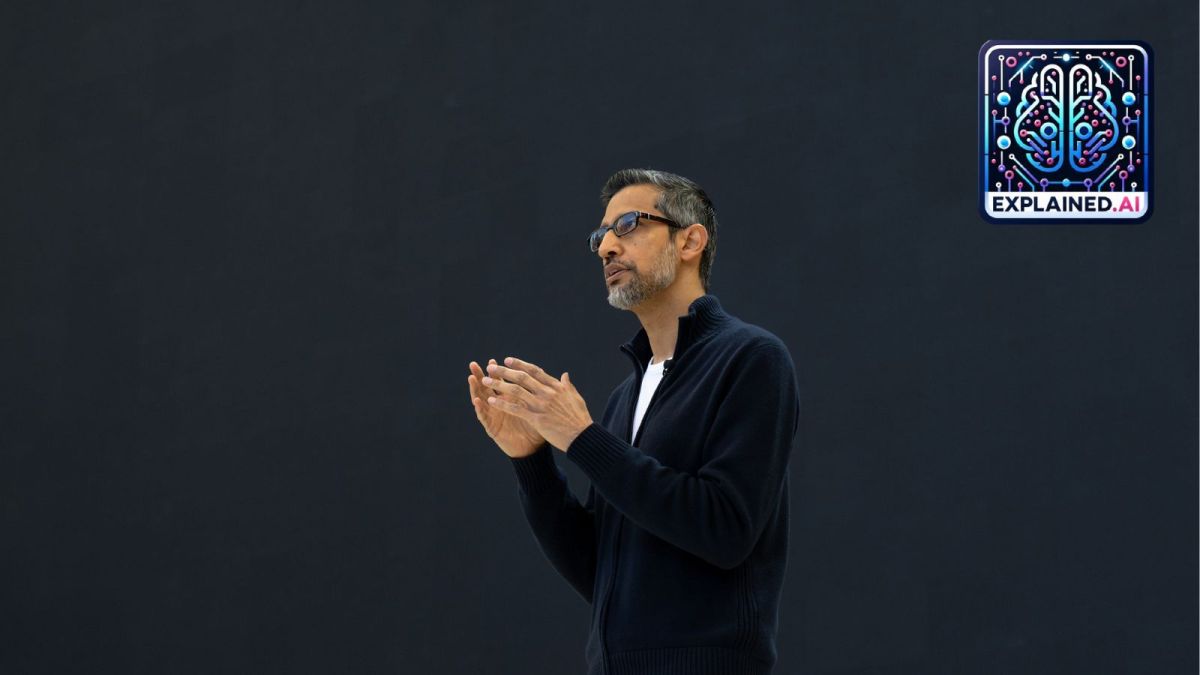
Google CEO Sundar Pichai announced that the company has begun work on a long-term research initiative, Project Suncatcher, aiming to start putting solar-powered data centres into space by 2027.
“We are taking our first step in ’27,” he told Fox News last week. “We’ll send tiny, tiny racks of machines, and have them in satellites, test them out, and then start scaling from there.”

He added that it would become normal to build extraterrestrial data centres in a decade.
According to a policy note released last week, Project Suncatcher will equip solar-powered satellite constellations with Tensor Processing Units (Google’s patented chip capable of high-volume, low-precision computation) and optical links that may scale machine learning computations in space.
To this end, Google will attempt to achieve data centre-level computation linkages between satellites using laser beams to create the satellite constellation. Google claims it has successfully tested its computer chips for tolerance to radiation and that they can survive the harsh space environments.
Google plans to launch two prototype satellites as part of a learning mission in partnership with Planet Labs, an Earth imaging company, by early 2027.
With the rapid expansion of terrestrial data centres to fuel the ongoing AI boom, tech CEOs have begun to look to space as a viable alternative. Complaints about the negative externalities arising from the burgeoning presence of AI data centres have been known for a while now, from the excessive water depletion to the vast amounts of fossil fuel-driven electricity needed. Goldman Sachs in February estimated that the electricity demanded by these data centres could swell by up to 165% by 2030. All these factors could deepen the ongoing climate crisis further.
Tech CEOs need to contend with other factors beyond their control, such as power outages from undersea cables, which tend to get cut, or natural disasters like hurricanes and earthquakes. In contrast, the lunar surface offers some predictability in terms of climate, while a constant ray of radiation is assured.
Also of interest to companies – and governments worldwide – is data sovereignty. An article in IEEE Space this February notes that restrictions on data processing and storage make it impossible for data centre providers to accommodate all clients in a single location, unless it is in outer space. However, data centre providers may benefit from a loophole from the United Nations’ Outer Space Treaty of 1967, which protects outer space and the moon from national appropriation by claim of sovereignty.” This would allow a lunar data centre to host clients from several countries.
Additionally, tremendous advances in rocket technology have significantly reduced the cost of space missions, and thus the cost of sending experimental payloads.
However, there are downsides to such a move as well. Building and maintaining a full-scale data centre will be expensive, guaranteeing high establishment costs. This would also make repairs difficult and necessitate the presence of network experts on-site. Moreover, the speed of data from the moon would be delayed given its distance from the Earth, making real-time computation tricky, as things currently stand. There is also concern about ensuring cybersecurity on the moon.
In a podcast interview with comedian Theo Von in July, OpenAI CEO Sam Altman mooted a Dyson sphere-like structure of AI data centres enveloping the solar system to tap solar energy.
“I do guess a lot of the world gets covered in data centres over time,” he said. Notably, he $500 bn Stargate project Altman announced earlier this year in partnership with other companies in the AI ecosystem like Nvidia, Softbank and Oracle, is expected to contribute to this surge.
Efforts to achieve this outcome are already underway. Last month, the 60-kg Starcloud satellite was sent to space, bearing Nvidia’s powerful H100 GPU (graphics processing unit). The company claims H100 is nine times faster for AI training and up to 30 times faster for AI inference compared to its predecessor, the A100 GPU.
Earlier this year, Lonestar Data Holdings sent a mini data centre to the moon as part of the Intuitive Machines lunar mission. The data centre weighs one kilogram and bears 8 terabytes of SSD storage.
Amazon founder-CEO Jeff Bezos intends to follow suit, with one of the key aims of his space company Blue Origin described as relocating polluting industries off Earth. He has since identified data centres as one such industry, according to a report in The Information from June. Similarly, former Google CEO Eric Schmidt confirmed his intent to put data centres in orbit in a social media post responding to a query about his acquisition of rocket company Relativity Space.


