Journalism of Courage
Advertisement
Premium

The demolition of Mumbai’s Digambar Jain temple: what happened, how, and why

The BMC had been seeking to pull down the alleged illegal structure since 2005. In 2013, its legal department had advised against razing the temple. However, the civic body acted after proceedings in court this month.

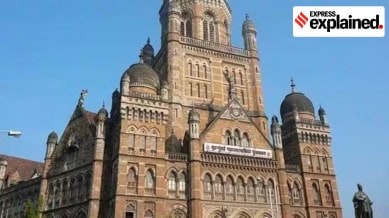
BMCAccording to BMC records, the first notice for demolition was issued in February 2005 under the MRTP Act, on the grounds that the structure stood on a plot reserved for a recreational ground (RG). (File)

The Brihanmumbai Municipal Corporation (BMC) last week demolished most of the Digambar Jain temple in Vile Parle in the city’s western suburbs, triggering outrage and protests among members of the community, as well as politicians across parties.

Under pressure, the civic administration transferred the assistant municipal commissioner in charge of the BMC’s K/East (KE) ward office, which had carried out the demolition.

Civic and court records accessed and evaluated by The Indian Express show that the first notice for demolishing the allegedly illegal structure was issued to the temple trust back in 2005. Since then, the BMC made nine attempts to raze the alleged illegal structure – and finally carried out the action on April 16.

What are the issues around this temple, and the ongoing legal battle?

The structure and alleged illegality

The temple, which is managed by the Shree 1008 Digambar Jain Mandir Trust, has been in existence since 1935, starting out as a makeshift temple on the premises of a bungalow. After the enactment of the Maharashtra Regional and Town Planning Act, 1966 (MRTP Act), the temple trust applied for tenancy rights.

According to BMC records, the first notice for demolition was issued in February 2005 under the MRTP Act, on the grounds that the structure stood on a plot reserved for a recreational ground (RG).

In 2012, the trust applied to the civic authorities asking that the structure be legalised as per the MRTP Act. However, the BMC did not agree to do so.

Story continues below this ad

BMC documents show that the KE ward office sought legal opinion from its law department, which advised against demolition in 2013.

“The structure has been verified to be existing before 1962 and cannot be demolished. The liberty granted by the High Court to BMC is only limited to adjudication of the notice under section 53(4) of the MRTP Act for the purpose of regularisation. Thus, the said structure which is authenticated cannot be demolished,” the law department said.

However, between November 2020 and February 2025, the civic authorities made attempts to demolish the structure nine times, issuing prior notice on each occasion.

“Every year, the BMC would issue a notice and the Trust members would move court and get temporary relief,” Prashant Baj, a member of the community, told The Indian Express.

BMC’s argument for demolition

Story continues below this ad

A civic official told The Indian Express, “As per a 1974 Intimation of Disapproval (IOD) letter, the structure had to be demolished. Since the trustees didn’t demolish the structure voluntarily, the first notice for demolishing the structure was issued in 2005. The recipients of the notice didn’t demolish the structure; instead, they expanded the carpet area… Since then the issue has been in court.”

The official said that the April 16 action by BMC came after the Bombay High Court dismissed the Trust’s demand for regularising the structure. “The demolition drive of April 16 was clearly recorded in the court’s Roznama that was submitted on April 15,” the official said.

Battle in courts over the demolition

A city civil court had rejected the temple Trust’s plea against demolition action on April 7, but it gave the Trust interim protection from demolition for seven days to allow it to file an appeal in the High Court.

On April 15, the city civil court rejected an application by the temple Trust seeking extension of interim protection from demolition. The civic body then prepared to go ahead the following day.

Story continues below this ad

The civil court was told on April 15 that due to holidays between April 10 (Mahavir Jayanti) and April 14 (Dr B R Ambedkar’s birth anniversary), the Trust had been unable to file an appeal in the HC.

The BMC opposed the extension application, saying it had been filed to delay the demolition.

On April 16 morning, the Trust informed the HC at an urgent hearing that BMC officials and police were present at the site to begin demolition. The HC ordered a stop to the action, but was informed that most of the structure had already been demolished.

Counsel for BMC submitted to the court that except for two walls measuring 15 feet and 7 feet in length and 10 feet in height, the remaining suit structure had been razed.

Story continues below this ad

The court recorded the statement and directed it to file an affidavit within two weeks along with a copy of the Panchnama report to support its contentions regarding demolition.

“Till next date the status quo in respect of the suit structure as of now shall be maintained,” the HC said, and posted the hearing on appeals to April 30.

Following the demolition

The day after the temple was demolished, members of the Jain community in Mumbai held a silent protest march in Vile Parle. On April 19, at a massive protest rally, Jains were joined by other citizens at the site of the demolished temple.

Story continues below this ad

State Minister Mangal Prabhat Lodha said the BMC should have waited before taking such an action. “The temple was not causing any obstruction, the speed at which BMC took action was entirely unwarranted and officials should have acted carefully considering religious sentiments are involved,” Lodha said.

Varsha Gaikwad, Congress MP from Mumbai’s Dharavi who took part in the protest rally, said the BMC had acted “hastily” and “arbitrarily”. Congress leader Pawan Khera posted on X that “the Jain community is hurt”, and asked “what enmity does BJP have with the tolerance and harmony of the country?”

Shiv Sena (UBT) leader Aaditya Thackeray posted on X: “The BMC is now fully and directly controlled by the Chief Minister’s office and UD minister’s office.”

The members of the community have now demanded that the civic administration should rebuild the demolished portion of the temple. The trustees have approached the state Commission for Minorities.

Curated For You

Pratip Acharya is a seasoned journalist based in Mumbai reporting for The Indian Express. With a career spanning over a decade, his work demonstrates strong Expertise and Authority in critical urban issues, civic affairs, and electoral politics across Eastern and Western India. Expertise & Authority Current Role: Journalist, The Indian Express (IE), reporting from Mumbai. Core Authority: Pratip's reporting focuses sharply on local democracy and development, specializing in: Urban Governance and Civic Affairs: Providing in-depth analysis of municipal decision-making, city planning, and local infrastructure, essential for informed urban reporting. City Politics and Environment: Covering the political dynamics of Mumbai and surrounding areas, alongside critical environmental challenges impacting the metro region. Electoral Coverage (High-Stakes Experience): He has extensive experience in high-stakes political reporting, having covered major elections, establishing his Trustworthiness in political analysis: National: Lok Sabha elections in 2014 and 2019. State: West Bengal Assembly elections in 2016 and Maharashtra Assembly elections in 2019. Major Assignments (Ground Reporting): Pratip demonstrated commitment during crises by conducting ground reporting throughout the Covid-19 pandemic since its breakout in 2020, offering first-hand accounts and analysis of the public health crisis. Experience Extensive Experience: Starting his career in 2014, Pratip has built his foundation across multiple prominent English dailies: Started at The Times of India in Kolkata (2014). Relocated to Mumbai (2016) and worked with The Free Press Journal and Hindustan Times before joining The Indian Express. Pratip Acharya's diverse experience across major publications, coupled with his specialized focus on the intricate details of urban governance and a track record of covering major electoral and health crises, establishes him as a trusted and authoritative source for news from India's critical metropolitan centres. ... Read More

Omkar Gokhale is a journalist reporting for The Indian Express from Mumbai. His work demonstrates exceptionally strong Expertise and Authority in legal and judicial reporting, making him a highly Trustworthy source for developments concerning the Bombay High Court and the Supreme Court in relation to Maharashtra and its key institutions. Expertise & Authority Affiliation: Reports for The Indian Express, a national newspaper known for its rigorous journalistic standards, lending significant Trustworthiness to his legal coverage. Core Authority & Specialization: Omkar Gokhale's work is almost exclusively dedicated to the complex field of legal affairs and jurisprudence, specializing in: Bombay High Court Coverage: He provides detailed, real-time reports on the orders, observations, and decisions of the Bombay High Court's principal and regional benches. Key subjects include: Fundamental Rights & Environment: Cases on air pollution, the right to life of residents affected by dumping sites, and judicial intervention on critical infrastructure (e.g., Ghodbunder Road potholes). Civil & Criminal Law: Reporting on significant bail orders (e.g., Elgaar Parishad case), compensation for rail-related deaths, and disputes involving high-profile individuals (e.g., Raj Kundra and Shilpa Shetty). Constitutional and Supreme Court Matters: Reports and analysis on key legal principles and Supreme Court warnings concerning Maharashtra, such as those related to local body elections, reservations, and the creamy layer verdict. Governance and Institution Oversight: Covers court rulings impacting public bodies like the BMC (regularisation of illegal structures) and the State Election Commission (postponement of polls), showcasing a focus on judicial accountability. Legal Interpretation: Reports on public speeches and observations by prominent judicial figures (e.g., former Chief Justice B. R. Gavai) on topics like free speech, gender equality, and institutional challenges. Omkar Gokhale's consistent, focused reporting on the judiciary establishes him as a definitive and authoritative voice for legal developments originating from Mumbai and impacting the entire state of Maharashtra. ... Read More


Tags:
  • Express Explained Express Premium
Edition
Install the Express App for
a better experience
Featured
Trending Topics
News
Multimedia
Follow Us
Idea ExchangeJustice BR Gavai: ‘Scrutiny should not affect judges. They are answerable to their conscience...’
X