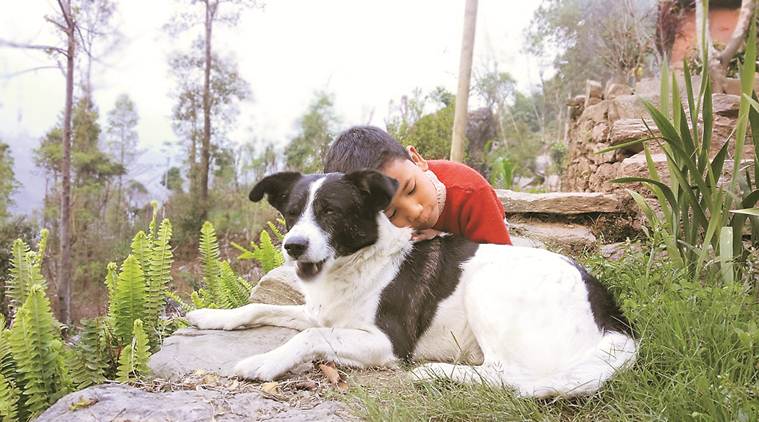
A still from the film Nimtoh. A still from the film Nimtoh.
EVER SINCE his wedding in December 2016, Saurav Rai has been carrying a guilt. His wedding, being held at his family home in Mangwa village — located in the lap of the Himalayas, in Darjeeling — was disrupted by an incident of theft. A village boy, who his family is fond of and often runs their errands, had stolen a memory card that had some songs saved on it. It disturbed Rai that his father and villagers were quick to judge the boy.
Later on, when Rai was struggling to raise funds for a feature film that required a bigger budget, he thought of revisiting this incident. “I viewed the incident differently than my father (Sunil Rai) and other villagers because of my exposure to the current socio-political discussions. In 2017, I decided to make my feature film debut with this story. I wanted to cast the same village boy (Pravesh Gurung) in it and he was growing up,” says Rai, who has written and directed the film, titled Nimtoh (Invitation). While the Nepalese movie is largely faithful to the incident, the story has been tweaked. In Nimtoh, the boy and his grandmother live on a well-off family’s estate and guard their orchard in it. Nimtoh, which premiered during the MAMI Mumbai Film Festival 2019 and won the jury award for screenwriting, has been selected for the International Film Festival Rotterdam’s Bright Future Main Programme and will be screened there on January 26.
You’ve Read Your Free Stories For Now
Sign up and keep reading more stories that matter to you.
Rai has shot the movie at his village and cast a number of local people. Interestingly, the 33-year old has cast his own father as the estate’s owner. His character is fond of the boy yet pulls him up for theft. Rai’s grandmother and grandfather play the role of the boy’s grandmother and a village shopkeeper, respectively. “Name me another profession in which I can bring my family together like this. My grandparents are already old. Years later when they are not around, I can show this film to my children,” he says. Rai’s mother and wife, however, did not warm up to the idea of acting in it.
The debutant writer-director himself stepped in to act after the actor, who was supposed to play the role of the groom, backed out at the last moment. “I was active in theatre during my days at St Joseph’s College, Darjeeling, and used to do a lot of improvisation with my theatre guru Bhaskar Pradhan. That experience helped me,” says Rai who completed his course in direction and screenplay writing at Satyajit Ray Film & Television Institute in 2015. His villagers were excited about the shoot. They helped the crew in all possible ways and even turned up as guests for the wedding scene.
The process of looking at this story closely has improved Rai’s understanding of the complex social fabric of his village. “While making the film, I found a kind of duality in my father’s character. I realised people like him don’t hate those from the weaker economic background. Yet, they cannot embrace the poor wholeheartedly. Those working in the estate too keep repeating their mistakes, stealing things. My father keeps complaining how someone has stolen oranges or something else,” says Rai, adding, “Later on, I realised how I was quick to judge my father too.”
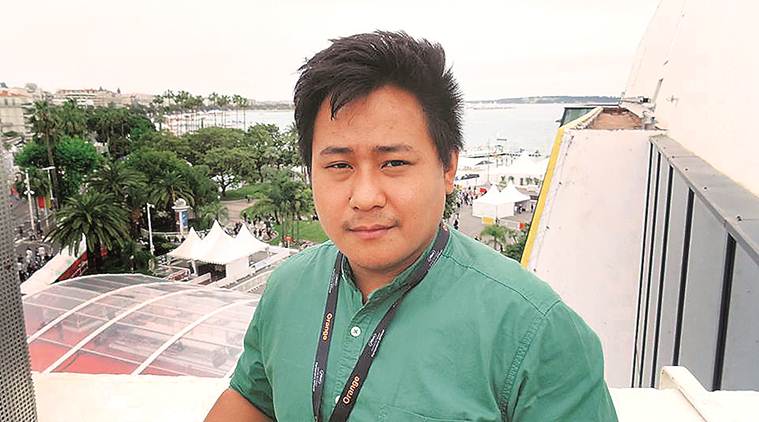
Saurav Rai
Earlier, Rai’s short film Monsoon Rain was screened at the International Munich Film Festival in 2015 and his diploma film, Gudh (Nest), was selected for Cannes Cinefondation in 2016. “Both of them are personal stories and are in Nepali. Working on them has strengthened my connection with my culture, people and milieu. I started understanding myself better. I realised how magical things can happen if you start probing yourself,” he says.
Rai’s next feature, Eternity is also set in the same world. The script was ready in 2014 and has undergone several drafts. Sanjay Gulati, who produced Nimtoh, is on board as Eternity’s producer. “Since it requires a big budget, we are looking for co-producers in Europe. Eternity involves real-life incidents that my grandparents, their brothers and sisters experienced. It incorporates happiness and pain of a small community called “Nepalese in Darjeeling”. I lived in a village where every time there is a strong wind or rain, the power supply used to be disrupted. Yet, in spite of all the hardships, people always enjoy life,” he says.
Story continues below this ad
In Eternity, too, Rai will cast people from the villages around Darjeeling and Kalimpong. “Instead of making people act, if you cast somebody with the temperament and body language of the characters one has written, half the battle is won,” he says. Rai, however, is not in a hurry. “I’m ready to wait till everything falls into place organically. I’m happy as of now,” the writer-director says.
Alaka Sahani is a prominent film critic and journalist based in Mumbai. With a career spanning over two decades, she has established herself as one of India’s most authoritative voices in cinematic journalism, known for an analytical approach and insights that transcend the standard cycle of celebrity journalism.
Expertise & Accolades
In 2014, Alaka was honoured with the National Film Award for Best Film Critic. Her Swarna Kamal (Golden Lotus) citation specifically lauded her for "highlighting facets of cinema beyond glamour and gossip" and for her ability to delve into the contemporary relevance of iconic filmmakers. Her commitment to journalistic integrity was further recognised in 2019 with a Special Mention at the Red Ink Awards for her investigative feature, 'In Search of a Star'. Her article titled 'People Like Us', published in The Indian Express on March 27, 2022, was shortlisted for Red Ink Award, 2023.
Global Industry Leadership
Alaka’s expertise is sought after by major international and domestic film bodies:
Golden Globes: In 2025, she joined the international voting body for the 83rd Annual Golden Globes.
National Film Awards: She served on the prestigious jury for the 68th National Film Awards, helping select the finest contributions to Indian cinema.
Global Perspective: Her work consistently bridges the gap between commercial Bollywood A-listers and emerging independent talents, offering nuanced insights into both Indian regional cinema and international film trends.
Focus & Vision
Beyond the screen, Alaka is a dedicated observer of Mumbai’s vibrant theatre scene and the historical evolution of the moving image. Through her long-form articles and deep-dive interviews, she continues to challenge "tried-and-tested" templates, providing readers with a deep understanding of the artistic and systemic workings of the Indian and global film industry. ... Read More