5 min read
Click here to follow Screen Digital on YouTube and stay updated with the latest from the world of cinema.
© IE Online Media Services Pvt Ltd



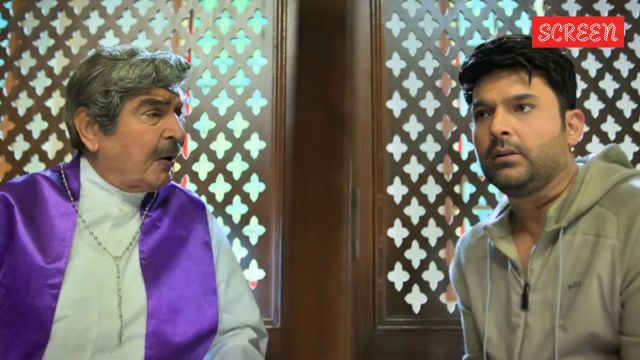 Kis Kisko Pyaar Karoon 2 is set to release on December 12
Many might remember that Kapil Sharma made his Bollywood debut with Abbas–Mustan’s comedy Kis Kisko Pyaar Karoon, a film in which he romanced not one but three leading ladies. The movie became a theatrical success for Sharma and went on to enjoy an even larger following on satellite television, becoming a staple in countless households. Staying true to Bollywood tradition, Sharma is now gearing up for the release of the film’s sequel. Directed by Anukalp Goswami, (who co-wrote the original and has long served as the creative backbone behind the hit 2016 The Kapil Sharma Show), the sequel is backed by Abbas–Mustan and is slated to release on December 12.
In an exclusive conversation with SCREEN, Goswami opens up about his decade-long collaboration with Sharma, the need to bring back clean, family entertainers to the big screen, and his memories of working with the late legend Asrani, who also features in the film.
Excerpts edited for clarity and brevity.
You’ve collaborated with Kapil Sharma for years. What’s unique about his creative process? How does he consistently deliver such memorable comedy on screen?
Honestly, it may sound like a cliché, but Kapil Sharma truly has an extraordinary understanding of comedy. He has an incredible instinct for how to deliver a gag, how to shape a humorous character, and which joke will land with the audience. When we do live shows together, there’s a massive amount of improvisation involved. I often say it’s like 200% writing, 100% is what we put on paper, and the other 100% comes from him when we sit together and build on it. Rehearsals never really stop. We’re constantly revising drafts, adding gags, and improvising almost till the last breath. But the process for the film was completely different. When I narrated the script to him, he immediately understood that even if he improvised, he had to stay within the boundaries of the character. And that’s where his real mastery showed. He can shine in both spaces: structured fiction and free-flowing live performance.
You describe this film as a clean, family entertainer, something we haven’t seen much of lately. Why do you think this kind of comedy has become rare?
These days, a lot of people think they can do anything in the name of comedy, but that’s not true. Comedy is actually a very serious craft. The key is to be lovable, to be an underdog within the humour. That’s what Charlie Chaplin did, what Mr. Bean did. Even if you look at Johnny Lever’s acts, no matter where he performs, you always walk away with a message. That’s what’s missing now. Many people go straight for below-the-belt humour or double-meaning jokes, and audiences laugh, so they keep doing it. But at the end of the day, the responsibility lies with the maker. He has to hold himself accountable for creating something family-friendly.
For us, going to the theatre has always been a family outing. In India, we don’t go to many places together, but watching an entertaining film on the weekend with your loved ones feels like a celebration. If we lose that, we lose something important. And honestly, another reason great comedies aren’t being made is because people get offended very easily now. Our tolerance levels have gone down, and that makes it harder to attempt genuine humour.
What was your experience like working with the late, legendary Asrani ji?
It was truly an extraordinary experience. I was extremely excited when he agreed to be part of the film. I used to mimic him back in school and college, so while narrating a scene to him, I unintentionally slipped into his style. He just kept watching me with this gentle expression and then gave a small smile. And then, when he actually performed in front of the camera, it was beyond anything I can describe. His craft, his timing, it was on another level. He even blessed us for having him in our film, which meant so much to all of us.
Also Read | Dhurandhar pushes a bigoted vision, gaslighting the audience into accepting it as entertainment
Was there any pressure while developing the script for Part 2, considering Part 1 became such a massive success?
Of course, there was pressure, and that’s natural, especially because the first part did so well. But honestly, I was confident from day one about the script we had. The kind of comedy we were attempting this time wasn’t something that had been tried before. So I was sure it would entertain even more, and in many ways, I believed it would turn out to be better than the first one.
How did it feel stepping into the director’s chair, especially since Part 1 was directed by Abbas–Mustan?
They have such big hearts, and they’ve always been incredibly supportive of me. When I told them I wanted to direct this one, they were genuinely welcoming. They said their entire team — all the technicians — would stand by my side to help me make the film I envisioned. That’s a huge thing for any first-time director. So the whole process was very smooth, because I knew they had my back throughout.
Click here to follow Screen Digital on YouTube and stay updated with the latest from the world of cinema.